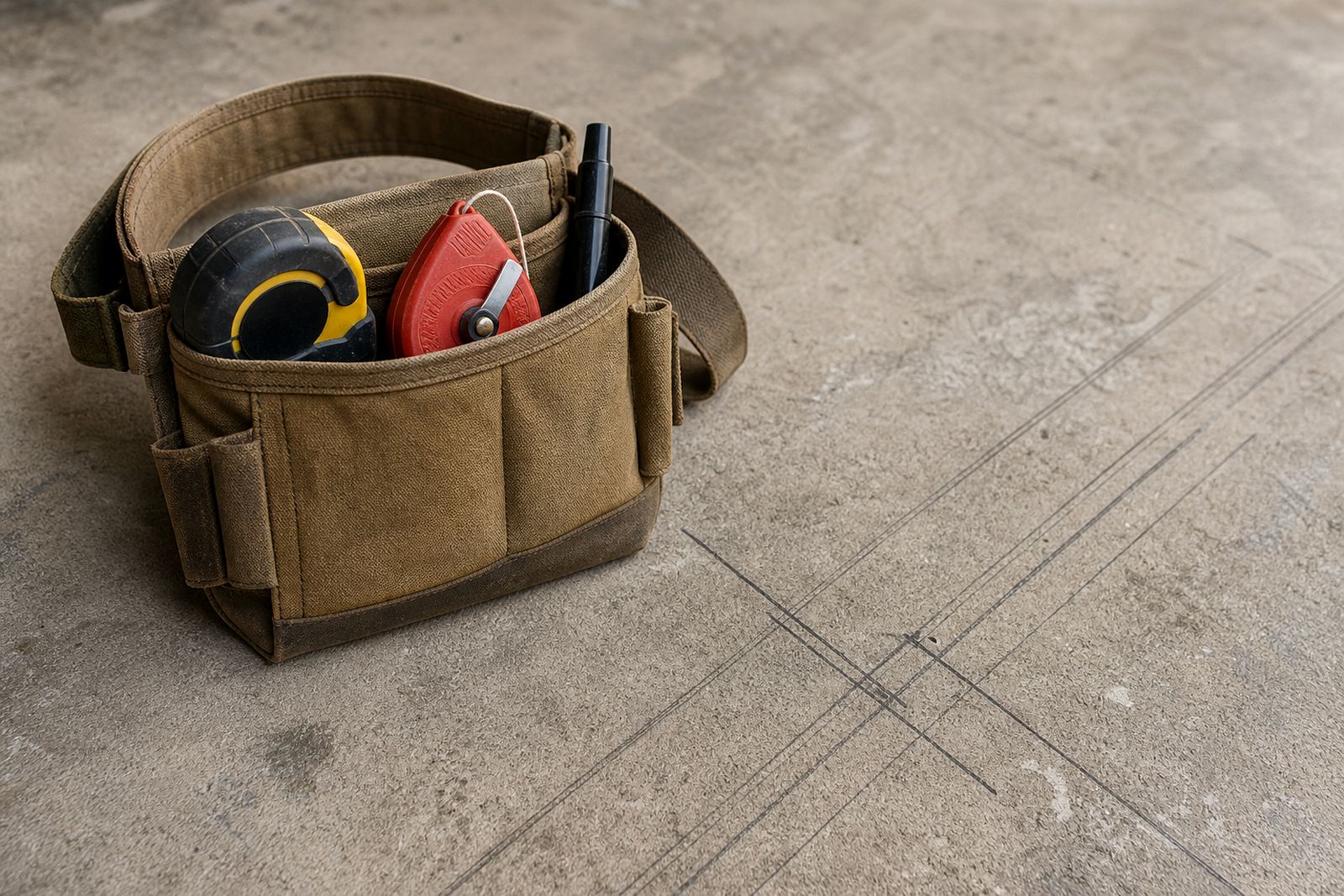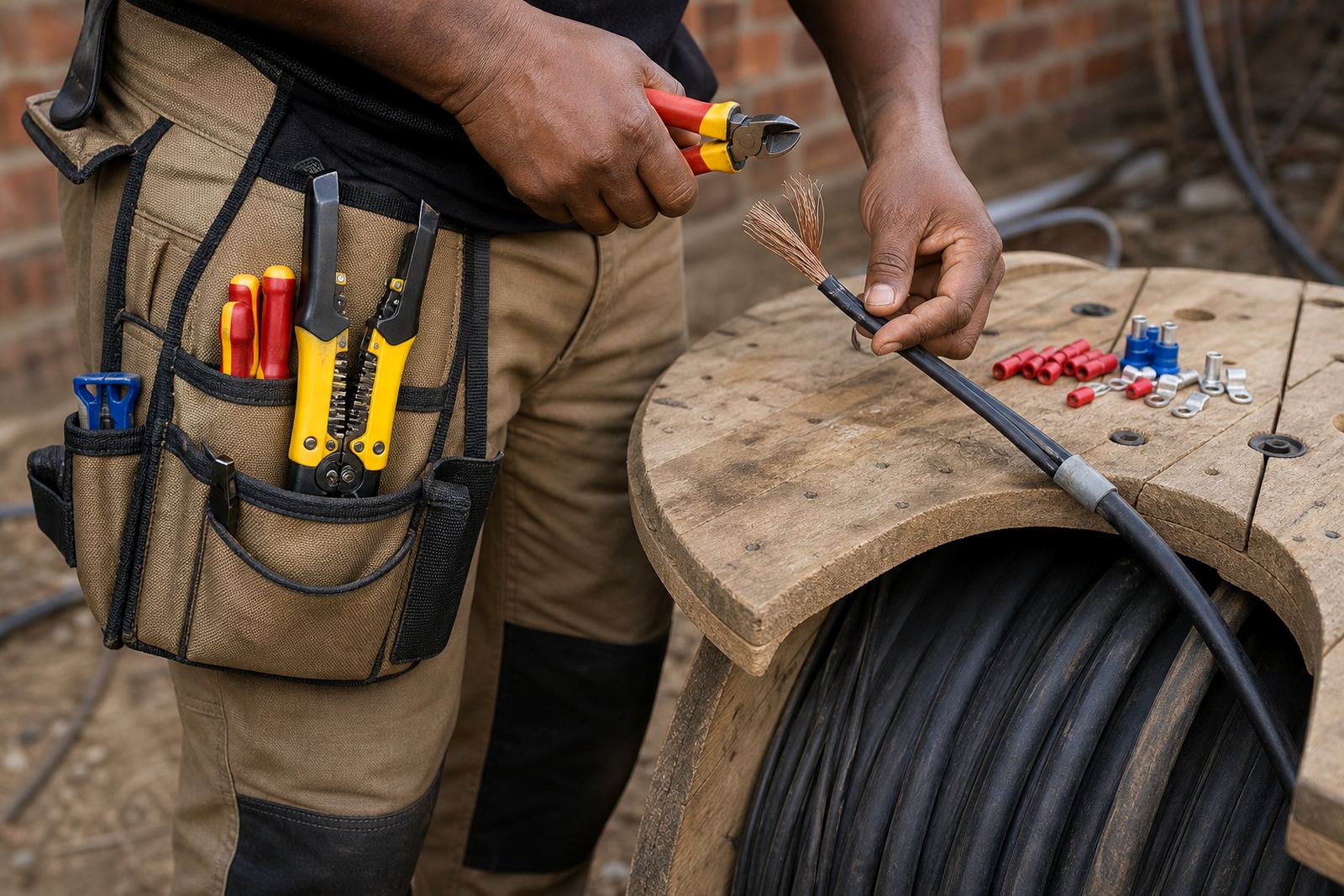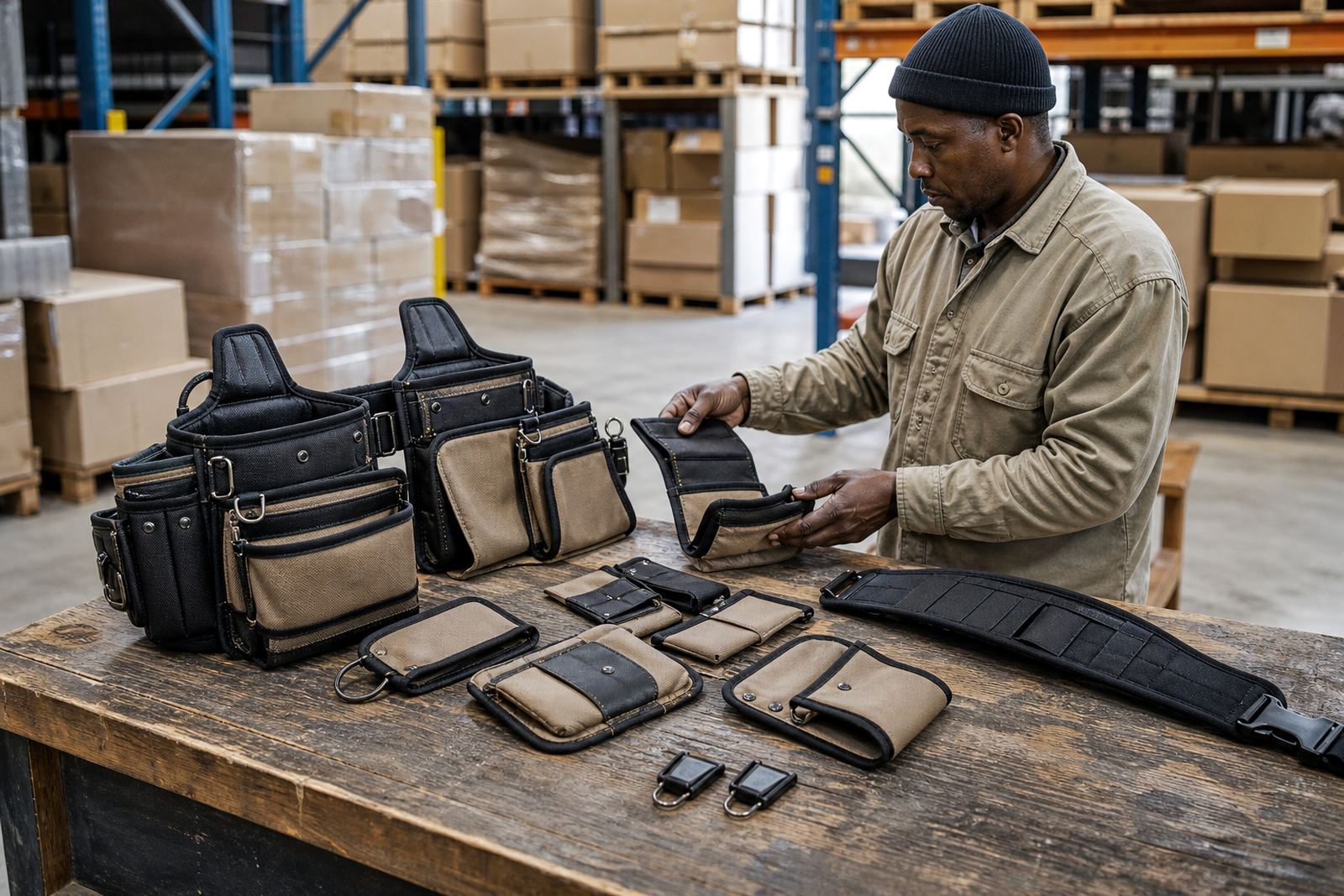

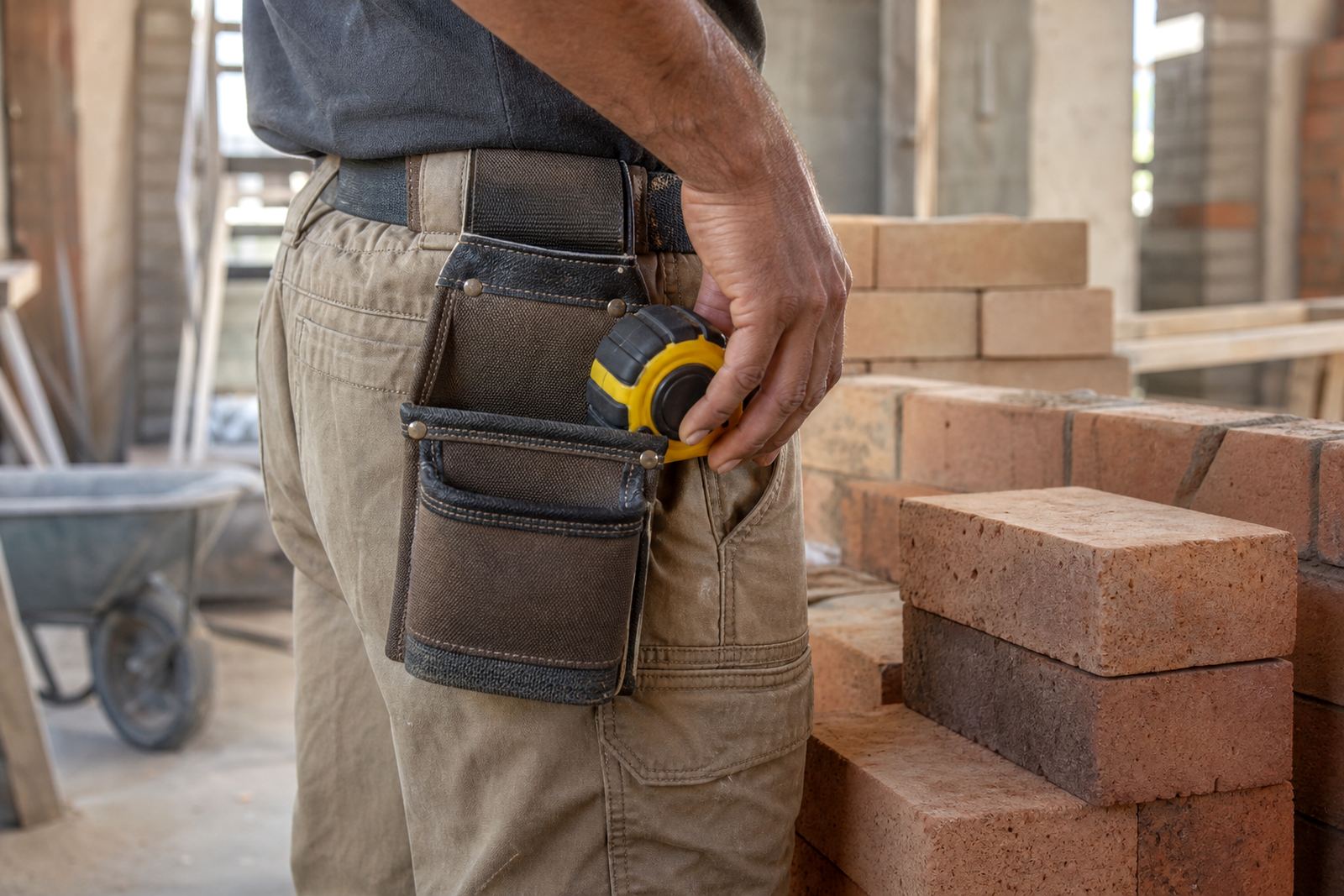
What the Tape Holder Pouch does on site
This pouch is made for holding a tape measure where you can reach it quickly, rather than leaving it in a pocket or on a ledge. It keeps the tape upright and ready for repeat checks on framing, cable runs, fitment work, and mark outs. For crews in Alberton, Johannesburg, Pretoria, Durban, Cape Town, and Polokwane, that matters when you are moving around a site and do not want tools dropping into dust, wet concrete, or rubble.
The pouch is lightweight, so it does not add much bulk at the hip. It helps keep the tape measure from swinging loose while climbing, kneeling, or stepping through scaffolding. On busy jobs, that small bit of control saves time and cuts down on wear to the tape case, clip, and blade lock.
It also suits teams that work in mixed conditions. You get the same benefit on residential builds, shopfitting, electrical maintenance, and small contractor jobs where access is tight and pace is steady.
Size options and carrying setup
We supply tape holder pouches in practical sizes suited to common tape measure cases and belt widths used by builders and electricians. A good fit keeps the tape steady and stops it bouncing around when you walk. If the pouch is too loose, the tape can twist. If it is too tight, removal becomes awkward and slows you down.
- Standard fit for most compact and mid-size tape measures
- Compatible with utility waist belts used for trade work
- Low-profile shape for wearing with other pouches
- Open top or secured hold styles, depending on setup
- Right-side or left-side wear, based on your working hand
If you are building a full kit, the tape holder can sit alongside nail bags, tool pouches, and electrician utility pouches. That lets you keep measuring tools separate from fasteners and hand tools, which makes the belt easier to use on site. For teams ordering for multiple workers, size matching is worth checking up front so everyone gets a belt that sits right over workwear and rain gear.
Best use cases for builders and electricians
This pouch works well wherever a tape measure is used often through the day. Builders use it for setting out walls, checking openings, marking timber, and confirming dimensions before cuts. Electricians use it when running conduit, setting box positions, checking cable routes, and measuring panel clearances. It also suits maintenance teams who need quick measurements while moving between rooms or outdoor areas.
In coastal areas like Durban or Cape Town, light but firm carry matters because humidity can affect leather, stitching, and metal fittings if gear is left damp in the van. On inland sites around Gauteng, dust and fine grit can work into moving parts, so a pouch that keeps the tape off the ground helps it last longer.
- New build sites and renovation work
- Electrical installation and fault finding
- Fitment teams and maintenance crews
- Contractors moving between multiple small jobs
- Stock handling where quick measures are needed often
Installation and power or gas needs
The Tape Holder Pouch does not need power or gas. There is no charging, no battery pack, and no fuel requirement. It is fitted to a belt or waist setup with your usual trade gear, so the main job is choosing the right belt width and the correct side for your workflow.
Fitment is simple. Slide it onto a compatible utility belt or attach it to the belt system already in use. Once fitted, check that it sits level and does not interfere with kneepads, tool pouches, or fall protection harness straps. If the tape holder is part of a project rollout supply, we can help match it with other pouches so the full set hangs properly and the weight stays balanced. That is especially useful on long shifts where poor belt layout can become a real nuisance.
For teams working under site rules, the pouch is easy to include in standard PPE and tool control checks because it carries no electrical or gas risk.
Care, cleaning, and servicing
Good care keeps the pouch working well. Brush off dust, cement powder, and metal filings at the end of the shift. If it gets wet, dry it fully before storage so stitching and backing materials do not stay damp. On busy contractor sites, that small routine helps reduce early wear and keeps the pouch looking tidy enough for repeat issue to staff.
Check the seams, rivets, belt loops, and edge binding regularly. If you notice fraying, loose fasteners, or a pouch that has stretched out, replace it before it starts affecting your pace. A damaged pouch can let a tape measure slip or rattle loose when you move quickly. For mixed crews and larger orders, stock replenishment plans help keep replacement items on hand so no one is left short.
- Wipe after dusty or muddy work
- Do not leave soaked in a toolbox overnight
- Inspect stitching and attachment points weekly
- Keep away from hot surfaces and welding splash
- Store flat or hung up when not in use
What to check before you place an order
Before ordering, check the tape measure size, the belt width, and whether the pouch needs to suit left-handed or right-handed use. It is also worth confirming how many pouches are needed per worker, because some teams want one holder per person while others prefer spares for van stock. If you are ordering for a contractor team, mixed trade kit, or site rollout, layout planning helps avoid awkward combinations that slow people down.
Make sure the pouch matches the rest of the belt setup. A tape holder should not crowd a nail bag or tool pouch. The goal is simple access, not a belt that feels overfilled. If the work includes frequent ladder use, check that the holder keeps the tape secure enough for movement but still quick to pull free. That balance is what makes it useful on real job sites.
For orders coming from Johannesburg, Pretoria, Midrand, Centurion, or further afield, delivery planning can be arranged as part of a larger supply run. If your project needs repeat replenishment, it helps to note the quantity, preferred fit, and whether the same setup will be used across all sites.
Why trade teams choose Waistbags Pro
Waistbags Pro is based in Alberton, Gauteng and has supported builders and electricians across South Africa since 2009. Our focus is on practical belt gear that works for daily site use, not just light showroom handling. Sibusiso Mthembu leads the business with a team that handles stock, orders, and custom requirements for trade customers.
Whether you need one Tape Holder Pouch or a bulk order for a contractor team, we help with pouch layout planning, belt size matching, starter kit builds, and project rollout supply. Clients reach us through the enquiry form on our contact page, and our team can guide you on the right setup for the work you do. It is a simple product, but on a long day it makes a proper difference.
Key facts
| Product type | Tape measure holder pouch |
|---|---|
| Use | Builders, electricians, contractors and maintenance teams |
| Carry style | Belt-mounted utility pouch |
| Power or gas needs | None |
| Common fit | Standard trade waist belts and utility belts |
| Care | Brush clean, dry fully, inspect stitching and loops regularly |