Built for tiling work, not general storage
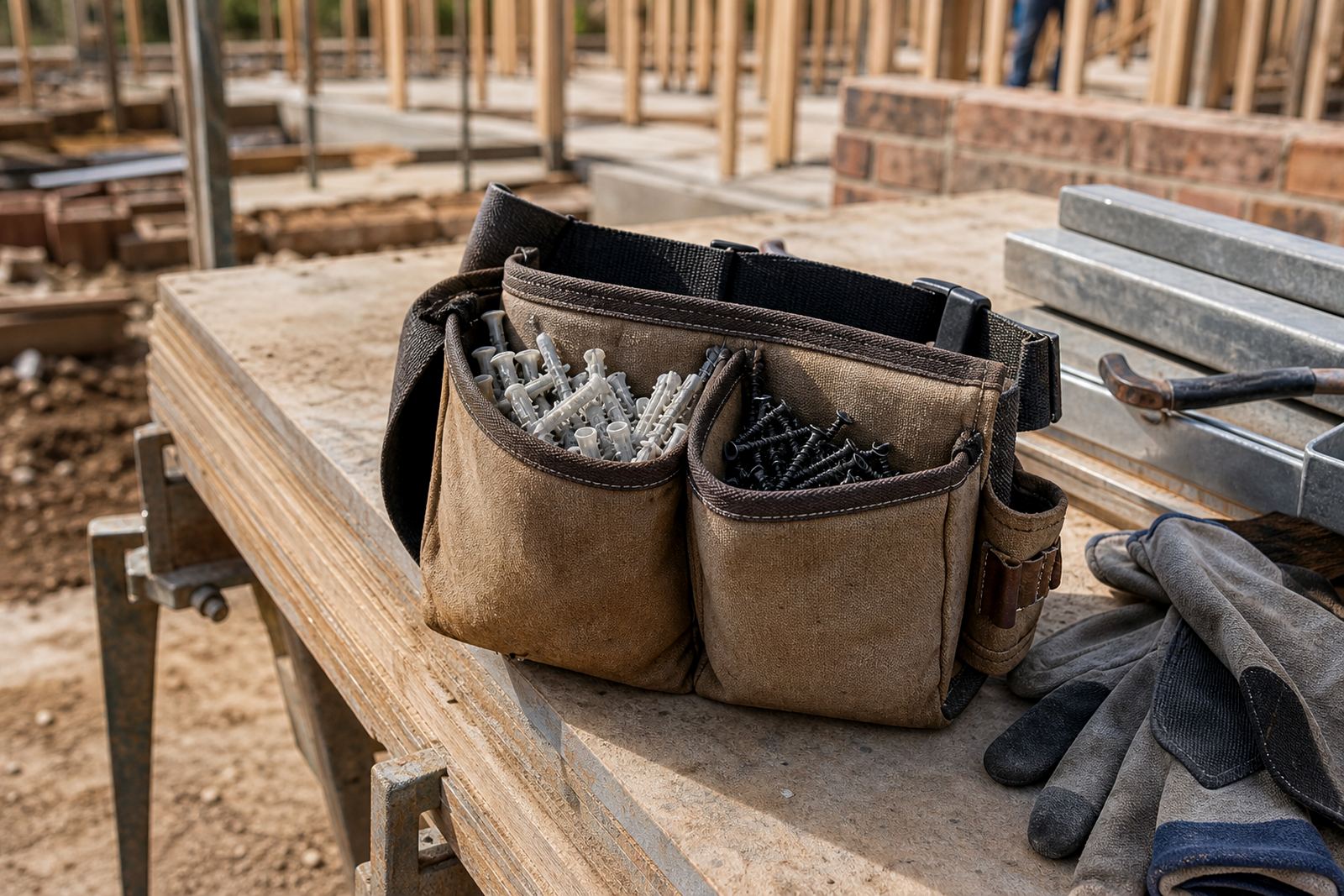
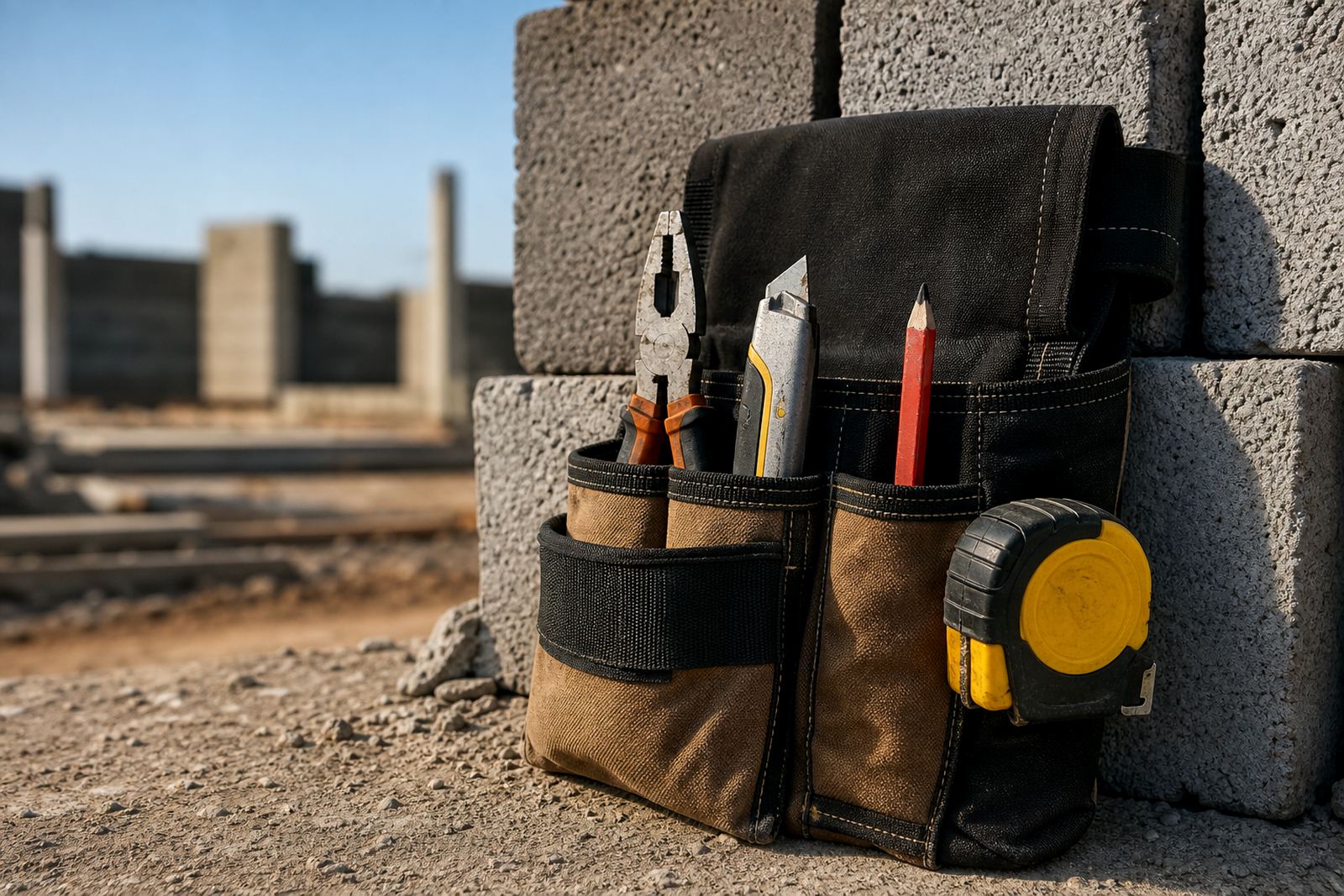
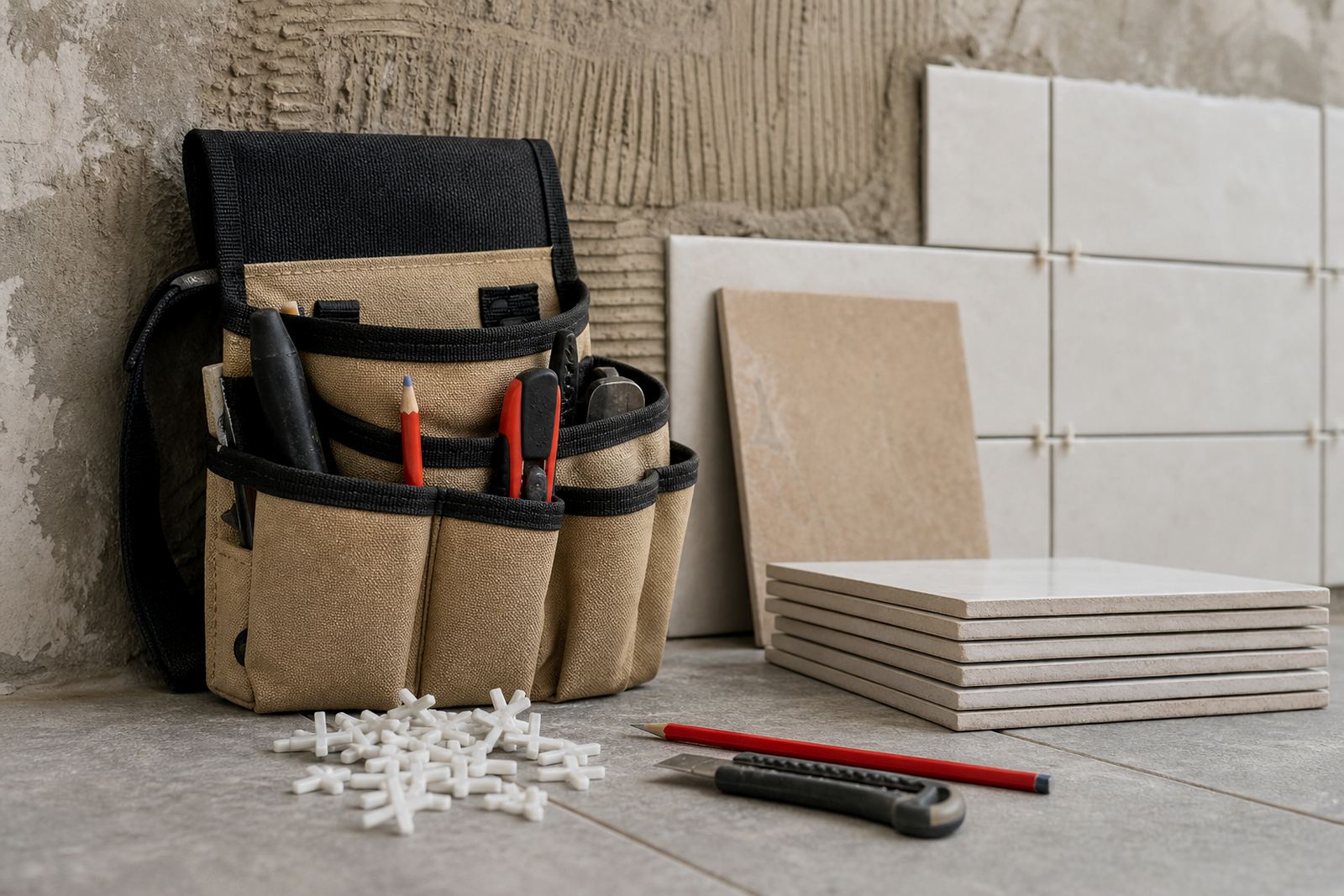
The tiling utility pouch is a compact work pouch made to carry the small items used every day on tile jobs. It gives you dedicated space for tile spacers, pencils, marker pens, a folding rule, utility knife, spare blades, grout rake, clips, wedge items and other light accessories that tend to get lost in a larger tool bag. On site, that means less time searching in a truck tray or bucket and more time setting out and fixing accurately.
This pouch suits builders, tilers, labour teams and finishing crews who need a lighter carry option than a full tool belt. It works well on new builds, bathroom upgrades, kitchen installs and shopfitting jobs where movement is frequent and the work area changes through the day. In Gauteng, coastal humidity in Durban, or dusty sites around Polokwane, the same need stays the same: tools must stay organised and dry enough to use immediately.
It is designed for everyday trade use, with a shape that sits comfortably on a utility belt and keeps smaller items upright instead of rolling around. The pouch opening is wide enough for quick access, but shaped to hold the load snugly so small parts dont spill when you bend or climb ladders.
Pocket layout and carry options
Different tiling teams prefer different carry setups, so the pouch is usually selected by pocket layout rather than by looks alone. Some installers want a deeper main pocket for spacers and setting tools, while others prefer several smaller slots for markers, knives and layout pieces. Choosing the right layout helps with balance and stops the pouch from pulling to one side when it is loaded.
- Single main compartment for spacers, clips and loose accessories
- Front slots for pencils, markers and small layout tools
- Reinforced knife pocket for safe blade storage
- Loop or clip points for attaching to a utility belt
- Optional padded or lined sections on selected versions
Some tradesmen prefer a left side carry, others want a right side setup depending on hand use and where they keep the blade. If a team is ordering for several workers, it helps to match the pouch format to the way each person works on the floor, especially on fast-moving project sites where every second counts.
Where it suits on site
This pouch suits tiling and finishing work in homes, apartments, offices, retail spaces and light commercial projects. It is especially useful where there is constant movement between preparation, laying, cutting and finishing. A tiler working in a bathroom, for example, can keep spacers, a knife, pencil and small measuring tools on the body instead of going back to the van or store room every few minutes.
It also works well for builders who handle tile prep and minor finishing tasks as part of a broader scope. On municipal or contractor sites, keeping small tools on your person can help with access control and reduce tool mix-ups when several teams are on one floor. For jobs in damp coastal areas, a pouch with wipe-clean material is easier to keep in good order, while inland dusty conditions call for simple cleaning after each shift.
- Bathroom tiling and wet area fit-outs
- Kitchen backsplashes and feature walls
- Commercial refits and shopfitting work
- Patch repair, maintenance and snagging
- New builds where setting-out is done in stages
Sizes, build and material details
Our tiling utility pouch range is selected to suit practical trade use rather than bulk storage. Typical sizes are compact to medium, with enough room for daily essentials without becoming heavy or awkward at the hip. A smaller pouch is useful for light trim and finishing work, while a slightly larger option is better for teams that carry extra spacers, marking tools and clips through the day.
Common build details include reinforced stitching at stress points, belt loops that hold steady, and material chosen for abrasion resistance. Many users prefer a rigid or semi-rigid shape because it makes one-handed access easier when wearing gloves. In humid coastal conditions and on sites where adhesive dust builds up, a pouch that can be wiped clean is easier to manage than one with too many soft folds and hidden pockets.
When checking sizes, think about what you carry every day, not what you might carry once in a while. A pouch that is too large becomes cluttered and can catch on scaffold, ladders or door frames. A pouch that is too small can force sharp items together and make it harder to work neatly.
Installation, power and gas requirements
This is a non-powered product, so there are no electrical, gas or battery requirements for the pouch itself. It is worn on a utility belt or clipped to a compatible belt system and used alongside hand tools. For tiled areas where power tools are on the job, the pouch should be kept clear of cords, grinders and wet cutting equipment to avoid damage and to keep blades and markers easy to reach.
If you are setting up a team order, check whether workers use a standard belt width, or whether a wider utility belt is already in use for other site gear. That affects how the pouch sits and how comfortably it carries through a full shift. On ladder work or when kneeling for long periods, a lower-profile pouch can be the better choice because it stays out of the way a bit more.
- No power supply needed
- No gas connection needed
- Use with standard trade belts or compatible utility belts
- Best paired with hand tools and small setting accessories
Care, servicing and what to check before ordering
Simple care keeps the pouch usable for longer. Tap out dust at the end of the day, wipe adhesive residue before it hardens, and check stitching and belt loops for wear. If a knife pocket starts to lose shape or a seam opens, replace it before it fails on site. That small habit can save time and prevent lost blades or spacers. It is also worth keeping the pouch dry after rain or after washing down a site, especially in coastal areas where moisture hangs around longer.
Before ordering, check the type of work the pouch will support, the size of the belt it must fit, and whether the user wants a left or right side setup. Also confirm if the order is for one person or for a mixed team, because different workers may prefer different layouts. For bulk team orders or project rollout supply, our crew can help with pouch layout planning, belt size matching and starter kit builds through the enquiry form on our contact page.
- Check belt width and waist size before placing the order
- Confirm the pocket layout needed for spacers, markers and knives
- Decide if the pouch is for individual use or team rollout
- Look at stitching, pocket depth and carry comfort for full-day wear
Key facts
| Product type | Tiling utility pouch for builders and electricians who do finishing and setting-out work |
|---|---|
| Typical carry items | Tile spacers, markers, knives, spare blades, clips, wedge pieces and small measuring tools |
| Size range | Compact and medium utility pouch options |
| Attachment | Compatible with standard utility belts and trade belt setups |
| Material | Heavy-duty trade material with reinforced stitching and wipe-clean finish |
| Use case | Bathroom tiling, kitchen installs, repairs, fit-outs and project work |