What Goes Into a Builders Kit
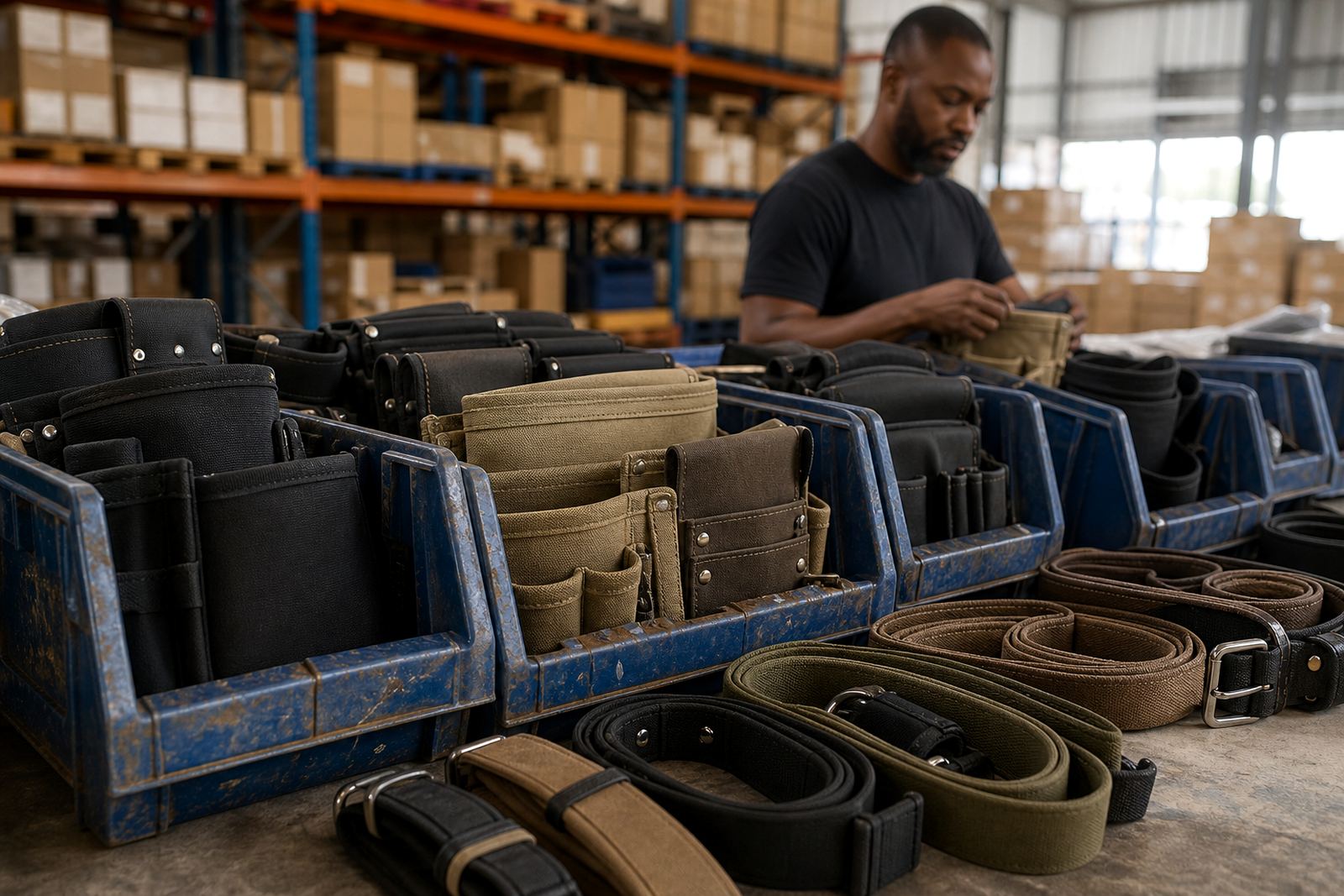
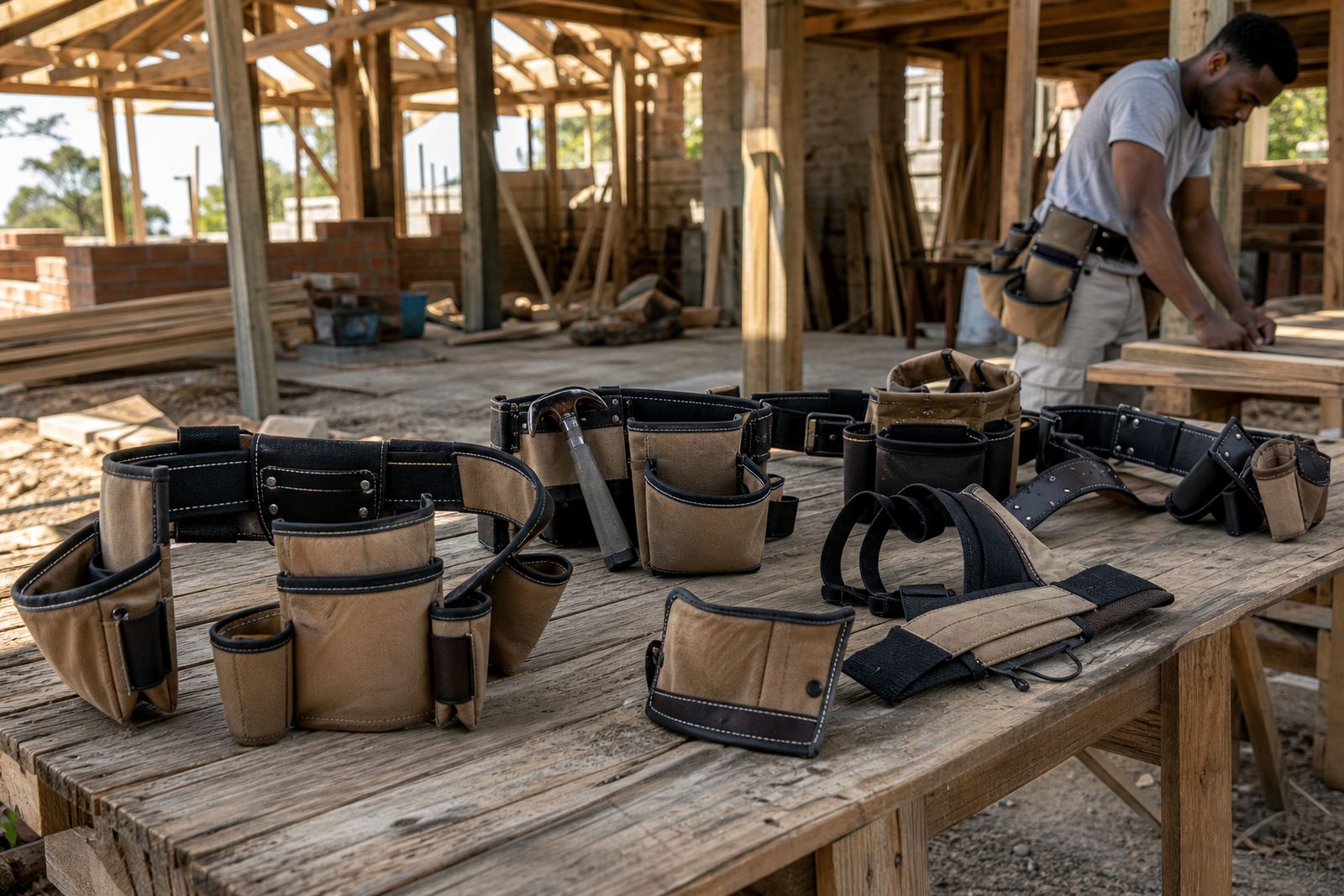
A builders kit is set up around the tools used most often on framing, fixing and general site work. We build around nail bags, hammer loops, tape pockets, pencil slots and small holders for screws, driver bits and a folding rule. The aim is simple, quick access without a lot of reaching or extra bulk at the waist.
Typical kit options suit individual artisans, small teams and larger contractor crews. A single kit can be built for left or right hand draw, and we can balance the layout so the weight sits better on the hips. For hot work days in Gauteng or long outdoor shifts near the coast, that balance makes a real difference.
- Deep main pouch for nails, fixings and mixed fasteners
- Hammer loop positioned for safe swing and easy return
- Tape measure pocket with secure top edge
- Pencil and marker slot for fast access
- Optional secondary pouch for small parts or driver bits
Fit, Size and Load Carrying
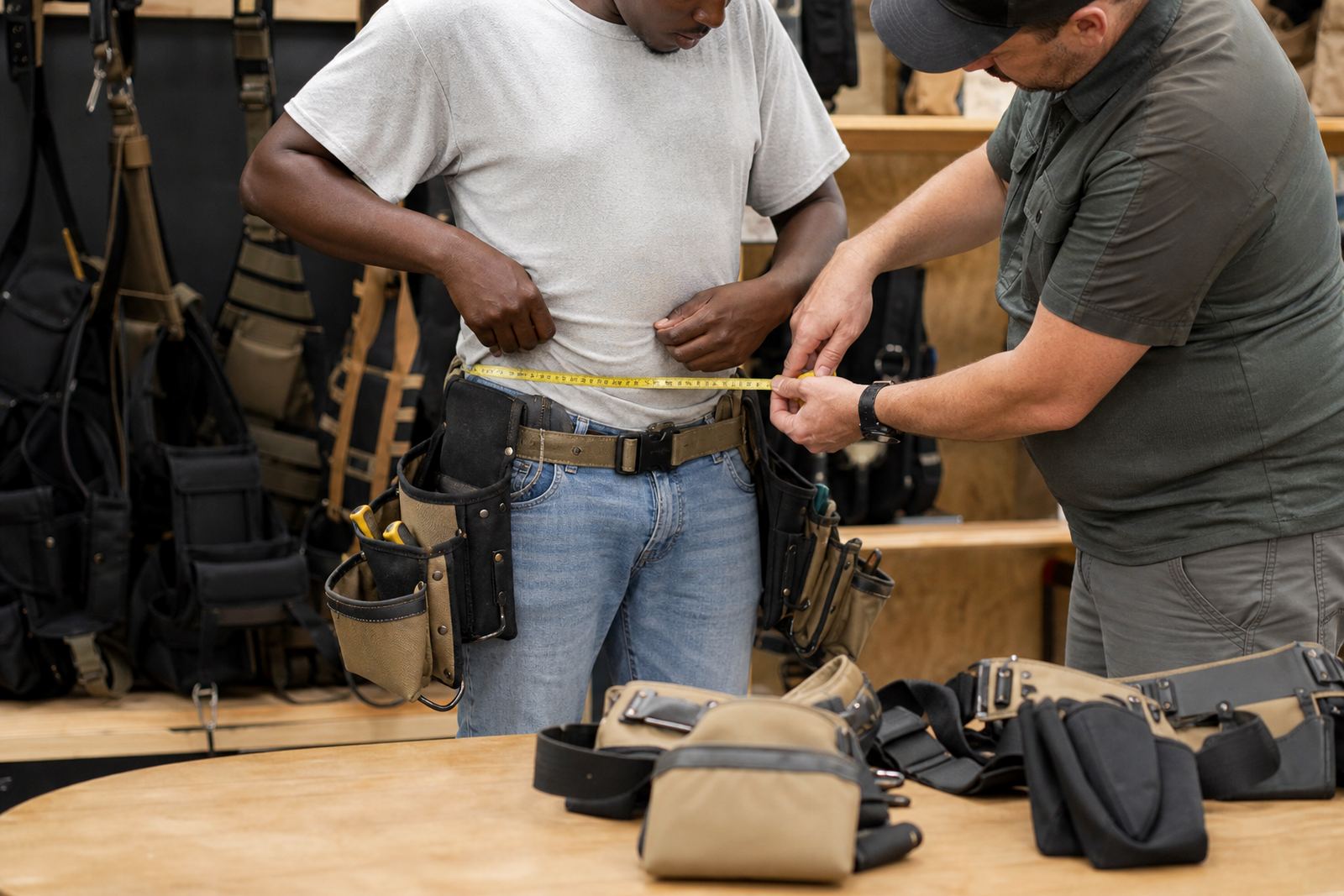
The correct belt size matters as much as the pouch layout. We match the waist measurement to the belt range so the kit stays stable when climbing ladders, bending for blockwork or moving across uneven ground. A belt that rides up or twists during the day slows the job and can wear out faster.
Our team checks the expected load before a kit is confirmed. A light finishing setup is different from a first-fix builder's kit carrying nails, screws, tape and a hammer all day. We also look at the kind of trousers worn on site, because bulky waistbands and tool belts do not always sit well together.
- Belt sizes matched to measured waist range
- Padding options for longer shifts and heavier loads
- Left handed or right handed pouch placement
- Compact layouts for smaller frames or tighter access areas
- Reinforced belt loops for regular daily use
How We Configure the Kit
Every order starts with a quick check of the trade, the site type and the tools used each day. Builders working on housing developments, boundary walls, shopfitting or general maintenance do not always need the same pouch depth or number of compartments. We use that detail to set out the kit before it leaves Alberton.
The process is direct. We confirm the tool list, suggest the best pouch mix, check sizing, then prepare the order for collection or delivery. If a contractor is supplying several crews, we can keep the kit layout consistent across the team so stock checks are easier on site. That helps when there are multiple sites on the go and one foreman needs to know what each person is carrying.
- Send the job details and tool list through the enquiry form
- We suggest a pouch layout and belt size match
- Confirm quantities, colours and any team split by role
- We prepare the kits and arrange dispatch or collection
Turnaround for Site Orders
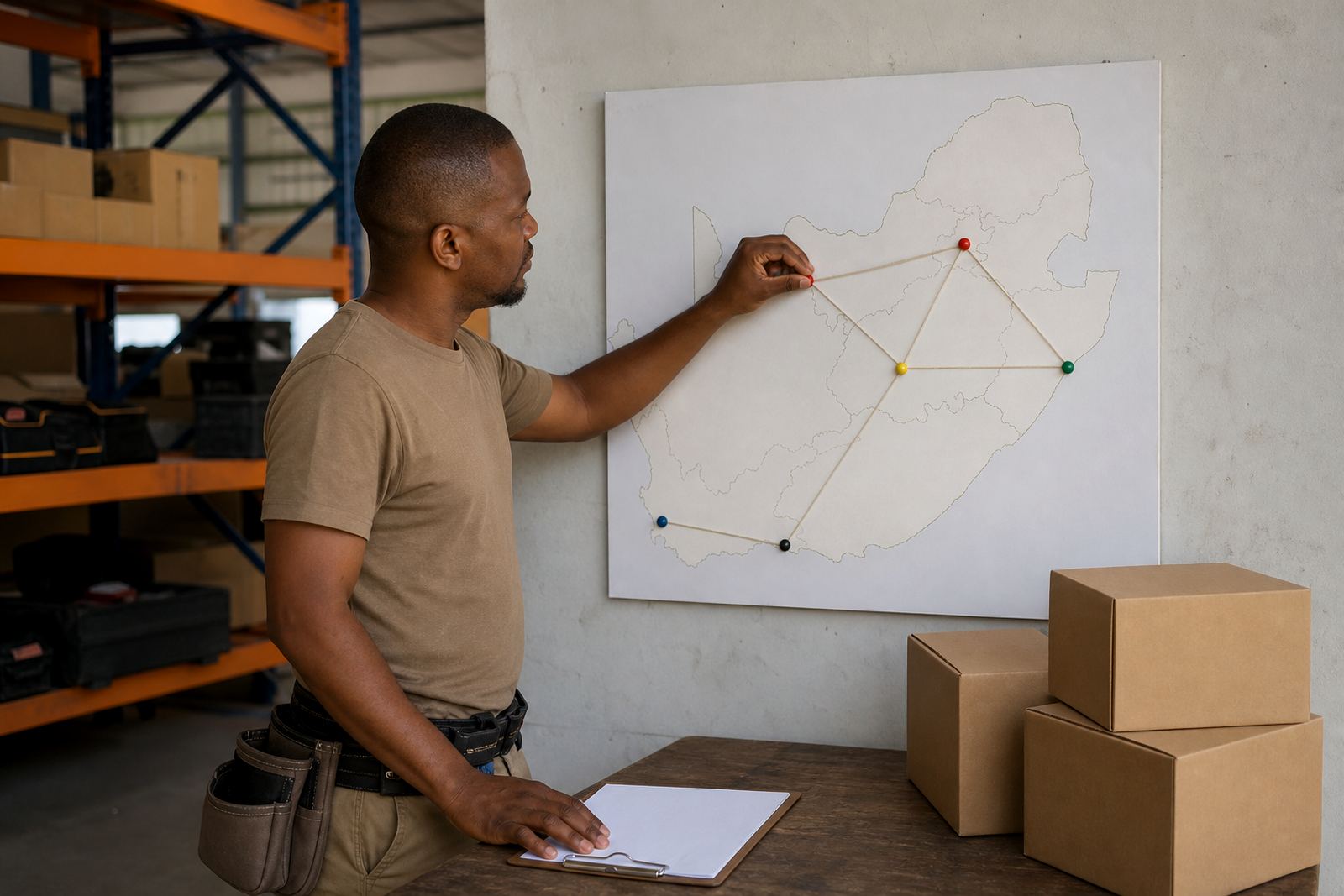
Turnaround depends on quantity and the level of matching required. Standard builders kit configurations are usually processed quickly, while larger contractor rollouts or mixed trade orders may need a bit more time for sorting and packing. We work with builders in Johannesburg, Pretoria, Durban, Cape Town and Polokwane, so delivery planning is set around local routes and site receiving hours.
Where possible, we group orders to reduce repeat deliveries and make reordering simpler. That is useful for firms managing live projects, because a missing belt or pouch can hold up a whole crew. In busy periods, especially around month end or before a new site starts, it pays to place the order early so there is time for checks and packing.
- Single kits for one-off replacements or new starters
- Bulk team sets for contractors and foremen
- Staged dispatch for phased project rollouts
- Delivery planning for municipal or site access windows
Pricing Approach and Value
Pricing is based on the pouch combination, belt size, quantity and any special layout requests. A standard builders kit costs less than a heavily customised setup, while bulk orders usually improve the Rand per unit. We keep the pricing approach practical so contractors can plan spend before a project starts.
For larger orders, we can quote across several kit types in one basket. That helps when a team needs mixed support, for example a builder's kit, a lighter finishing kit and a few spare belt sections for backup. The point is to keep the spend clear and avoid buying parts that do not suit the job.
- Plain kit pricing for standard configurations
- Bulk rates for contractor and team orders
- Mixed pricing where different pouch sets are needed
- Replacement pricing for worn belts or single pouches
Care, Checks and Maintenance Intervals
Builders kits hold up longer when they are checked regularly. On active sites, we suggest a quick weekly inspection for stitching, rivets, belt holes and hammer loop wear. If the kit is used in dusty conditions or in coastal humidity, wiping it down and letting it dry properly helps it last longer and keeps the pockets from stiffening up.
For teams working through heavy shifts, a fuller maintenance review every three to six months is sensible. That is the time to check for frayed edges, loosened tool slots and belt stretch. A kit that starts to sag or shift on the hip should be adjusted before it becomes a nuisance. Small fixes now avoid replacements later, and the crew keeps working without stop-start delays.
- Weekly quick check for wear points and loose stitching
- Monthly fit review for belt tension and pouch placement
- Three to six month inspection for heavy use teams
- Dry storage away from standing water and wet cement splash
Key facts
| Pouch focus | Nail bags, hammer loops, tape access and small parts storage |
|---|---|
| Belt fit range | Matched to measured waist size for each user |
| Load use | Light finishing through to heavier all-day builders carry |
| Material profile | Hard-wearing construction suited to daily site use |
| Service area | Alberton, Johannesburg, Pretoria, Durban, Cape Town, Polokwane, Midrand and Centurion |
| Order types | Single kits, bulk team orders, mixed trade kits and project rollouts |