
What a starter kit build includes
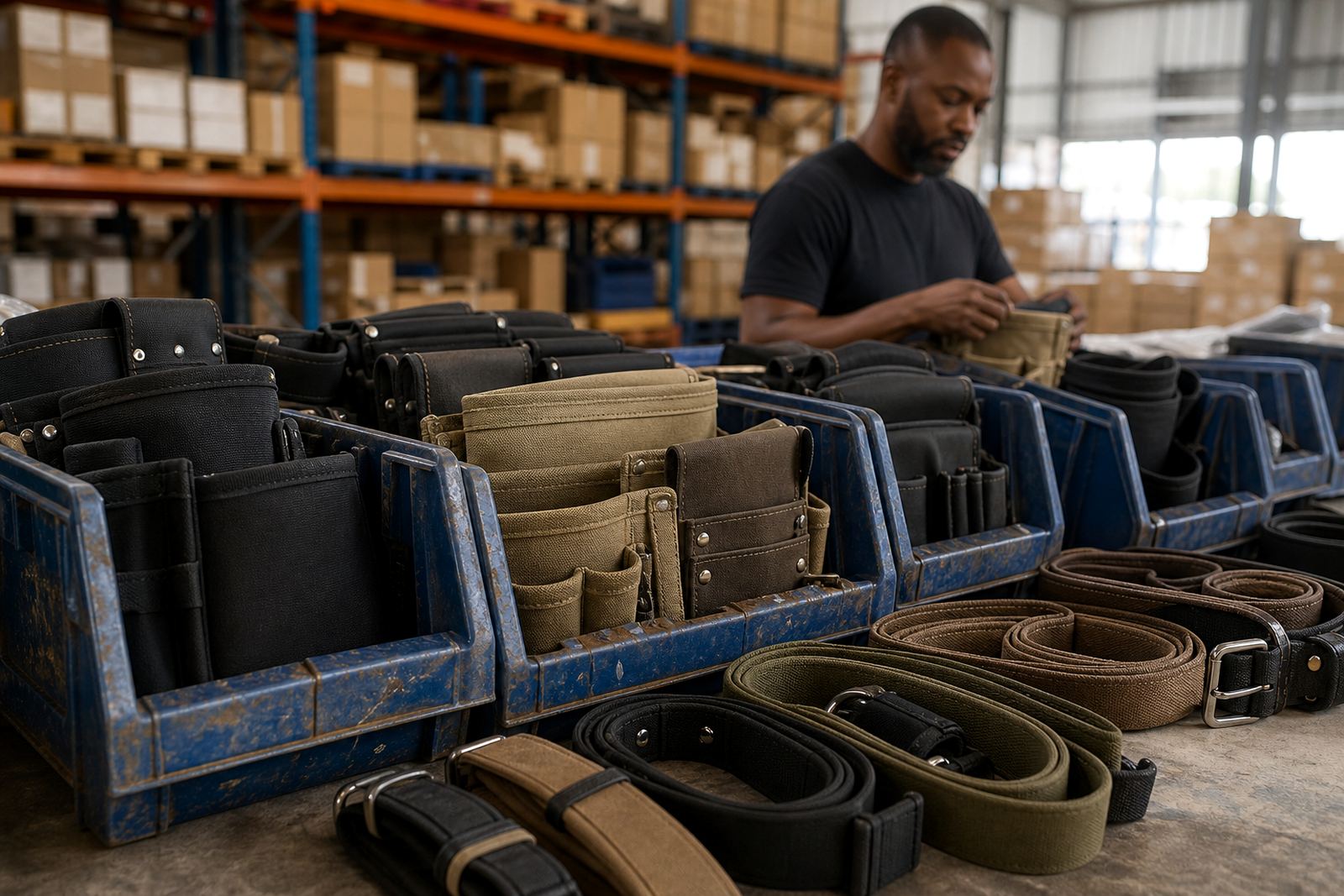
A starter kit build is a practical bundle made up for the job ahead, not a random mix of pouches. We set up the waist belt, main pouch, secondary pouch and the small holders needed for nails, screws, tape, pencils and hand tools. For electrical work, that can include slimmer pouches with more slot separation. For building teams, we usually allow more space for fasteners, pliers and a tape measure.
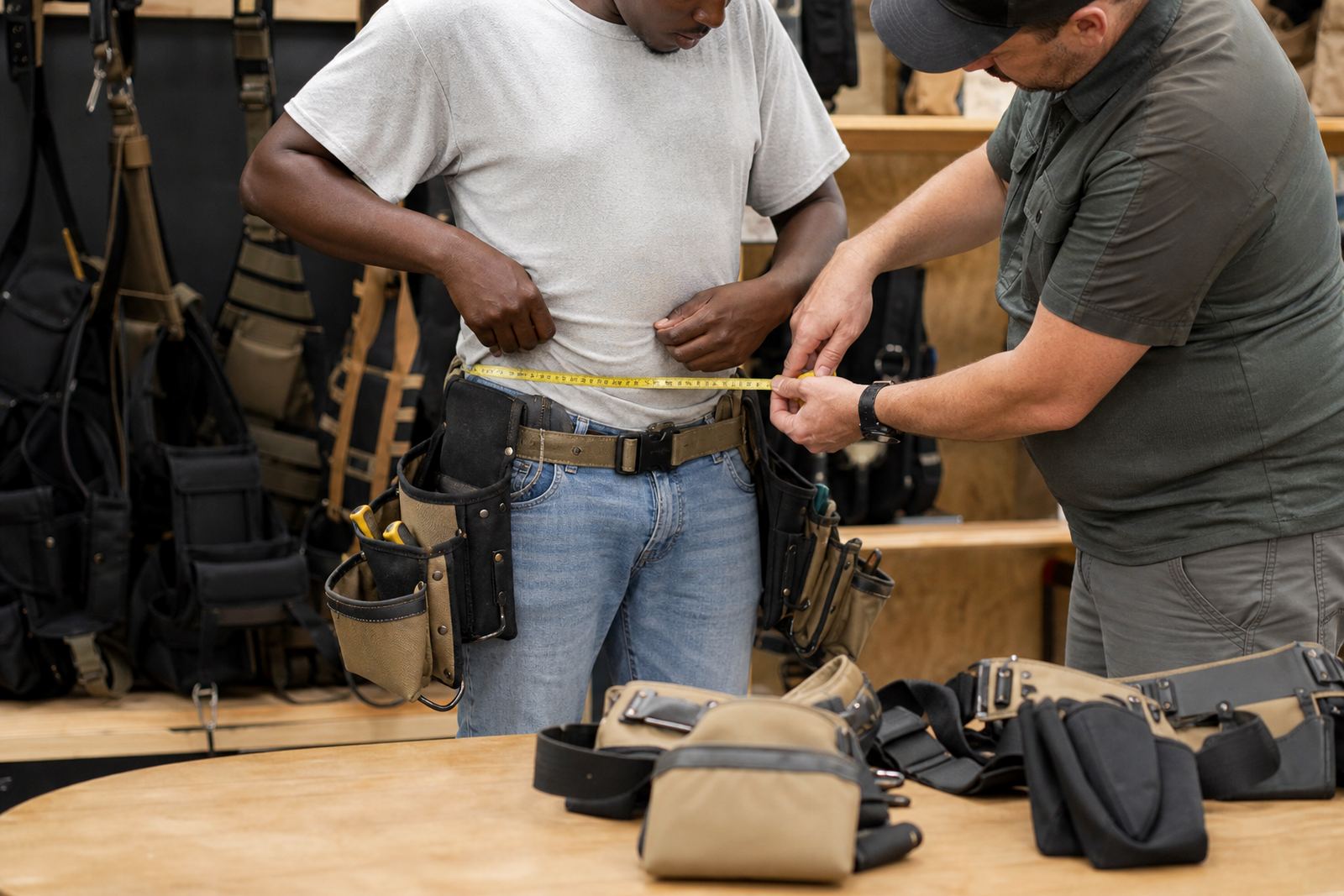
Most starter kits are built for everyday site use in Gauteng heat, coastal humidity in Durban and the dust that comes with open sites in places like Polokwane. We also check that the belt sits comfortably over workwear and can be adjusted for different body sizes, which matters when kits are issued to a whole crew.
- Waist belt size matched from 30 to 46 inch waist range, with extension options
- Tool pouch layout based on trade and task list
- Nail bag or utility pocket added where needed
- Space for tape, pencil, tester, cutters, pliers and fixings
- Durable stitching and reinforced stress points for daily site use
Starter combinations for apprentices and new hires
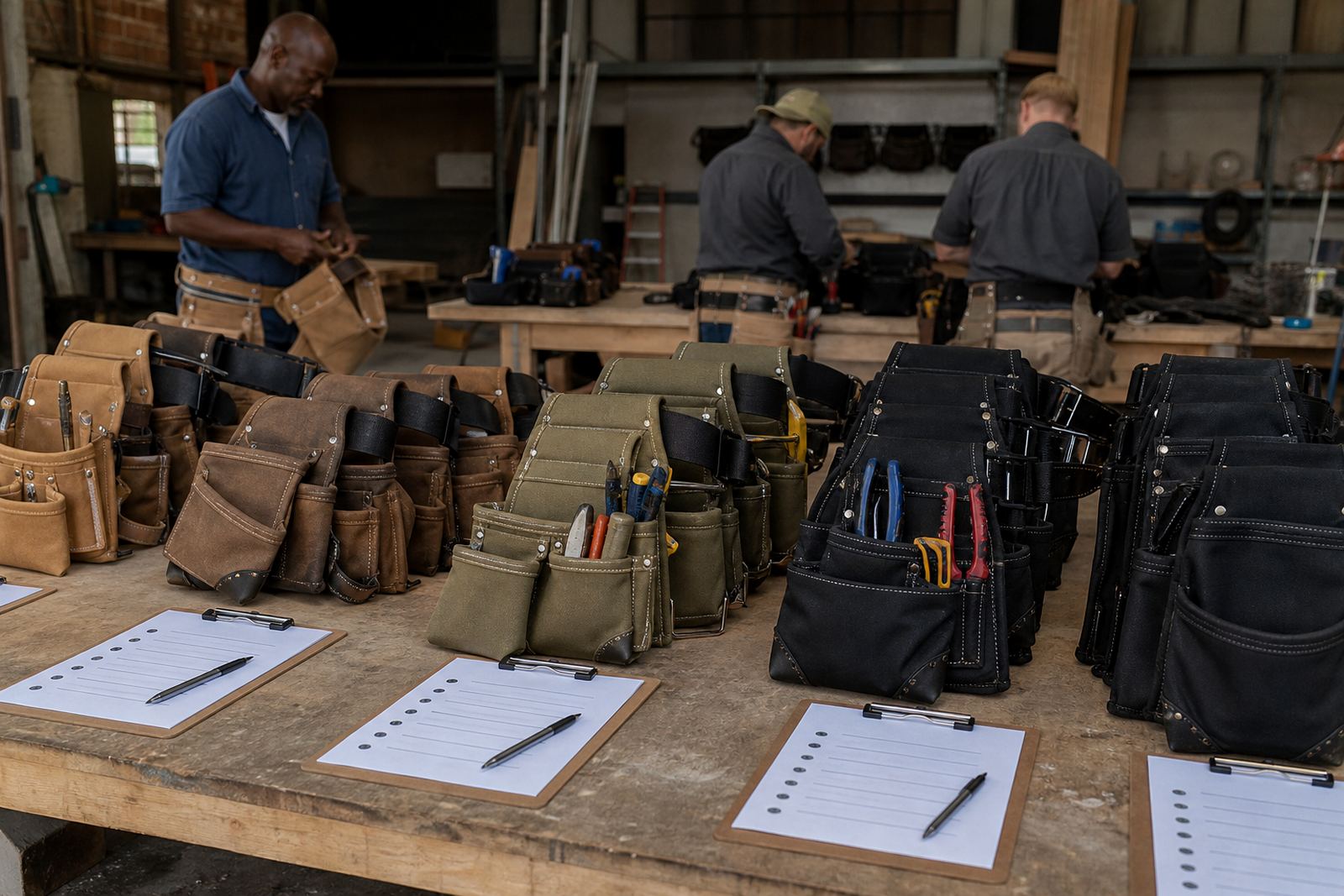
We usually recommend three clear starting setups. A light apprentice set is for basic carry items and learning the trade without overloading the belt. A trade-ready set gives a working installer enough room for regular tools and fasteners. A site team set is for supervisors or crews who need a wider mix and quicker access on busy jobs. It keeps the load balanced so the wearer is not constantly shifting the belt around.
For electrical teams, the pouch layout can be kept tighter and cleaner for insulated hand tools, testers and small consumables. For builders, the build is often broader, with a deeper nail bag and extra loops for marking gear. If a client is rolling out kits across multiple branches, we can keep the kit structure consistent so every worker is carrying roughly the same setup, wich helps with stock control.
- Apprentice set for basic carry and lower first issue cost
- Trade-ready set for daily tool access and mixed fasteners
- Supervisor or lead-hand set for broader site carry
- Electrical and building versions available
How we put the kit together
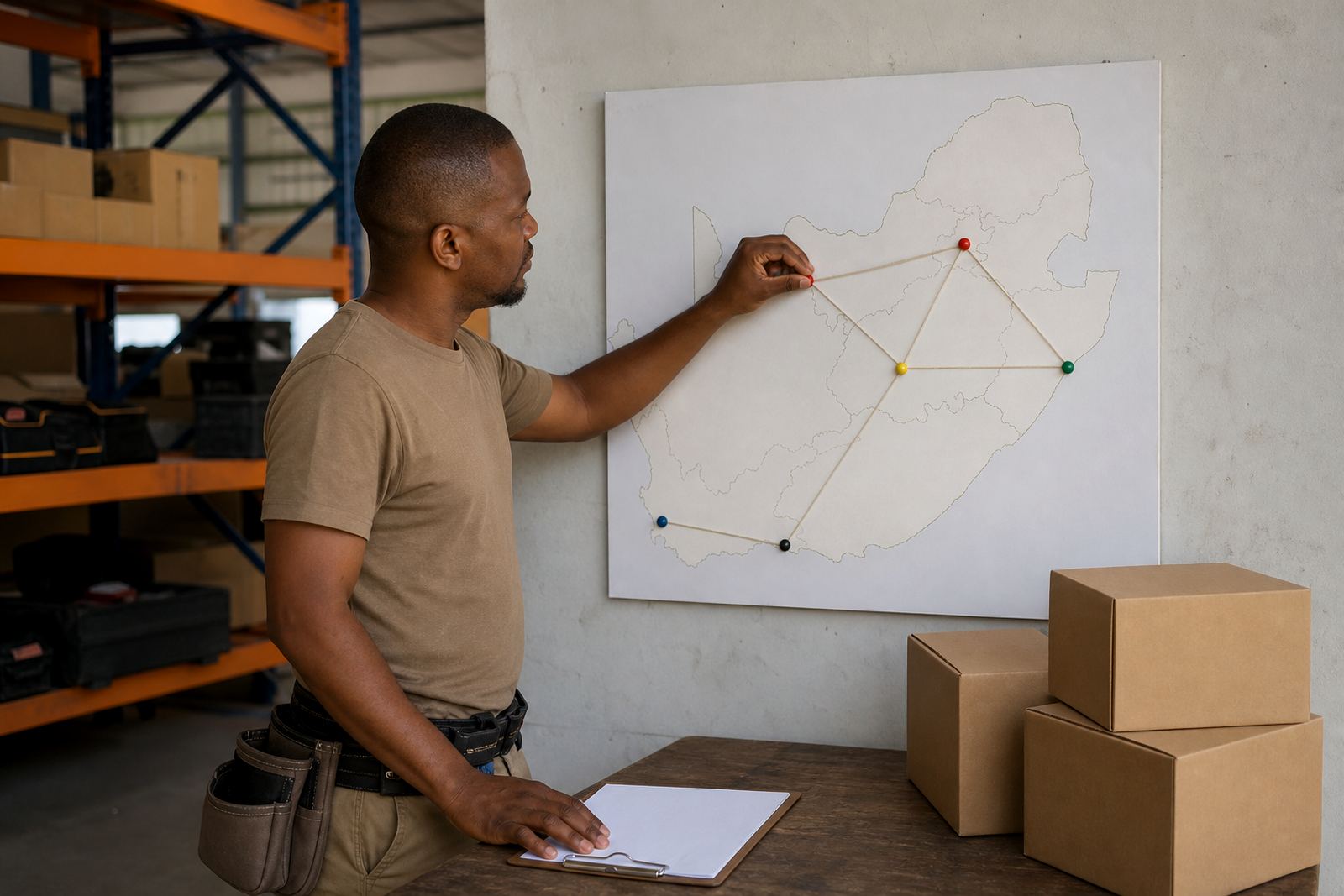
The process starts with the trade, the number of workers and the kind of sites involved. We then look at the tools already issued, what the team carries most often, and whether the order is for one branch or several areas such as Johannesburg, Pretoria, Durban, Cape Town or Midrand. From there, we recommend a layout and size match before the kit is packed and checked.
If the order is for a contractor with different crews, we can separate the kits by role. That means one pack for apprentices, another for electricians, and another for builders. This saves time on issue day and cuts down on returns because the right item is going to the right person first time.
- Step 1: confirm trade, team size and site type
- Step 2: choose belt size and pouch layout
- Step 3: add trade-specific holders and accessories
- Step 4: pack, check and prepare for delivery or collection
Turnaround for small and bulk starter orders
Turnaround depends on quantity and how specific the kit needs to be. Smaller starter builds for a few workers are usually turned around quickly, while mixed trade orders and branch rollouts need a bit more planning. If a client needs regular monthly issue packs, we can set those up as replenishment orders so the same kit can be repeated without starting from scratch each time.
For planned projects, it is best to allow enough time for sizing and layout selection, especially when the team is spread across sites. In most cases, we can move faster when the order uses standard layouts and common sizes. Larger team rollouts may need staggered dispatch so the first crews receive stock while the rest are packed. That works well for contractors working under load-shedding windows and tight site deadlines.
- Small starter orders: fast turnaround once sizes are confirmed
- Bulk team builds: allow extra time for layout checks and packing
- Repeat orders: quicker once the kit spec is on file
- Staggered delivery available for phased site rollout
Pricing based on layout, size and quantity
Pricing is guided by the pouch type, the number of items in the kit, the belt size and the order volume. A simple apprentice set costs less than a full mixed trade kit, and bulk orders improve the unit rate. We keep pricing practical and upfront, with no unnecessary add-ons. If a client needs the same starter build for several branches, we price the core kit once and then work from the agreed format for the rest of the rollout.
Where a site has a strict budget, we can trim the setup to the essentials and keep the most used items in the main pouch. Where the team needs more carry capacity, we add extra holders instead of moving everyone to a larger belt straight away. This keeps costs controlled and the kit easier to wear all day.
- Pricing changes with pouch count and material spec
- Bulk quantity improves the per-kit rate
- Simple kits for apprentice issue and budget control
- Expanded kits for trades that carry more tools daily
Care checks and replacement intervals
Starter kits last longer when they are checked at set intervals instead of waiting for something to fail. For daily site use, we suggest a quick monthly check on stitching, belt holes, rivets and pouch edges. On dusty or coastal jobs, a wipe-down and inspection every two weeks is better. If the team works in harsh conditions or in and out of vehicles all day, certain parts may need replacing sooner than the main belt.
A good maintenance routine helps the kit stay comfortable and safe to wear. If the belt has stretched, the pouch is leaning or the stitching is opening at a stress point, the item should be swapped before it becomes a problem on site. We can also help set up stock replenishment so the replacement cycle does not interrupt work.
- Monthly check for normal site use
- Two-week check for dusty or coastal conditions
- Replace worn belt holes, stitching or rivets early
- Keep one spare set for active teams where possible
Key facts
| Kit sizes | Starter, trade-ready and site team combinations |
|---|---|
| Waist range | 30 to 46 inch with extension options |
| Trade options | Builders, electricians and mixed contractor teams |
| Pouch setup | Single, double or mixed pouch layouts |
| Typical use | Apprentice issue, new hire issue and team rollout |
| Service area | Alberton, Johannesburg, Pretoria, Durban, Cape Town, Polokwane and nationwide |