
What mixed trade kits cover on site
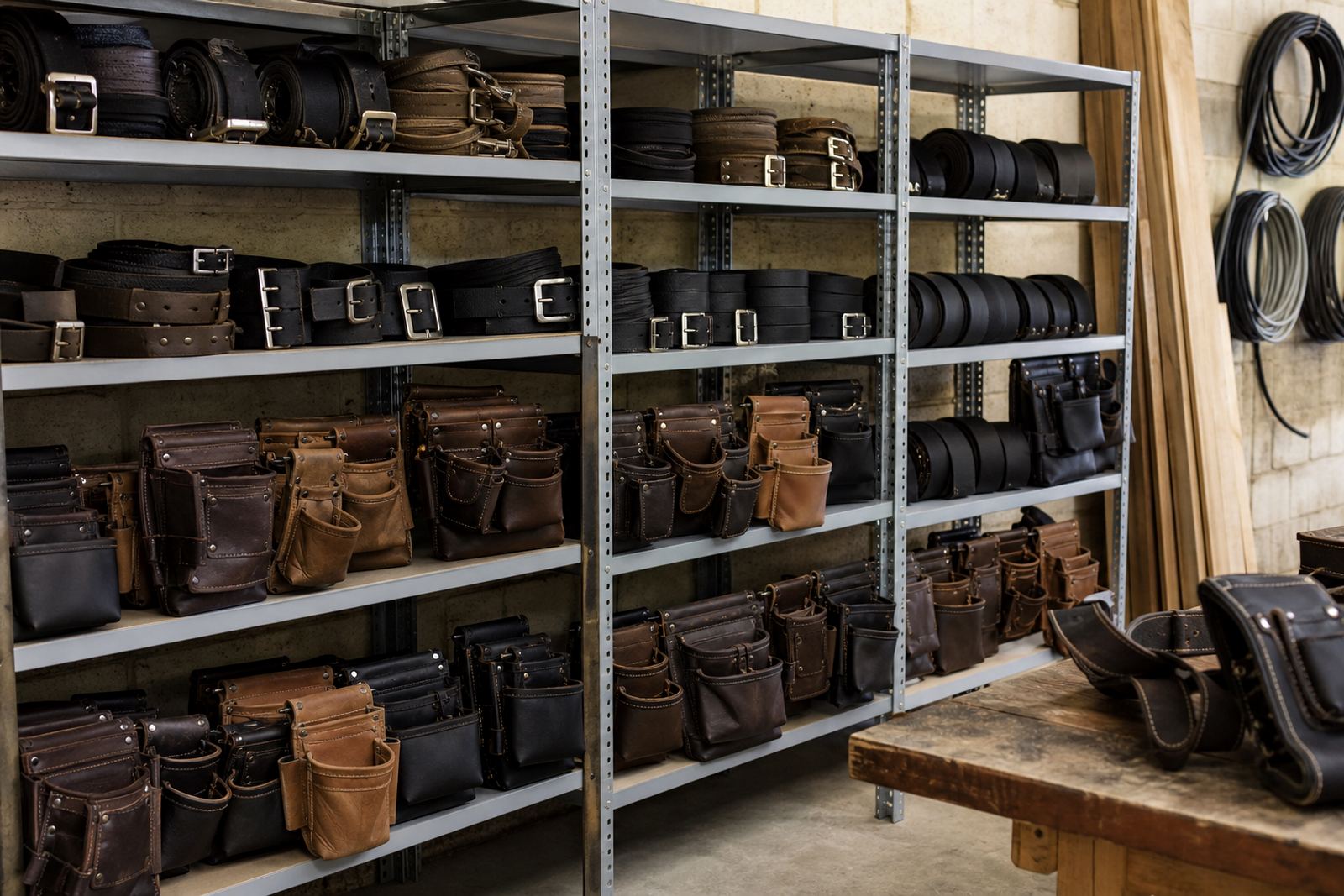
Mixed Trade Kits are put together for projects where one team has different roles but shares the same delivery schedule, site rules and stock control. A mixed order can combine nail bags for builders, tool pouches for electricians, and utility waist belts for supervisors or maintenance crews who need lighter carry options. This works well on housing developments, retail fit outs, plant upgrades and municipal maintenance jobs where crews need their tools close at hand and no time is wasted sorting gear.
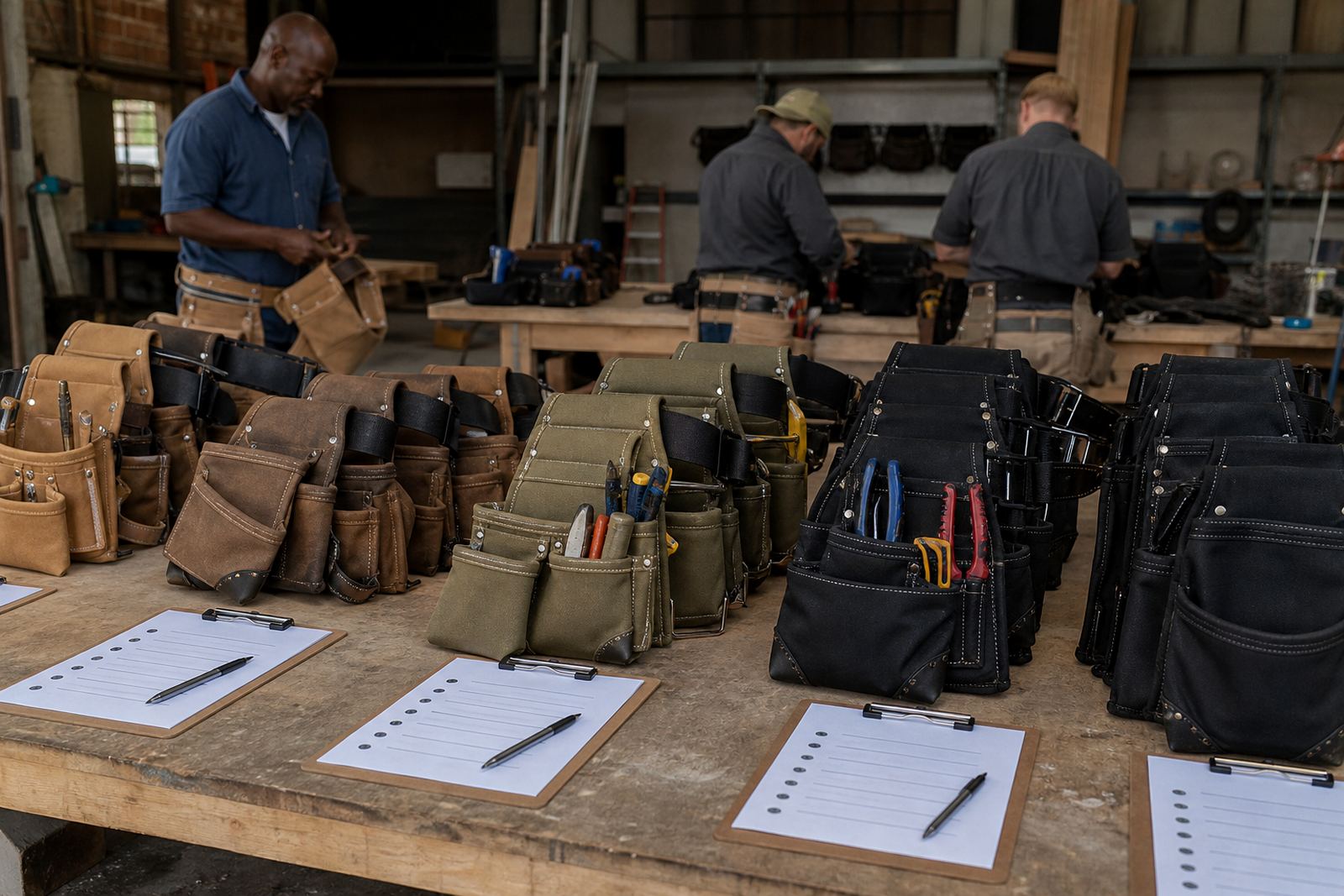
Each kit is planned around the tools actually used on site, not just what looks similar on paper. For example, a builder may need a deeper pouch for fasteners and tape, while an electrician may need narrower sections for screwdrivers, cutters and fixings. We also take into account whether the team works on ladders, in tight service areas or outdoors in coastal humidity, because comfort and access matter over a full shift.
- Builder pouch layouts for nails, tape, pencils and hand tools
- Electrician pouch layouts for insulated hand tools, testers and fixings
- Utility waist belts for lighter daily carry or supervisor use
- Starter and replacement sets for mixed teams on one project
- Options for bulk issue, phased rollout or replenishment later
How we plan the right combination
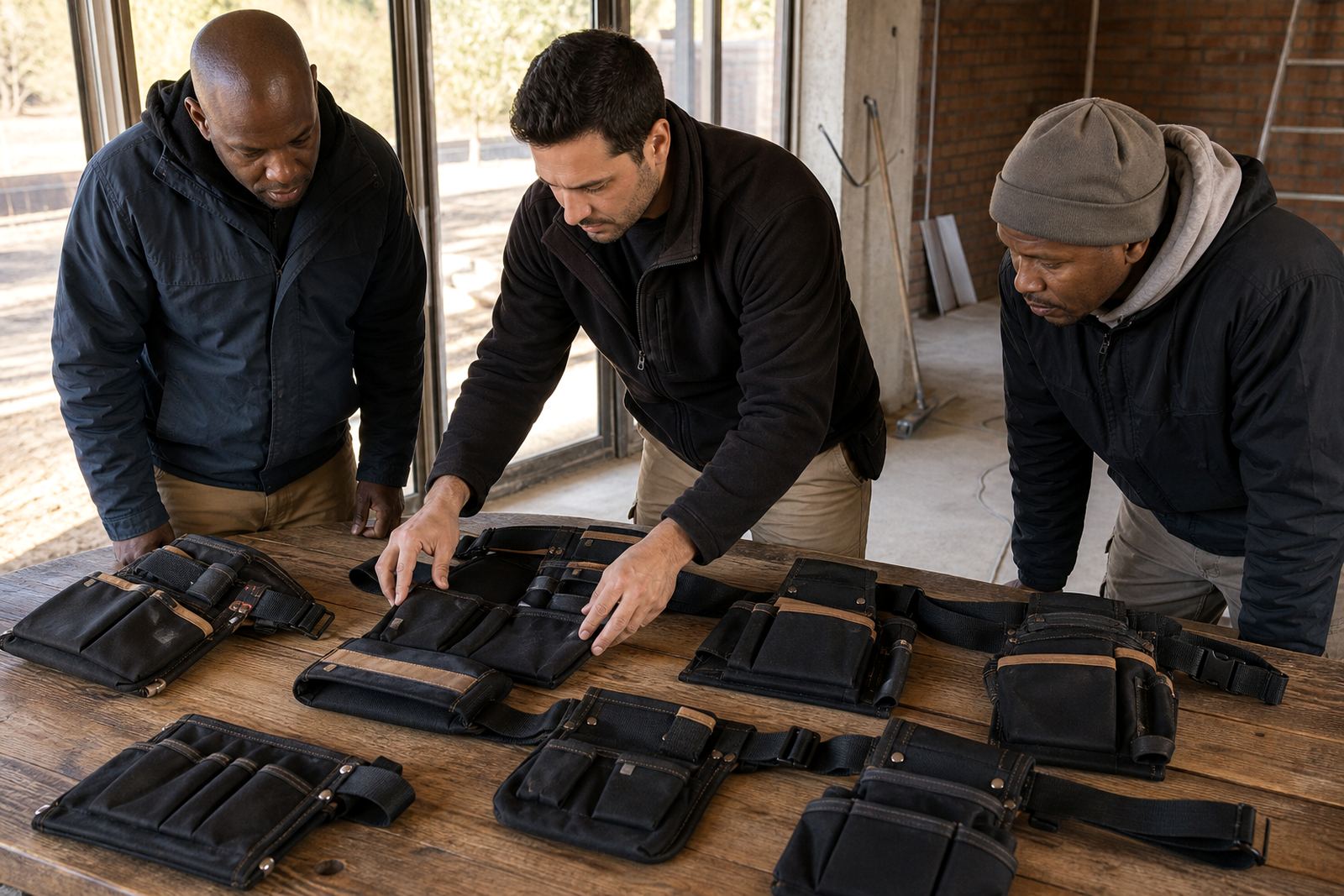
We start with the trade mix, the headcount and the tasks each person will cover. From there we match pouch type, belt width and layout so the order supports real use on site. A mixed order for a team of 12 on a building project may include 6 builder kits, 4 electrician kits and 2 general maintenance kits. If the site uses different sub contractors, we can separate the order by team label or by role so issuing stock is simpler.
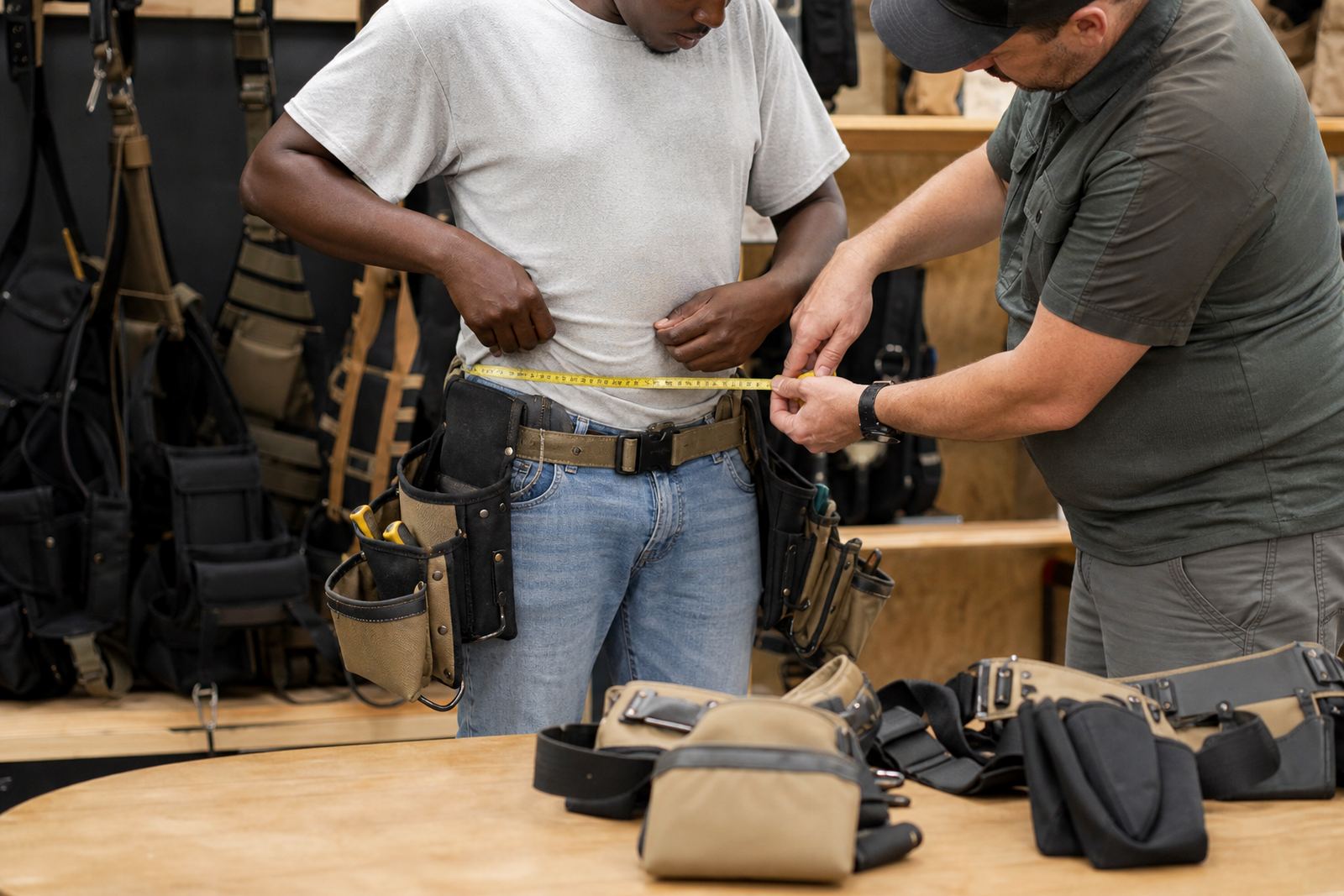
Spec checking is part of the process. We look at belt length, pouch depth, stitching points and the type of fastening used so the kit suits the wearer and the tools. That matters on long shifts and in hot weather, because a poor fit leads to slipping, pressure on the hips, and slower work. If your team works in the East Rand or on the coast, we also consider conditions like dust, sweat and humidity which can affect how gear wears over time.
- Project headcount and trade split
- Tool list and carry requirements per role
- Preferred belt sizes and waist ranges
- Site conditions, including heat, dust and moisture
- Issue plan for bulk delivery or staggered handover
Included in a mixed order
A mixed trade kit order is not just a pile of pouches. It includes planning support so the final order makes sense when it lands on site. We can build the mix from scratch or work from an existing list. If you already know what each crew needs, we will help check the quantities and make sure the layouts are practical. If you are still planning the project, we can suggest sensible combinations based on the work scope and the number of people on site.
Common inclusions are single pouch units, paired pouch sets, adjustable waist belts and mixed carry sets for labourers, artisans and maintenance staff. For bigger rollouts, we can separate the order into project packs, with the right mix for each crew. This helps contractors control issuing and keeps the store room from filling up with the wrong sizes or repeated items.
- Tool pouch combinations for builders and electricians
- Nail bags for fastening and fixing work
- Utility waist belts in multiple sizes
- Mixed crew packs for rolling projects
- Optional stock holding for repeat supply
Turnaround and delivery planning
Turnaround depends on the size of the order, the mix of products and whether sizing confirmation is needed. Smaller mixed kits can often be prepared faster, while larger contractor orders may need a little more coordination, especially if different branches or sites are involved. We work from Alberton and supply Johannesburg, Pretoria, Durban, Cape Town, Polokwane, Midrand and Centurion, with delivery planning arranged around site access and receiving times.
For projects with fixed start dates, we recommend sending the headcount and kit breakdown early. That gives time for pouch layout planning, belt size matching and any stock balancing between teams. If a project runs in phases, we can split the release so the first crew gets issued early and the balance follows later. This is useful where load-shedding schedules, access windows or municipal delivery rules affect receiving times.
- Urgent orders: subject to stock on hand and order size
- Standard project orders: planned around the site start date
- Phased releases available for multi stage work
- Branch-to-site delivery planning for larger teams
Pricing approach for mixed trade kits
Pricing is based on the mix of items, the quantities required and any special planning needed for the project. A straight bulk order usually prices better per unit than a small mixed order, but a mixed order can still save time and reduce waste because you are not buying separate items that do not fit the job. Where possible, we quote by kit structure so you can compare the cost per crew member or per work group.
If you are budgeting for a project, it helps to think in layers. The first layer is the base carry setup, the second is the trade specific pouch layout and the third is the replenishment plan. That way the purchase is not treated as a once off. It becomes part of your site stock control and can be topped up as teams rotate or as pouches wear in heavier use. We keep pricing practical and clear, with no guesswork around the final pack list.
- Unit pricing for individual pouches and belts
- Kit pricing for mixed role team orders
- Bulk rates for contractor and project rollouts
- Replenishment pricing for repeat supply
Maintenance intervals and replacement planning
Like any working kit, tool pouches and waist belts need checking at set intervals. For active construction teams, we recommend a visual inspection every 2 to 4 weeks, especially on high use sites. Look for frayed stitching, bent clips, stretched belt holes and worn stress points around the pouch base. On dusty sites or in coastal air, fast wear can show sooner, so the interval should be shortened if the kit is used daily.
Maintenance staff and electricians who work with smaller tools often keep their belts in service longer, but it still pays to review the kit before a new phase starts. A poor fitting belt or damaged pouch slows the team down and can cause tools to drop. If needed, we can help plan replacement cycles and staggered replenishment so the whole team does not need new stock at the same time.
- Check stitching, clips and belt holes regularly
- Replace damaged pouches before the next project phase
- Review fit after crew changes or weight changes
- Use staggered replacement for larger teams
Key facts
| Available formats | Single pouches, paired sets and mixed crew kits |
|---|---|
| Typical belt sizes | Adjustable sizes to suit varying waist measurements |
| Trade mix | Builders, electricians and maintenance staff |
| Planning support | Pouch layout planning and belt size matching |
| Supply regions | Alberton, Johannesburg, Pretoria, Durban, Cape Town, Polokwane, Midrand and Centurion |
| Order types | Bulk team orders, starter kits and project rollout supply |