Project Brief for a Sandton Commercial Fitout
The job came from a commercial contractor working on a multi-floor office fitout in Sandton, Gauteng. The team needed a practical carry solution for sparkies, partition installers and finishing crews who were moving constantly between lifts, stairwells and active work areas. Fixed toolboxes were slowing them down, especially when one crew was working on ceilings while another was setting out frames or doing final touch ups.
The brief called for lightweight pouches that would hold fasteners, pencils, marking tools, small hand tools and fixings without getting in the way. We also had to keep the setup comfortable for long days, because the team was working around staged handovers and tight access windows. In an office build, you cant waste time walking back to a central store every few minutes.
- Client type: commercial fitout contractor
- Location: Sandton, Johannesburg
- Work: partitioning, ceilings, electrical trims and finishing
- Main need: mobile tool carry for mixed trade teams
Site Constraints That Shaped the Kit
The site had the usual Sandton pressures. Access was controlled, noise windows were limited and the contractor had to keep shared passages clear for other trades. Some areas were already carpeted or had completed finishes, so loose tools and open boxes were not practical. The team also needed gear that could handle dust from drilling and ceiling work without becoming a nuisance at the end of each shift.
We kept the specification focused on low bulk carry. That meant selecting pouches with enough compartments for trade essentials, but not so many pockets that they became heavy or cluttered. Belt length and fit mattered as well, because the crew included different body sizes and some members wore the pouches over layered workwear early in the morning when the site was cooler. By the afternoon, the same belt still had to sit properly without slipping.
- Low bulk carry for movement through finished areas
- Durable stitching for daily site use
- Quick access to screws, bits, pencils and cutters
- Comfortable fit over standard workwear
What We Supplied and How We Set It Up
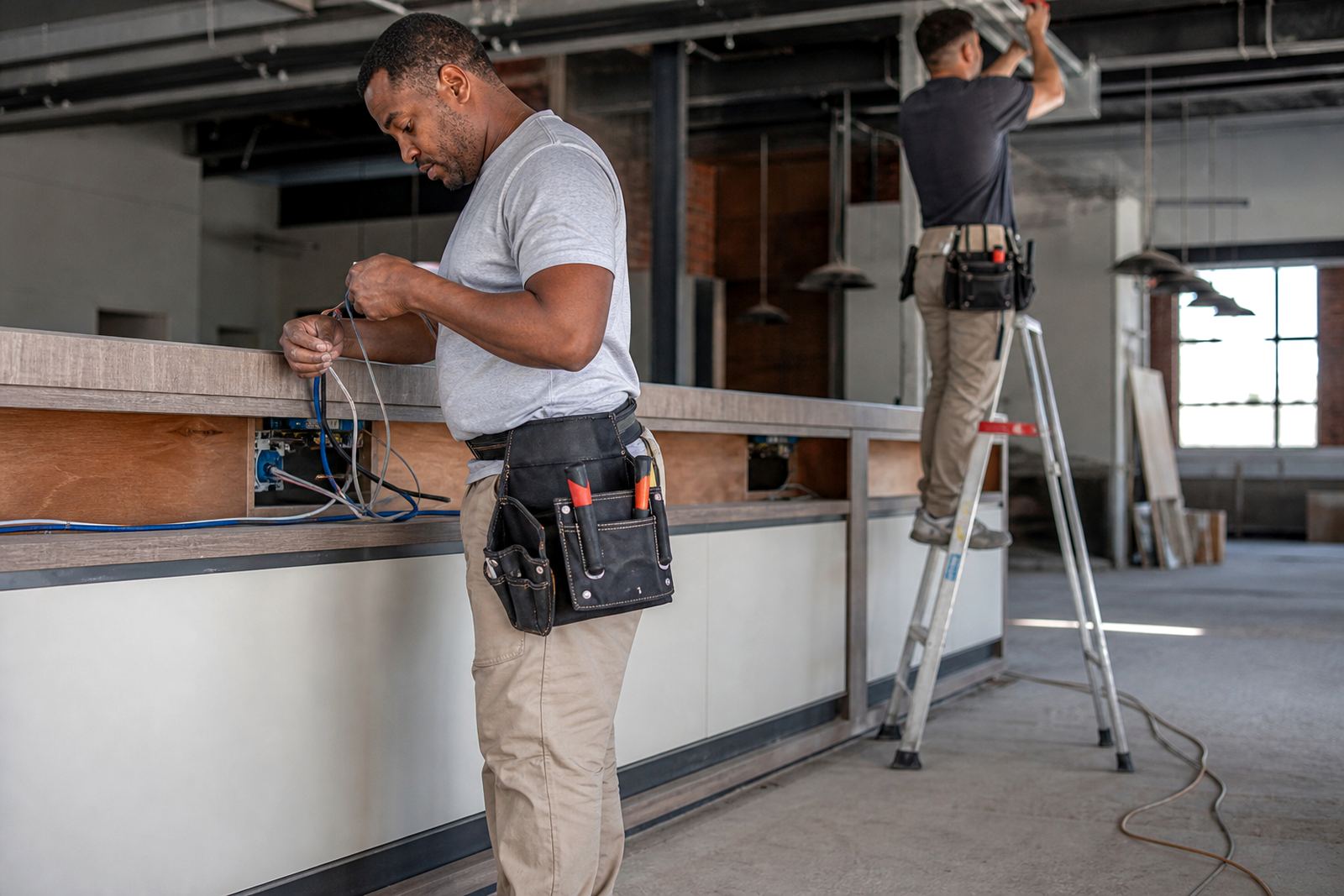
We supplied a mixed set of utility waist belts, nail bags and compact tool pouches, arranged for the different roles on site. Electricians received pouch layouts suited to testers, pliers, screwdrivers, cutters and fixings, while the finishing teams got simpler carry options for tape measures, chalk, blades and small consumables. The aim was to reduce clutter and keep each person carrying only what they needed for that task.
We also handled belt size matching before issue, which saved time on site. Several team members needed different waist sizes once the pouches were loaded, so we checked fit and adjusted the rollout plan before delivery. That small step made a big difference because belts that ride up or twist can slow a crew down very quickly. We supplied the kit in labelled groups so supervisors could hand them out without confusion.
- Utility waist belts in multiple sizes
- Tool pouches for general fitout and electrical use
- Nail bags for fixings and small hardware
- Labelled issue groups for fast distribution
Timeline and Rollout Over Three Weeks
The rollout ran over three weeks. In week one, we confirmed the trade mix, pouch preferences and belt sizes with the site lead. In week two, we finalised the order and prepared the mixed kits, making sure the quantities matched the number of active crew members plus a few spare sets for replacements. In week three, the order was delivered to the site and handed over in batches so the foreman could issue them as teams came on shift.
This staged approach worked well because the fitout was moving in phases. Some crews were on partitions while others were still roughing in electrical points or fitting ceilings, so the kit had to suit a changing site plan. It also meant the contractor could top up only where needed instead of overbuying all at once, which helped keep the spend under control during the project.
Results on the Sandton Site
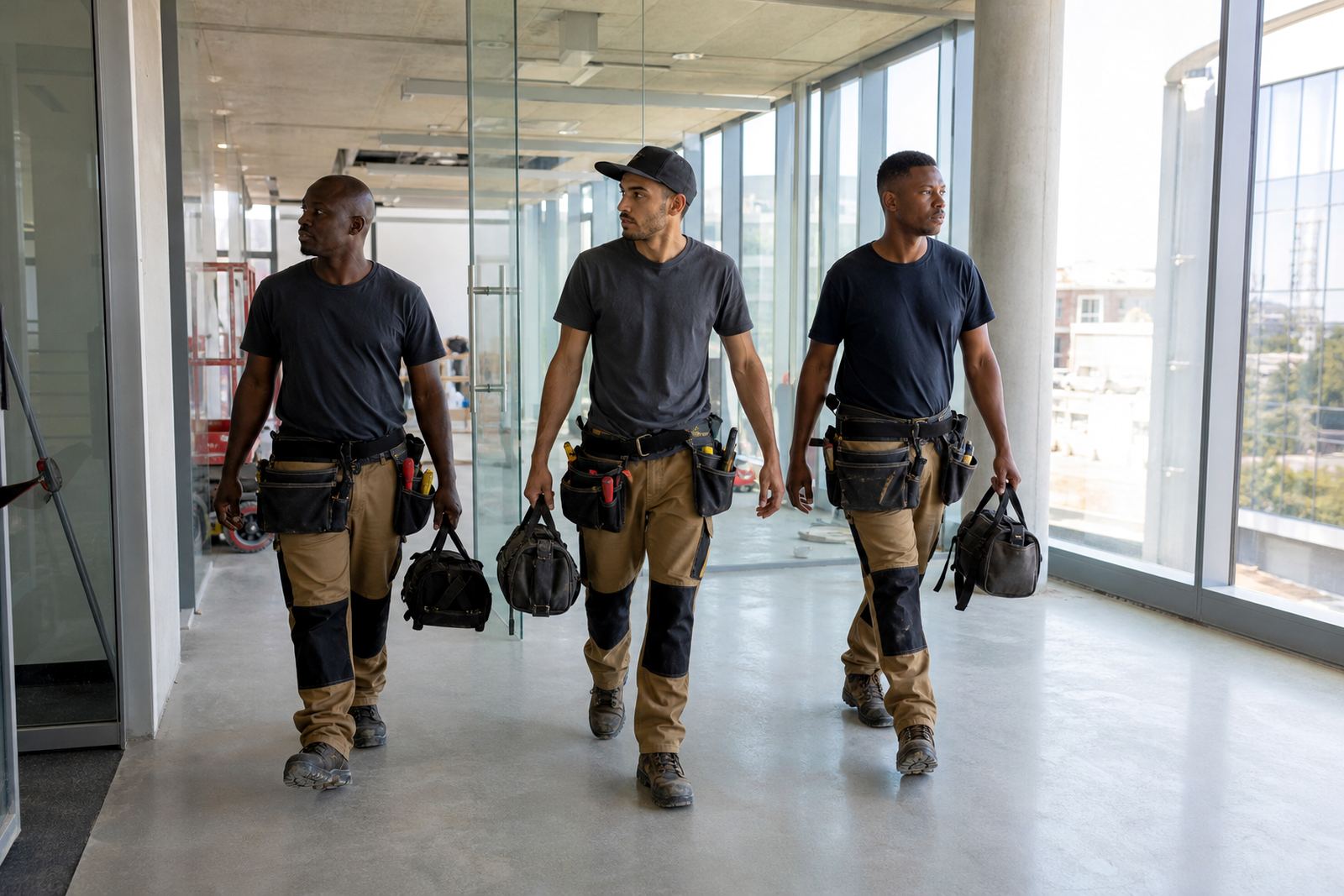
Once the teams started using the pouches, the main change was speed. Workers spent less time putting tools down or searching for fixings and more time on the task in front of them. Supervisors also reported fewer interruptions when crews moved between floors, because each person carried the basics on the belt instead of making repeated trips back to the store room.
The contractor said the light carry setup was especially useful near handover areas, where appearance and control mattered as much as output. There was less scattered gear on floors and workstations, and the crews kept a neater footprint around finished surfaces. For a project in Sandton, that kind of order matters as much as any other part of the job. The final feedback was that the pouches held up well and stayed comforable through the busiest part of the fitout.
- Less time lost walking back for tools
- Cleaner work areas around completed finishes
- Better comfort for long shifts
- Faster issue of tools at the start of each day
What We Would Do Again for Similar Fitouts
For another office fitout in Johannesburg, we would use the same approach: split the order by trade, match belt sizes before issue and keep the pouch layout lean. That is the easiest way to support partition, electrical and finishing teams on a live commercial site. It also helps when the project is running in stages and teams are sharing tight access routes.
We would also keep a few spare belts and replacement pouches in reserve for the end of the project, when wear and tear tends to show up. On busy sites, one missing pouch can delay a crew more than people expect. A small reserve keeps the rollout stable and avoids last-minute scrambles. That is why the contractor asked us to keep their project profile on file for future works, so the next order can be handled quicker.
- Split orders by trade and task
- Check sizing before delivery
- Keep spare units for replacements
- Plan for phased site access and handovers
Key facts
| Project location | Sandton, Johannesburg |
|---|---|
| Project type | Commercial office fitout |
| Timeline | 3 weeks from brief to delivery |
| Main products | Utility waist belts, tool pouches, nail bags |
| Primary users | Electricians, partition crews and finishing teams |
| Key outcome | Improved mobility and faster tool access on site |