Front-Hanging Storage for Fast Work on Site
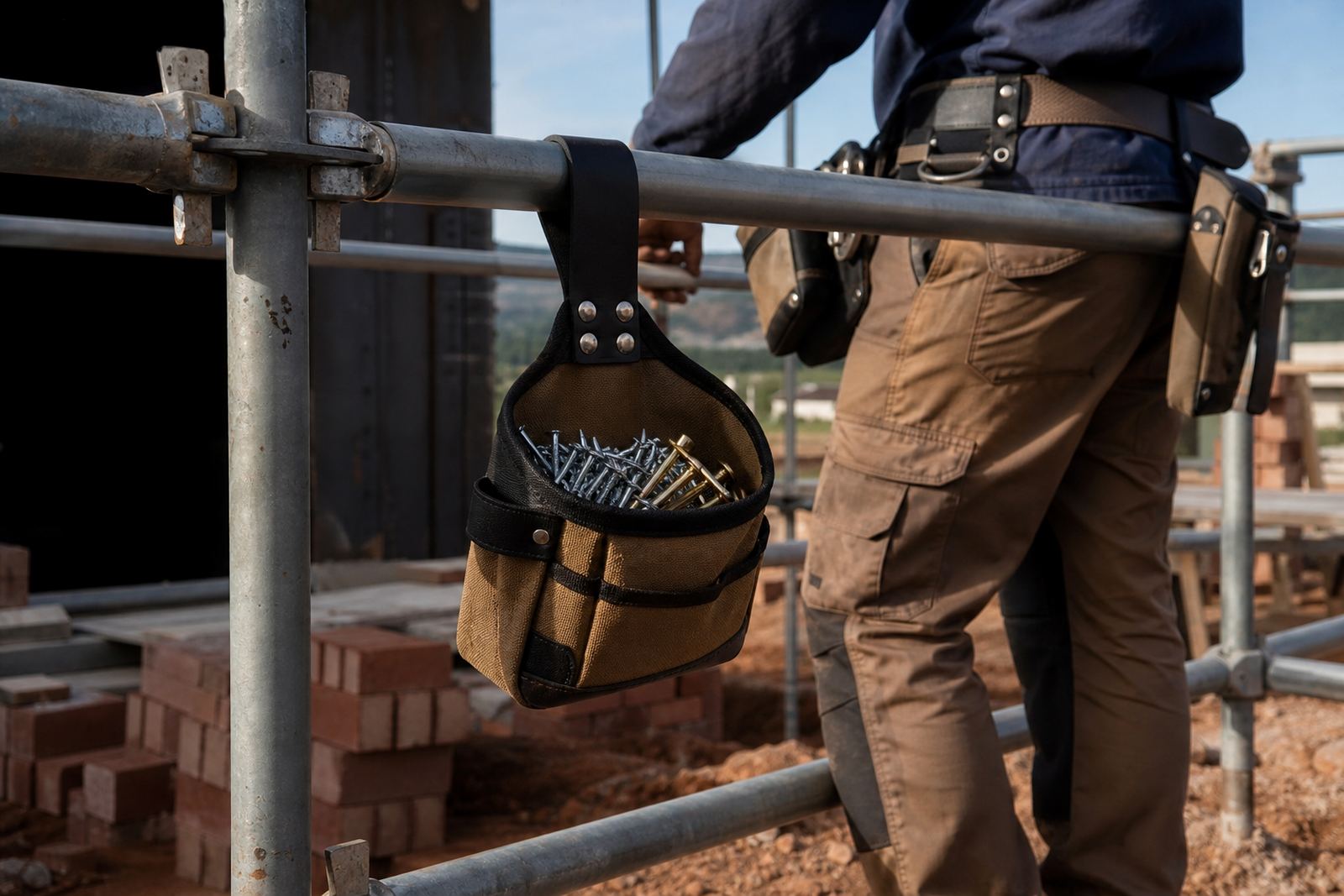
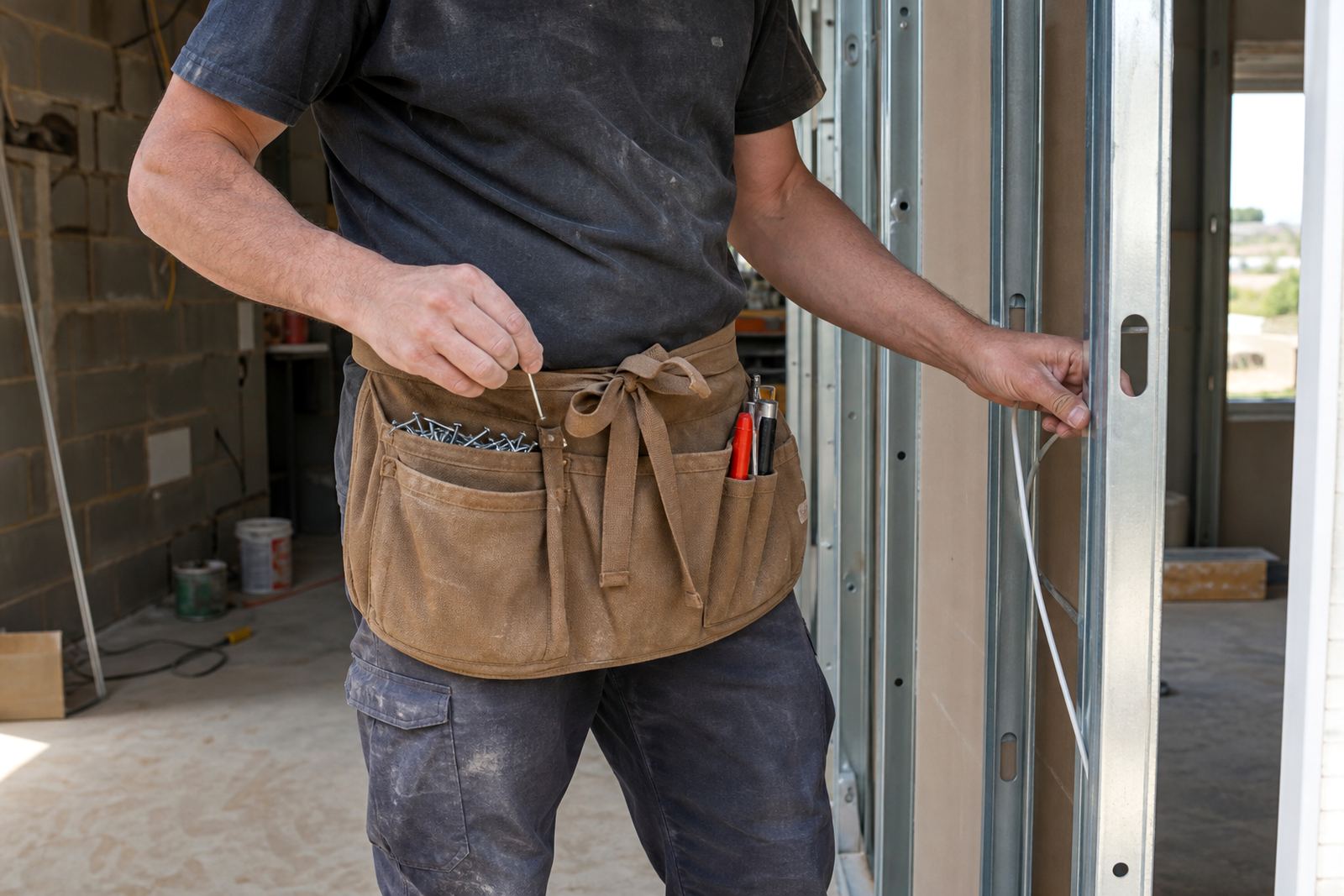
An apron style bag hangs at the front of the body so the items you use most often stay within reach. It is made for fasteners, screws, plugs, pencils, tape measures, wire cutters, small spanners and other compact hand tools that need to stay organised during the job.
For builders and electricians, this layout saves time because there is less bending, less rummaging in a larger tote, and fewer interruptions when you are working from a ladder, a scaffold, or a tight ceiling space. It also helps keep small parts from getting lost on busy sites where there is dust, cable offcuts and moving foot traffic.
The bag is practical for general building work, electrical installation, maintenance callouts and light fitting tasks. It is not a bulk carrier for heavy equipment, but it does a proper job with daily carry items that need quick access. That makes it useful on residential sites in Alberton as well as larger contractor jobs in Johannesburg, Pretoria, Durban, Cape Town and Polokwane.
Sizes, Pockets and Belt Options That Suit Real Working Sets
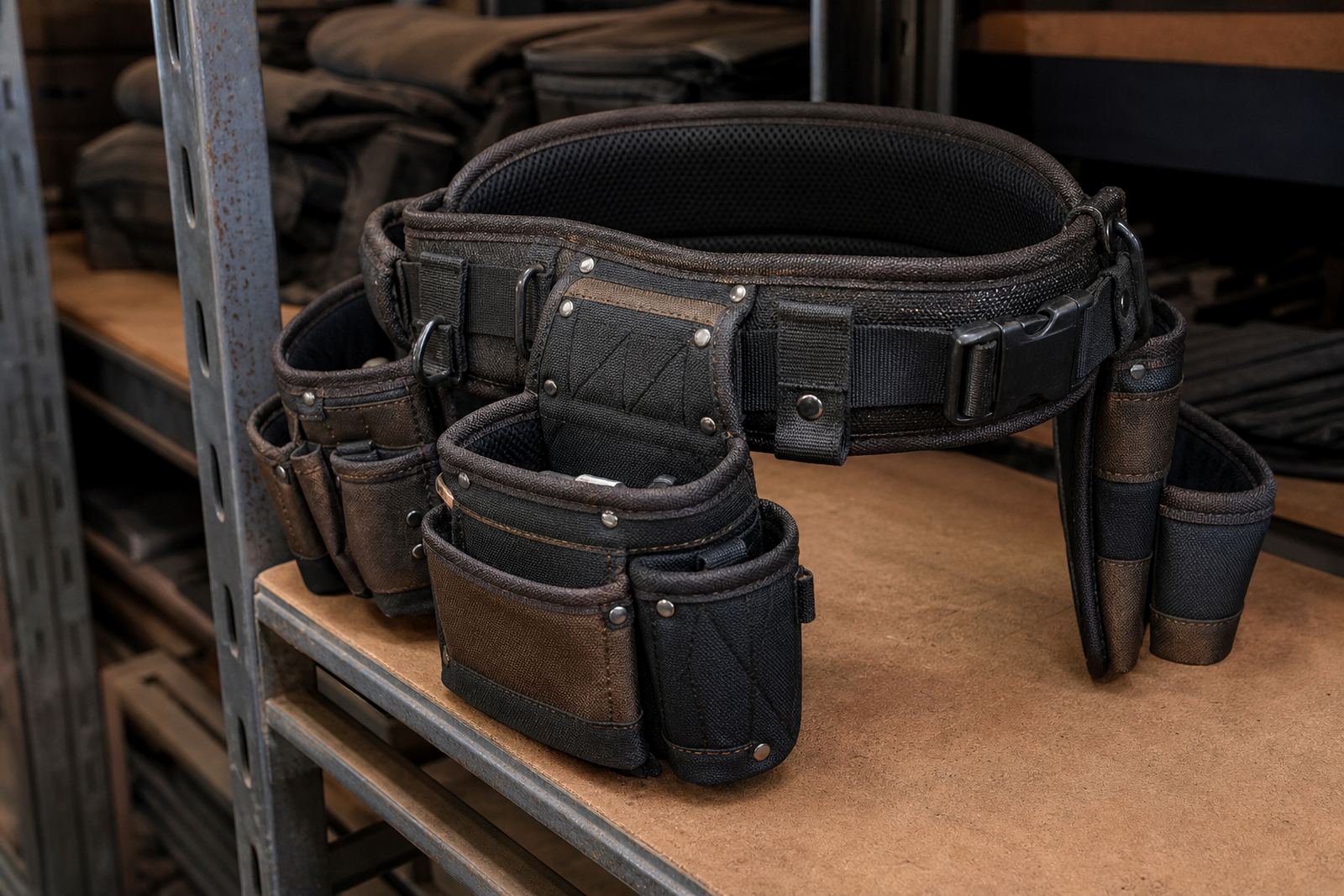
Apron style bags are usually chosen for the amount of storage they offer and how they balance on the waist. Common options include single main pouch styles, dual-pocket layouts, and versions with smaller front slots for fasteners or pencil tools. Some models also include hammer loops, tape loops or reinforced divider sections.
When choosing a size, think about what you carry every day rather than what you might need once a week. A compact pouch works well for service work and electrical punch lists. A larger apron style bag suits builders, installers and foremen who keep several hand tools and fixings close at hand.
- Compact front pouch for screws, plugs and small fixings
- Dual-section layout for separating tools from consumables
- Reinforced belt tunnel or loop system for stable carry
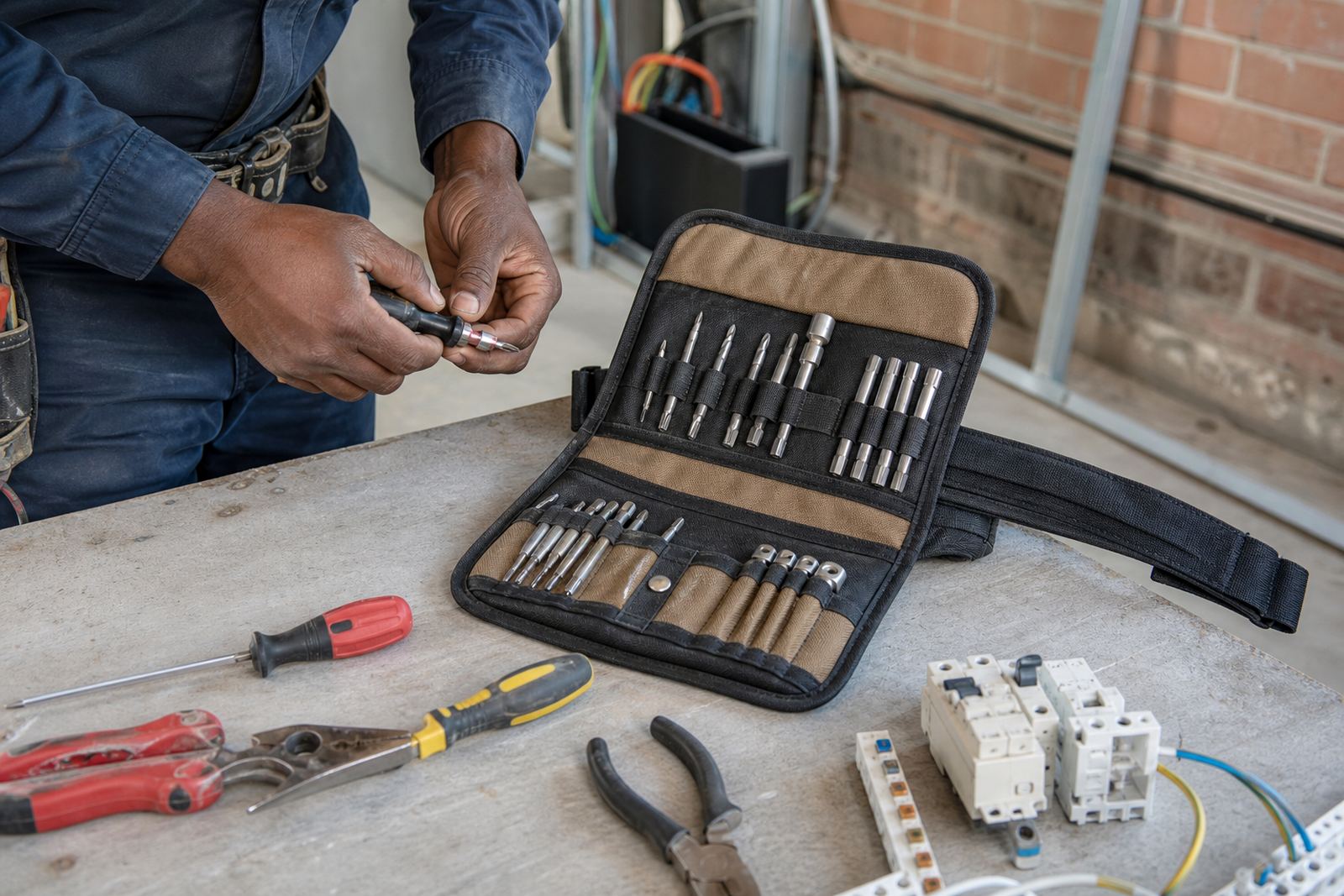
- Optional tool slots for pliers, drivers and markers
- Lightweight carry for long shifts and ladder work
If you are ordering for a team, a proper size match matters. A belt that sits too high or too loose will shift while you move, which becomes uncomfortable during long shifts and can slow you down on site. We can help with belt size matching and starter kit builds for mixed trade crews.
Where the Apron Style Bag Works Best
This bag suits work where speed and access matter more than carrying volume. It is a practical fit for electricians running domestic wiring, doing DB board work, hanging light fittings or handling small service repairs. Builders use it well for fixings, setting out, marking, fastening and small installation tasks.
It also works for project teams on multi-unit developments, shopfitting jobs, maintenance contracts and site punch work. If you are moving between rooms, floors or units through the day, the front-hanging format helps keep your most used items on you without going back to the van.
- Electrical installation and maintenance work
- Builders, installers and site supervisors
- Short repair jobs and callouts
- Project rollout supply for contractor teams
- Work in hot, dusty or high-traffic site conditions
On coastal jobs, moisture and salt air can work on fittings and fabric over time, so regular cleaning matters. In inland areas like Gauteng, dust and construction debris are usually the bigger issue. The right pouch helps you keep tools controlled in both conditions, and that is what most tradespeople need.
No Power or Gas Needed, Just Practical Site Readiness
The Apron Style Bag does not need power, fuel, or gas to operate. It is a manual carry item, so there is no setup beyond fitting the belt properly and loading it with the tools you use most. That makes it a good choice for load-shedding conditions where working without powered accessories is often part of the day.
Because it is not tied to electricity or gas, the main checks are physical: stitching, rivets, pocket depth, belt length and the strength of the hanging points. If you are working around live electrical areas, keep sharp tools and loose metal items secured so they do not snag or fall. For builder teams, make sure the pouch layout matches the pace of the job and the number of fixings you carry at one time.
Delivery planning is also straightforward. These bags are suitable for bulk team orders and mixed trade kits, so contractors can outfit crews in one go and reduce the time spent issuing basic pouches on site. That is useful for rollouts across Alberton and surrounding commercial areas where work starts early and access windows are tight.
Care, Cleaning and Regular Servicing Checks
Tool pouches last longer when they are cleaned often and checked before a bag starts to fail. Dust, cement powder, plaster, adhesive and metal filings can settle into seams and pockets, so give the bag a shake-out after use and wipe it down with a dry or slightly damp cloth. If it is heavily soiled, use mild soap and let it air dry fully before storing.
Do not overload the bag beyond what the belt and stitching are made for. A heavy load can pull at the seams and make the pouch twist on the waist. If you work on rough sites, inspect the corners, belt loops and pocket edges for wear at least once a week. That is especially helpful for teams moving between jobs in humid coastal areas or dust-heavy inland sites.
- Empty screws and sharp offcuts at the end of each shift
- Check stitching, rivets and belt loops regularly
- Keep the pouch dry before storing in the bakkie or storeroom
- Avoid soaking the fabric unless the care instructions allow it
- Replace worn belts before the pouch starts to sag
If you manage several workers, a stock replenishment plan can help keep service teams supplied with usable pouches instead of waiting for wear to become a problem. That keeps the kit ready for the next callout and reduces downtime on busy weeks.
What to Check Before You Order
Before ordering, check the type of work the pouch must support, the number of pockets you need and the belt size your team wears. It is worth confirming whether the user wants a compact apron style bag for fixings only, or a larger layout for hand tools as well. If the bag will be used with a wider belt, make sure the tunnel or loop spacing matches.
You should also consider the site conditions. For electrical crews, pocket control and easy access are important when working with small parts and testers. For builders, the bag may need a stronger bottom panel and a layout that handles nails, plugs and marker tools without collapsing. If you are ordering for multiple branches, note that one layout does not suit every job, so it helps to compare requirements before finalising the order.
Clients in Alberton and across South Africa can send an enquiry through our contact page for product selection, bulk team orders, pouch layout planning, or mixed trade kits. Our team includes support for contractor orders, delivery planning and custom order coordination, which helps with rollouts across Johannesburg, Pretoria, Durban, Cape Town, Polokwane, Midrand and Centurion.
Apron Style Bag in a Nutshell
This is a front-hanging tool bag for the tradesman who needs fast access and a simple layout that stays out of the way. It is practical, light enough for daily use, and strong enough for regular site work when matched to the right load and belt size. If you need a pouch that keeps small tools ready without slowing you down, this style makes sense.
Waistbags Pro supplies apron style bags to builders and electricians across South Africa, with support from our Alberton base and supply areas in Johannesburg, Pretoria, Durban, Cape Town, Polokwane, Midrand and Centurion. For bulk orders or site specific selection, use the enquiry form on our contact page and we will help you match the right setup.
Key facts
| Product type | Front-hanging apron style tool bag |
|---|---|
| Primary use | Fast access for fasteners and compact hand tools |
| Typical users | Builders, electricians, installers and maintenance teams |
| Carry format | Waist-mounted with belt support |
| Material focus | Tough wear fabric with reinforced stress points |
| Power or gas requirement | None |