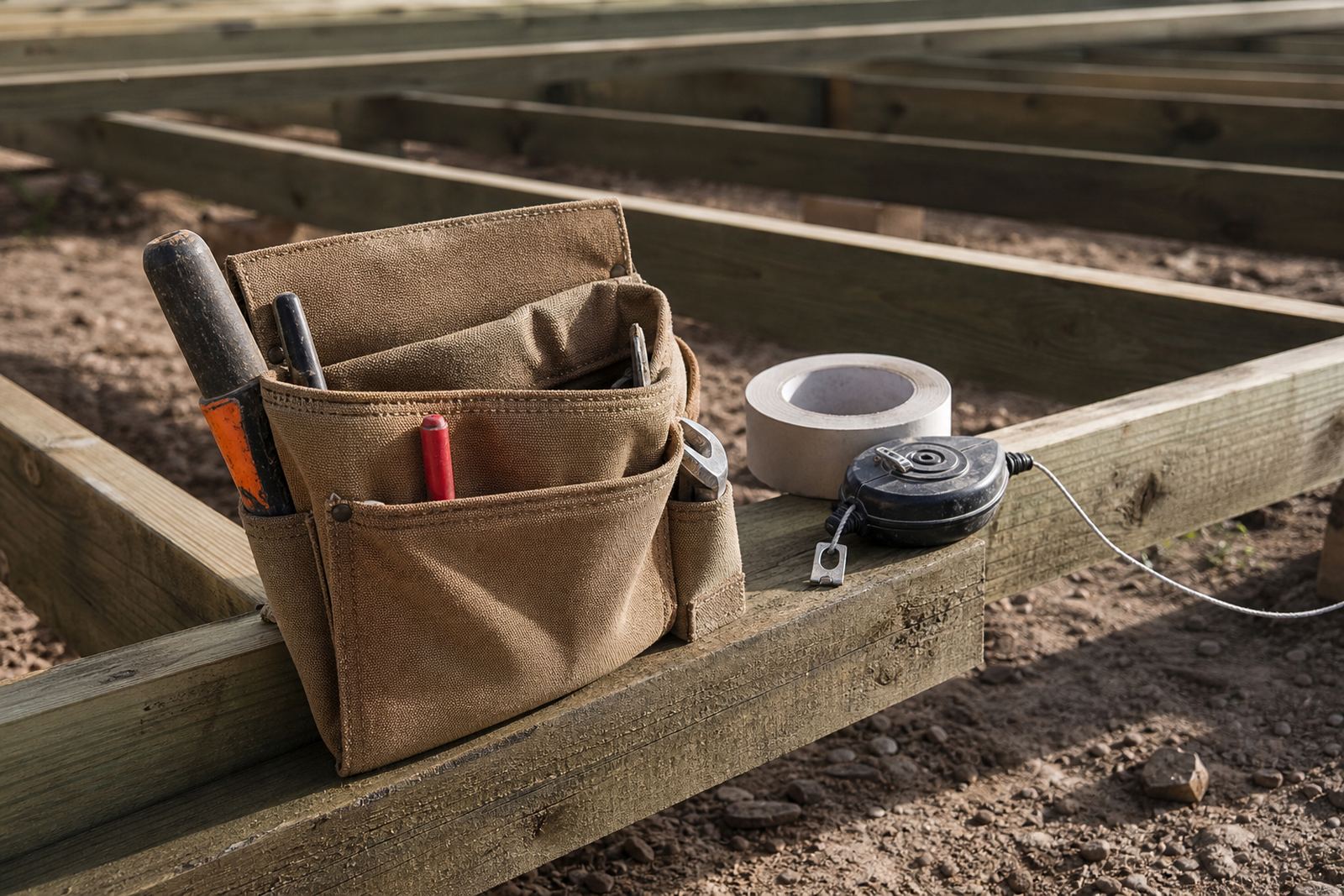
Light canvas carry for everyday site work
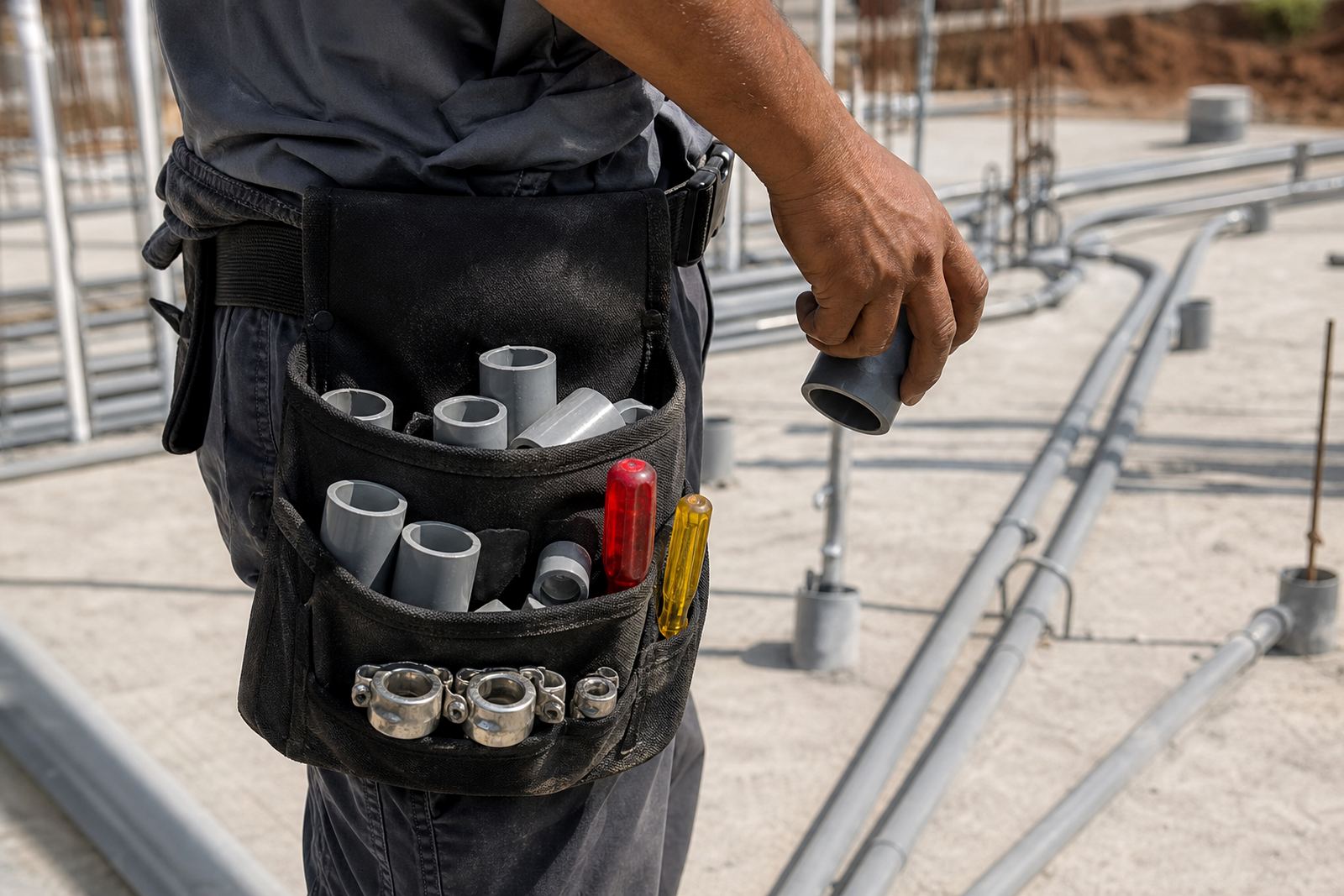
This pouch is made for smaller tools, fasteners and hand items that need to stay close by during the day. It suits workers who do not want a heavy leather rig, but still need proper pockets for tape, pencils, pliers, screwdrivers, connectors and fixings. The canvas body is easier to wear for long shifts and works well in warm weather, where heavier belts can feel bulky.
It is a practical choice for housing sites, commercial maintenance, fit-outs and light repair work. If your team moves between floors, units or houses, a lighter pouch can help reduce fatigue and keep the essentials in reach. It is not a bag for heavy tools, but for general site use it does the job well.
Sizes, pockets and carry options
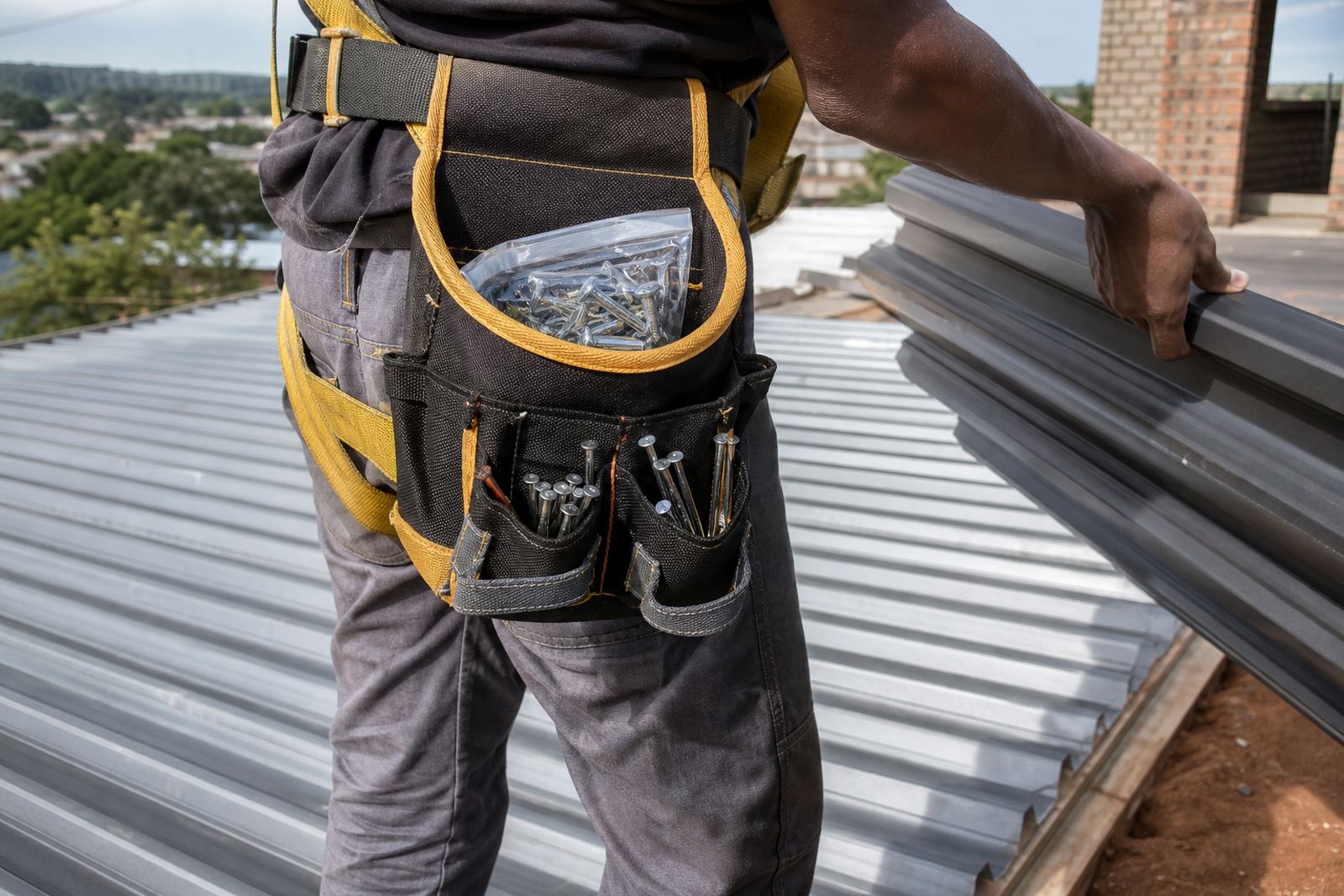
Canvas pouches are usually supplied in compact to medium sizes, with pocket layouts that suit mixed trade use. Some versions are better for electricians, while others are set up for builders who carry nails, screws and a few basic hand tools. Waist belt fit is important, so the pouch should sit level without pulling to one side.
- Compact pouch for light tool loads and fixings
- Medium pouch for mixed hand tools and consumables
- Single or multi-pocket layout depending on task
- Loops for pencils, markers or slim tools
- Open top access for quick pick-up on site
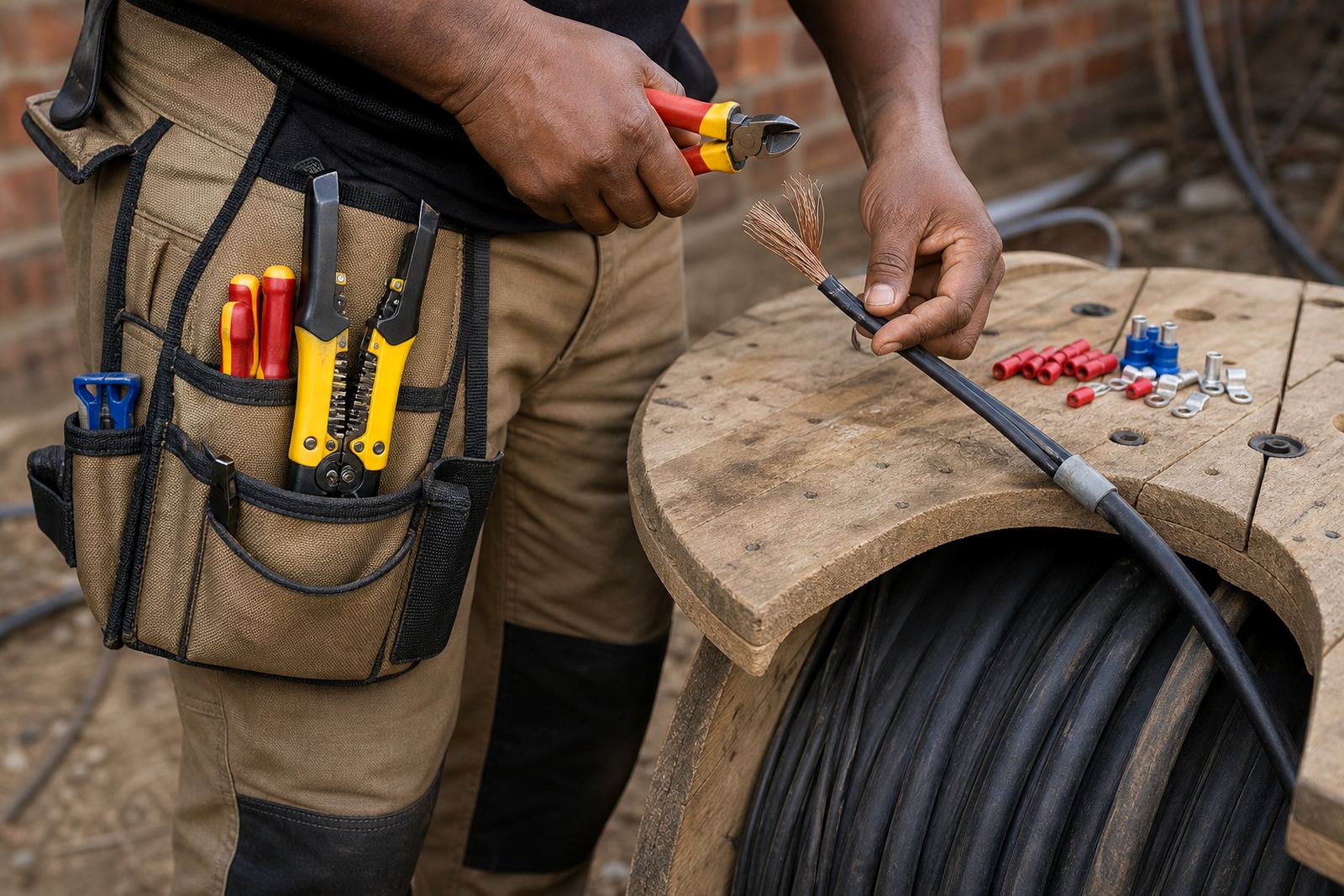
For teams working on repeated jobs, a matched layout helps. One pouch can be set up for screws and anchors, while another carries test pens, wire strippers and small drivers. That way the right gear stays with the right person, and there is less shuffling back and forth.
Where this pouch suits best on site
This product suits light to medium duty site tasks in Johannesburg, Pretoria, Durban, Cape Town, Polokwane and surrounding areas. It is useful on building sites, in maintenance departments, at housing developments and for subcontractors who need a simple carry system. In coastal areas, the canvas is best kept dry after use so the fabric does not stay damp for too long.
For electricians, it can carry basic hand tools, small terminal items and marking gear. For builders, it works for nails, screws, plugs, small tape measures and marking tools. It is also a good fit for site supervisors who need a practical pouch for daily rounds and small repairs. If you are on a ladder, scaffold or access platform, a lighter pouch makes movement easier and less clumsy.
In hot weather and during load-shedding jobs where teams work around timing windows, quick access matters. A lighter pouch means less strain when moving fast between tasks, and that can save a bit of time each day.
Installation, fit and power or gas needs
The pouch itself does not need installation in the fixed sense. It is worn on a waist belt and should be adjusted so the pockets face forward or slightly to the side. The belt must sit snug enough not to slide, but not so tight that it digs in during bending or kneeling. If the pouch is used with a separate utility belt, check the belt width before ordering so the loops match properly.
There are no power or gas requirements for the pouch. It is a carry item only. If your work involves cordless tools, gas nailers or battery kit, the pouch can still support the hand tools and fixings that go with those jobs. On electrical work, keep test equipment and metal tools separated where possible to avoid scratches and clutter. For gas-driven site tasks, the pouch should only carry the small items needed alongside the main kit, not heavy consumables.
- Check belt width before ordering
- Make sure the pouch sits comfortably at the hip
- Keep the load balanced left to right
- Use only for light to medium tool loads
Care, cleaning and servicing over time
Canvas is easy to look after if you keep to a simple routine. Shake out dust, plaster and offcuts at the end of the week, then wipe the fabric with a damp cloth. If the pouch gets wet, let it dry fully before storing it in a toolbox or vehicle. In humid coastal conditions, this matters even more because trapped moisture can leave the pouch smelling damp after a few days.
Check the stitching, belt loops and pocket edges every so often, especially if the pouch is used on construction sites with rough surfaces. If a pocket starts to sag or a seam opens, stop using it for heavier items until it is repaired. Small tear? Catch it early and you avoid losing fasteners on site. A little routine care extends the working life of the pouch and keeps it presentable for client-facing jobs.
What to check before you place an order
Before ordering, think about the tools your team actually carries each day. A pouch that is too small will get overfilled, while one that is too large may swing about and slow the user down. The best match depends on the trade, the belt size and the type of work being done. For bulk team orders, it helps to list the common items first, then match the pouch layout to those items.
- Main trade use: electrical, building or mixed site work
- Preferred belt size and waist fit
- Number of pockets needed for daily carry
- Whether open pockets or closed sections are better
- Durability needed for site dust, moisture and movement
- Quantity needed for starter kits or replacement stock
Waistbags Pro supports team orders, pouch layout planning, starter kit builds and project rollout supply from Alberton, Gauteng. If you are setting up a new crew or replacing worn pouches, our team can help you choose a sensible setup for local site conditions and day to day use. That saves time when stock is being issued and helps keep every person carrying the right gear.
Key facts
| Product type | Light-duty canvas tool pouch |
|---|---|
| Primary use | General site tools, fixings and small hand items |
| Typical users | Builders, electricians, maintenance teams and contractors |
| Carry system | Waist belt compatible |
| Care level | Wipe clean, air dry after use |
| Power or gas requirement | None |