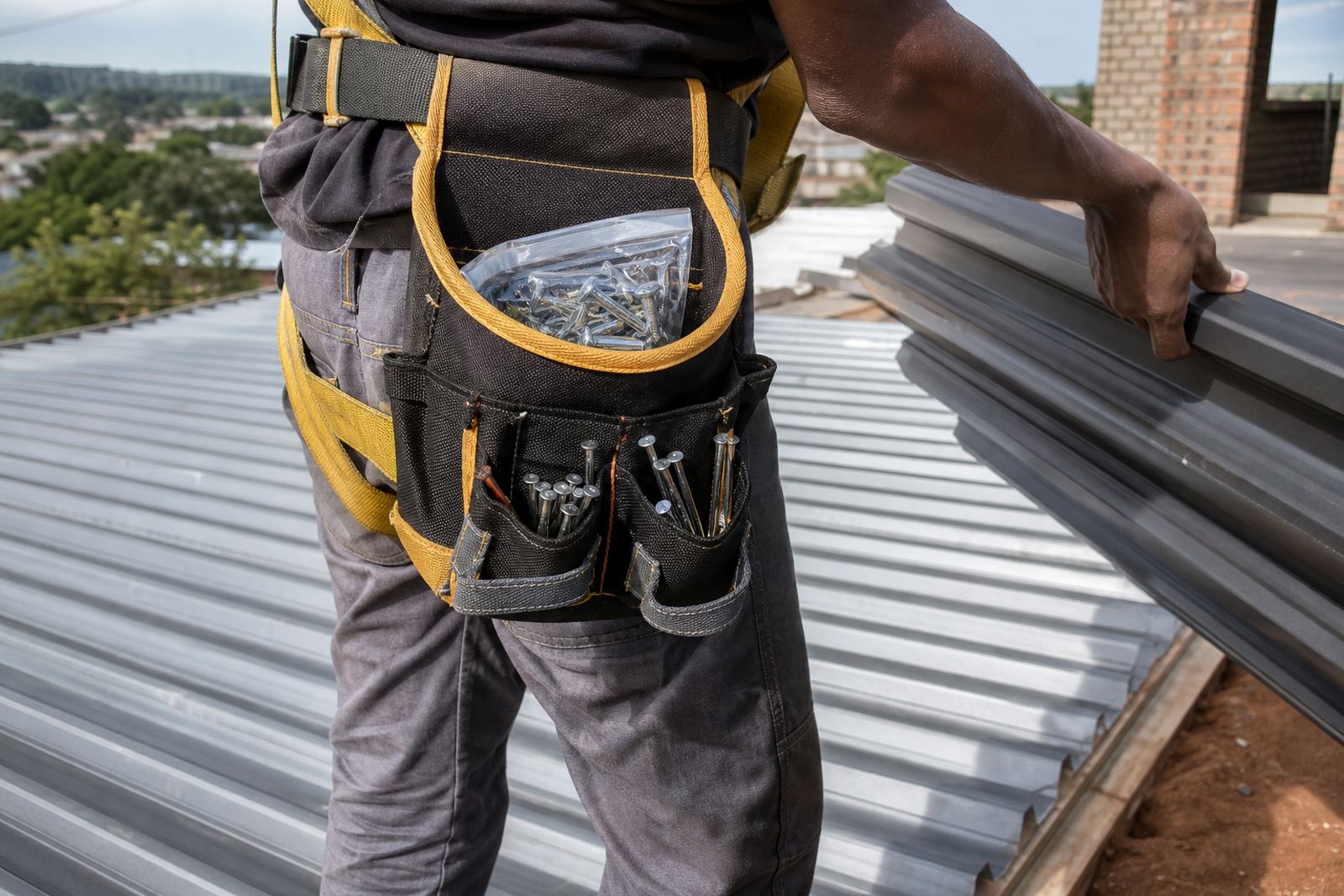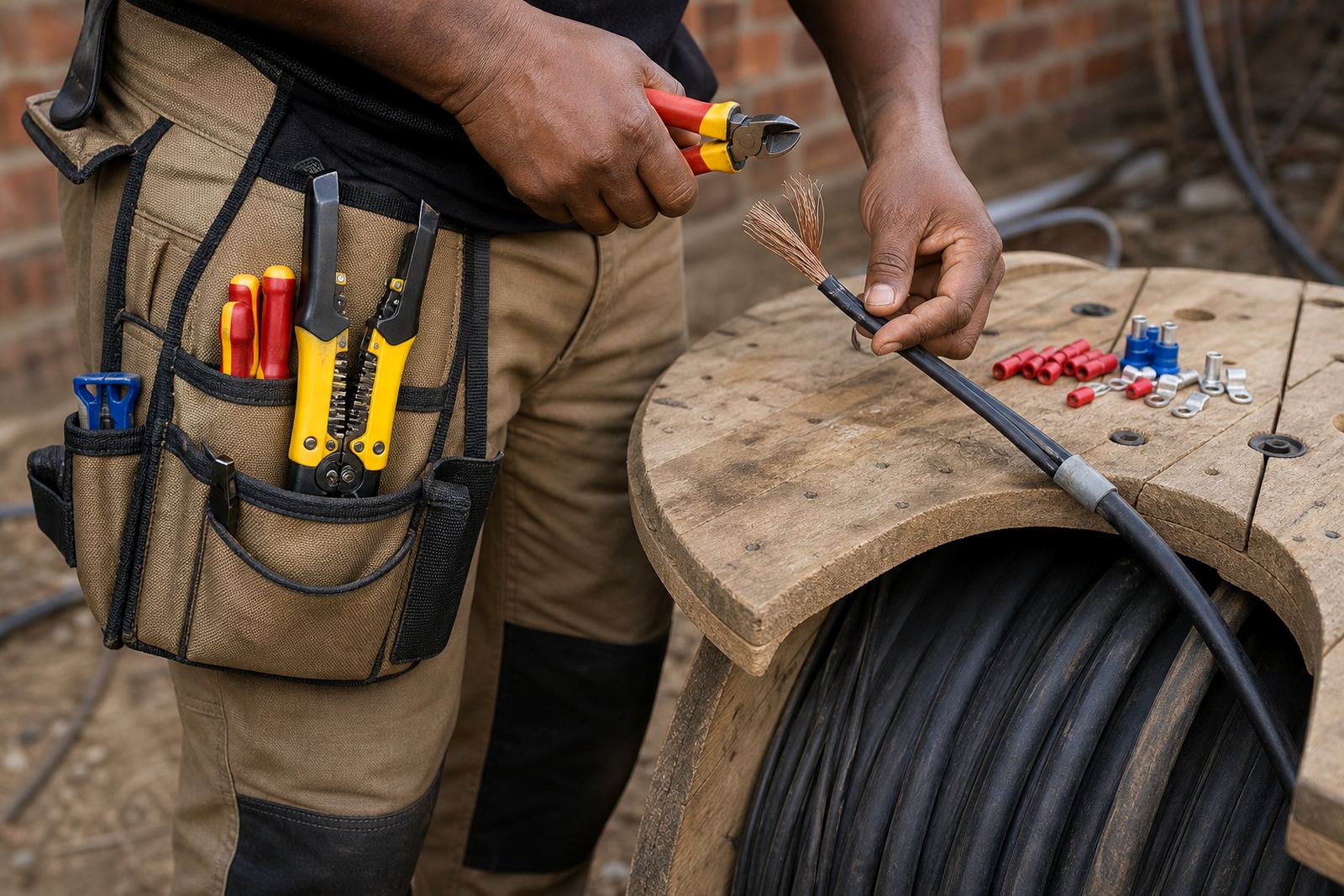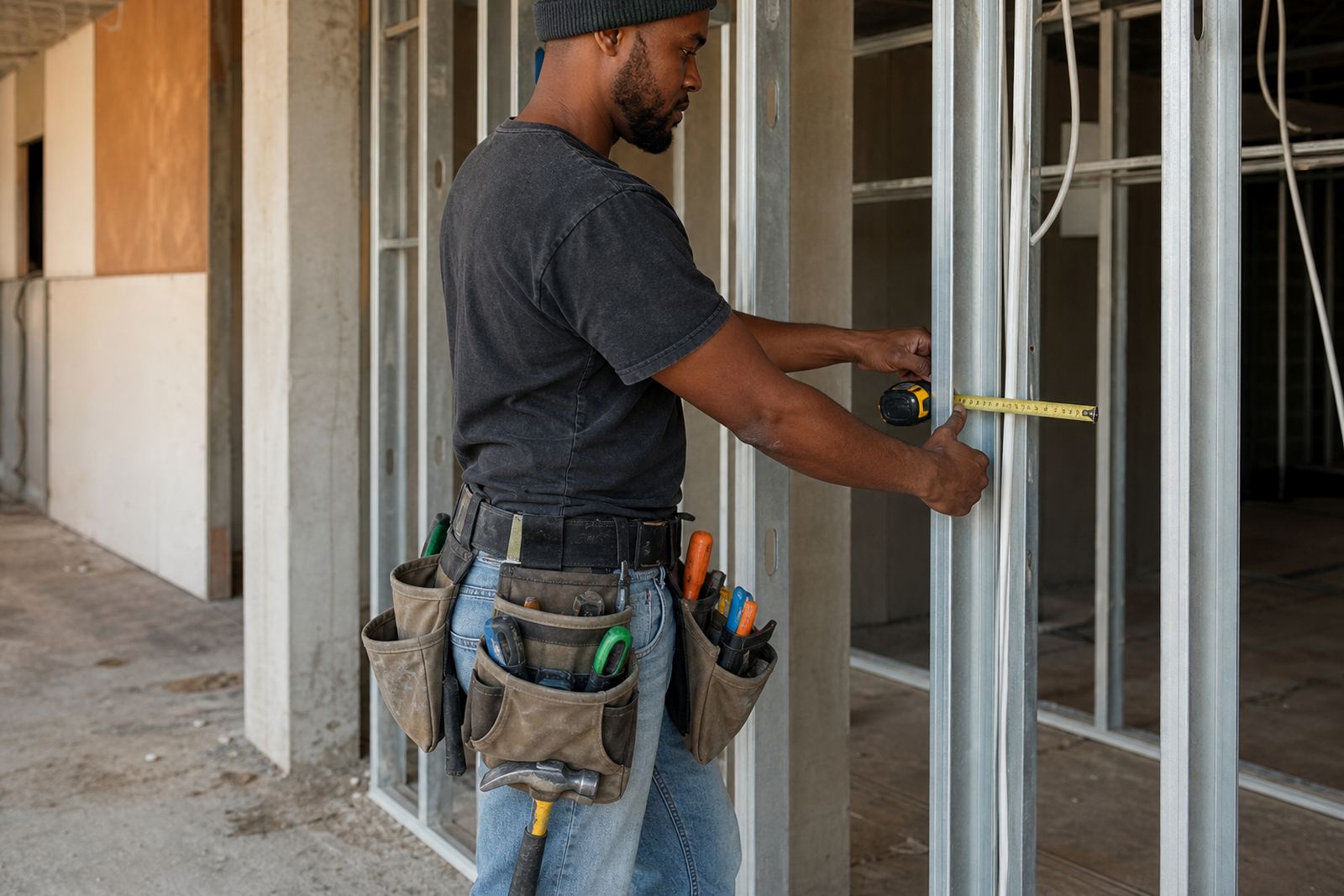

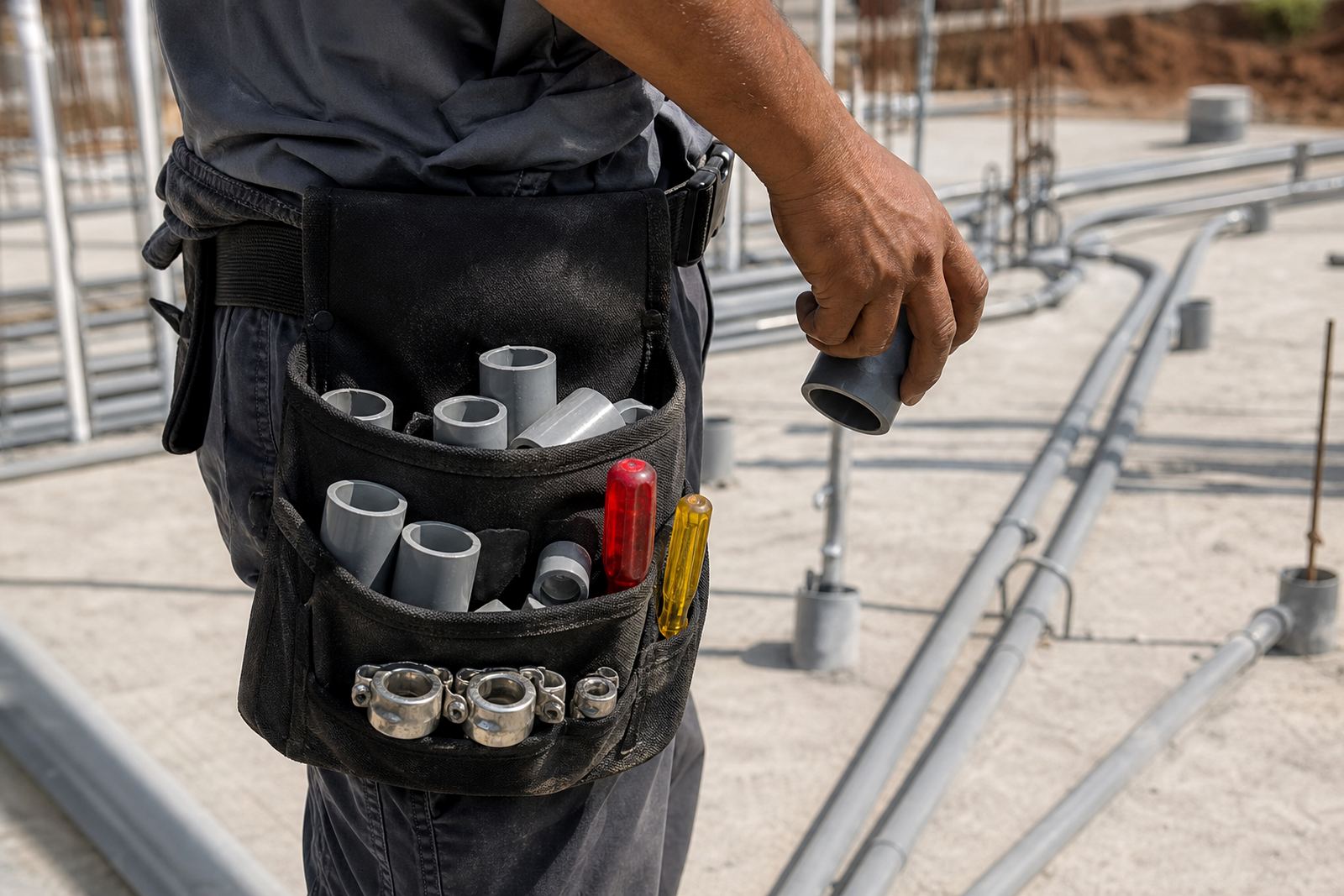
Built for conduit work and daily site handling
This pouch layout is made for electricians who spend the day fitting conduit, running small fixings and moving between trays, walls and ceiling spaces. The main pockets keep conduit fittings apart from screws and plugs, while the smaller slots help stop mixed fasteners from jangling together. That makes counting easier at the end of the day and saves time when you are working on a live site with other trades around.
The body is cut for site use in South African conditions, from dusty inland builds in Alberton to humid coastal work in Durban and Cape Town. Stitching, pocket depth and belt placement all matter when you are bending, climbing or working from a ladder. A pouch that sits properly also reduces strain on the hips and keeps tools from digging in during long shifts.
Pocket layout, sizes and carry options
The Conduit Fitters Pouch is supplied in practical sizes for light service work or fuller install kits. Some users want a compact pouch for callouts and punch lists, while others need extra depth for fittings, screw packs and a marker, knife and tape measure. If your team works on new builds or ongoing maintenance, size choice should match the number of fixings you carry on a normal shift.
- Compact option for basic conduit fittings and a small fastener mix
- Standard option for a balanced tool load with hand tools and marking gear
- Larger option for crew members carrying fittings, screws, plugs and test gear
- Waist belt compatibility for overalls, work trousers and layered site clothing
- Left or right wear depending on how you draw tools on site
For teams ordering in bulk, layout planning helps match the pouch to the actual task. A conduit installer on a commercial floor does not carry the same load as a maintenance electrician on a school or retail property, so we advise choosing by work type first and not only by pocket count.
Best suited to electricians on fit-out, service and maintenance work
This pouch suits electricians working on conduit installations, DB room support, plant rooms, shop fit-outs and domestic rewires. It is also useful for teams moving between several sites in one day, where speed and organisation matter more than carrying a full tool bag. When you are on ladders or scaffolding, having fittings and screws close to hand helps keep the job moving without repeated trips back to the van.
It works well for contractor teams in Johannesburg, Pretoria, Midrand and Centurion where construction schedules are tight and access can change by the hour. In coastal towns, the pouch also helps keep small metal fittings from disappearing into a bag where moisture and grit collect. One practical note: if your crew uses different fastener sizes on the same project, separate them before the shift starts or you end up sorting by hand later, which nobody enjoys.
- New housing and sectional title installations
- Retail and office fit-outs
- School and municipal maintenance
- Warehouse, factory and light industrial work
- General electrical service calls and snag lists
Installation, belt fit and power or gas needs
The pouch does not need power or gas to use, and there is no fitting hardware beyond the belt system selected with it. It is worn at the waist and should sit snugly enough to stay in place when bending, climbing or stepping over rubble. For best results, match the belt width and buckle style to the wearer’s work trousers and the amount of equipment carried.
Before issuing pouches to a team, check the belt length against clothing layers. Winter workwear, rain gear and flame resistant overalls can change the fit. A pouch that is too low can strike the thigh on a ladder, while one that is too loose shifts when carrying conduit fittings across rough ground. On large sites, mark each belt to the person using it so issue and return stays orderly.
Care, cleaning and practical servicing
Tool pouches take a beating from plaster dust, concrete dust, oil, rain and general site dirt. Shake out debris daily and wipe the inside pockets with a dry or slightly damp cloth. If the pouch picks up wet concrete or sealant, clean it before it hardens because built-up residue reduces pocket space and can abrade tools. Let it dry fully before storing, especially in coastal areas where damp air hangs around after knock-off.
Check stitching, rivets, belt loops and pocket edges on a regular basis. Small wear points can be fixed early, but once a seam opens it usually spreads under load. If the pouch is used on municipal projects or longer term contracts, set a simple inspection routine with the rest of your PPE checks. That saves money and avoids a pouch failure halfway through a shift.
- Empty and shake out dust at the end of each day
- Keep sharp tools in their proper slots to avoid tearing pockets
- Do not overload one side of the pouch with heavy items
- Store dry and flat when not in use
- Replace belts or worn clips before they fail on site
What to confirm before you place an order
Before ordering, check how many fittings and tools the wearer carries, which side they prefer to wear the pouch and whether the belt needs to work over thick clothing. It is also worth checking if the team wants a compact service pouch or a fuller layout for installation work. For mixed trade crews, this makes a big difference to day-to-day efficiency.
For project rollout supply, we can help with starter kit builds, mixed trade kits and size matching for individuals or teams. If you are ordering for builders and electricians across Alberton, Johannesburg, Pretoria, Durban, Cape Town or Polokwane, include the site type, the usual task list and any special pocket needs. That helps us recommend a layout that suits the actual job rather than a generic one.
- Preferred wear side and waist size
- Main items carried each day
- Whether the team needs single pouches or bulk issue
- Site type: residential, commercial or industrial
- Any need for mixed kit packing or replenishment planning
Key facts
| Product type | Electrician tool pouch for conduit fittings and small hand tools |
|---|---|
| Main use | Separating conduit fittings, screws, plugs and daily carry tools |
| Typical carry | Fittings, screw packs, marker, knife, tape and small hand tools |
| Size options | Compact, standard and larger work-ready layouts |
| Use areas | Builders and electricians on sites across South Africa |
| Power or gas requirement | None, it is a worn carry item only |