What contractor order support covers
Our contractor order support is built for foremen, procurement staff and owner-operators who need practical gear choices that work on site. Instead of buying loose items and hoping they fit the team, we help you match pouch layouts, belt sizes and quantities to the actual work being done. That suits brickwork crews, fit-out teams, electrical contractors and maintenance teams who need quick access to fixings, pliers, cutters, tape measures and consumables.
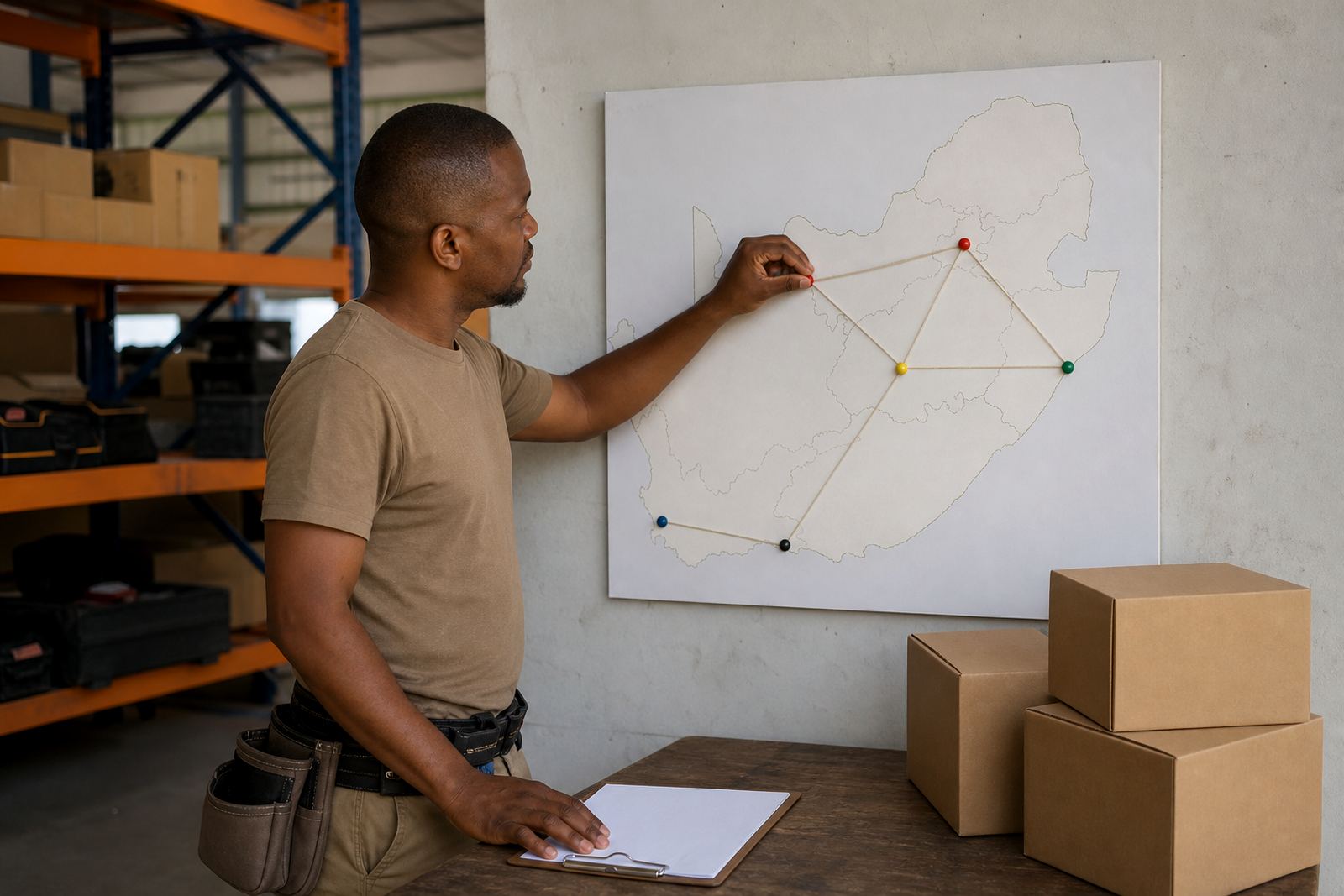
From our Alberton base, we supply Johannesburg, Pretoria, Midrand, Centurion, Durban, Cape Town and Polokwane. Orders can be planned for a single crew or for multiple teams moving between sites, including phased rollouts where stock has to be delivered in stages. If your work changes from week to week, we can also help you choose mixed trade kits so the same order covers more than one task type.
For South African conditions, practical details matter. Coastal humidity in Durban means materials need to hold up to damp storage and salty air. Inland sites in Gauteng often deal with dust, heat and load-shedding, so a pouch that closes properly and keeps tools in place can save time when the job starts late and the team needs to move fast.
Practical combinations we help you choose
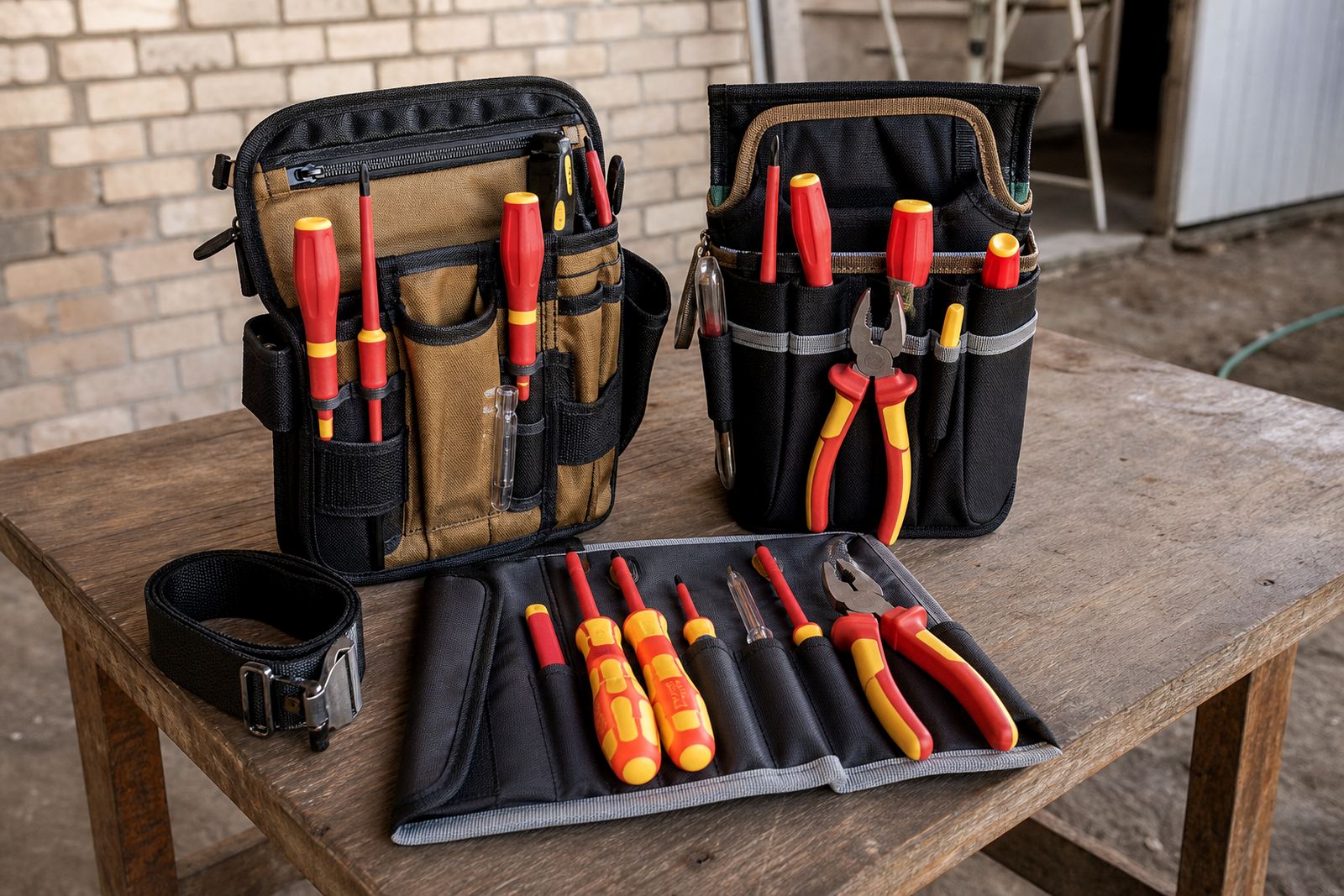
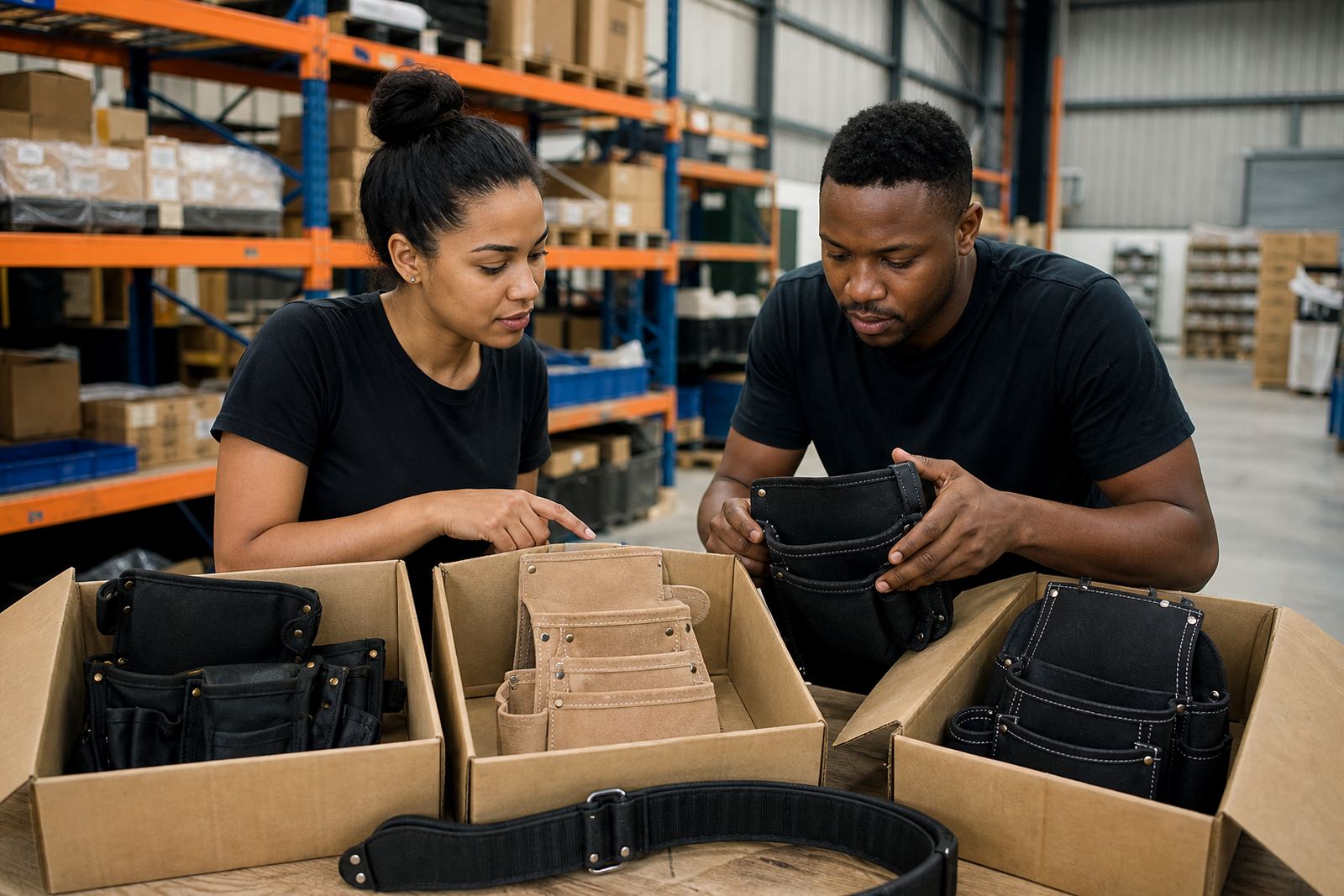
Many contractor orders are not about buying the most expensive option. They are about selecting a combination that suits the team size, trade type and daily carry load. A builder may need a wider nail bag with space for fasteners and marking tools, while an electrician may need a smaller pouch set with separate compartments for drivers, testers and cutters. We help narrow that down before the order is placed.
- Tool pouches for daily carry and fixings
- Nail bags for builders, carpenters and general site work
- Utility waist belts in common sizes from small to extra large
- Starter kit builds for new crews or new sites
- Mixed trade kits for teams doing more than one task
- Custom order support for repeat supply and phased rollouts
If you are replacing old gear, we can also work from what is already in use and suggest a better layout. That includes checking whether the belt width, clip spacing and pouch depth suit the tools being carried. A poor fit leads to bouncing, twisting and slower movement on ladders or scaffolds, so the sizing step is important.
How the ordering process works
We keep the process simple and direct. You send your enquiry through the contact page, tell us what trade you are supplying, how many workers need kit, and whether the order is for one site or several. If you already know the quantities, we use that as the starting point. If not, we help you work it out based on crew size, shift pattern and replacement cycle.
- Step 1: Tell us the trade, site location and team size
- Step 2: We help match pouch styles, belt sizes and quantities
- Step 3: You confirm the mix and delivery plan
- Step 4: We prepare the order and arrange supply to the required area
- Step 5: You use the same order structure for repeat replenishment
For larger projects, we can split the supply into stages so you do not receive all stock at once if storage space is tight. This is useful on busy sites in Johannesburg or Pretoria where safe storage may be limited, and it also helps when project teams change as work moves from one phase to the next.
Turnaround and delivery planning
Turnaround depends on stock mix, order volume and delivery area. Standard contractor orders are handled quickly when the sizes and quantities are confirmed early. Larger mixed orders or staged project supply may take longer because we need to check the full line-up before dispatch. If you are planning around a deadline, allow time for size confirmation and any adjustments to the kit mix.
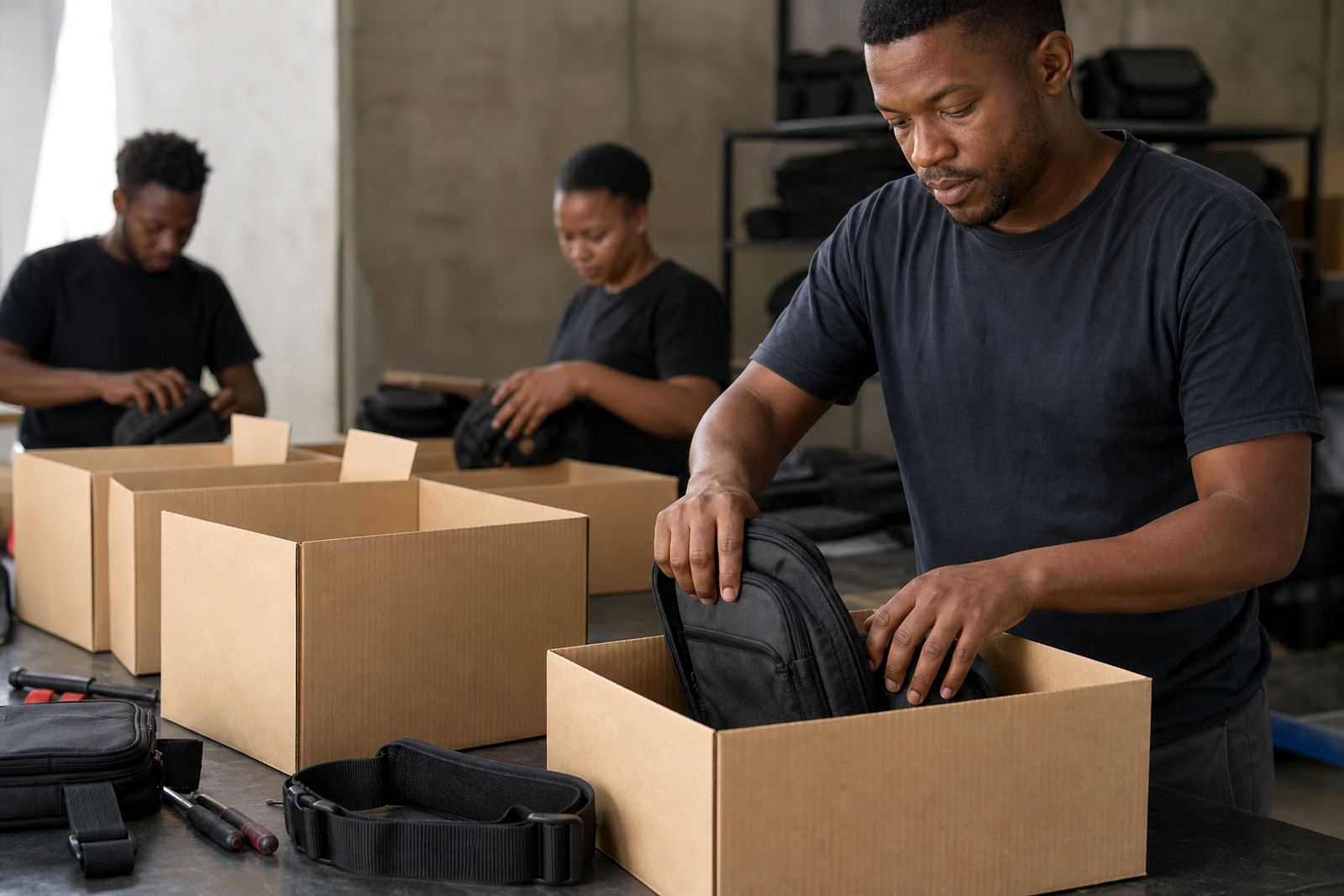
We also help with delivery planning so the order reaches the right site at the right time. That matters when a contractor has multiple crews working in different places, or when site access is limited by municipal rules, security gates or working-hour restrictions. Our warehouse team in Alberton manages packing and dispatch, while our customer support team keeps the order details clean and easy to repeat.
Where possible, we recommend ordering a small buffer above the exact headcount. A few extra belts or pouches on hand can prevent delays if a new worker joins mid-project or if a kit needs replacing after hard use on site.
Pricing approach for contractor accounts
Our pricing is based on quantity, product mix and the level of support needed for the order. Simple repeat orders are easier to price because the item list is already set. Mixed trade kits, custom builds and staged deliveries may require a more detailed quote so the quantities are correct. We keep it practical and transparent, with no unnecessary add-ons.
For builders and electricians buying in volume, the best value usually comes from matching the order to actual site use. Buying too many of one item and too few of another wastes money and creates uneven stock. If you manage several teams, we can help structure the order so each team gets the right mix without overbuying. That often makes replenishment easier and the monthly spend more predictable.
If a contractor needs recurring supply, we can set up a repeat pattern so future orders are quicker to place. That is useful for firms working across Alberton, Midrand, Centurion and the greater Gauteng area, where projects can start and end at different times.
Maintenance intervals and replacement planning
Tool pouches and waist belts last longer when they are checked on a regular basis. We suggest a quick inspection every 2 to 4 weeks on active sites, especially where the team works in dust, rain or coastal conditions. Look for frayed stitching, cracked belt loops, worn clips and torn seams around the load points. If the pouch is carrying sharp tools or heavy fasteners, the wear can show up sooner.
Replacement timing depends on use. A well-cared-for utility belt on light duty may last through a long project, while a hard-worked builder's bag on a busy site may need earlier replacement. We advise contractors to keep a small reserve for the most used sizes and styles, then top up before the busy season begins. This reduces interruptions when a pouch fails mid job and the crew has to stop to reorganise.
- Inspect belts and pouches for wear before each major project phase
- Replace items with damaged stitching or weak clips immediately
- Keep one spare kit per active crew where possible
- Review sizing again when staff numbers or tasks change
Good maintenance is not complicated, but it saves time and money. A clean, well-fitted pouch keeps the tools where they should be, and that helps the team work faster with fewer delays.
Who uses this service most often
Contractor order support is a strong fit for electrical firms, general builders, maintenance contractors, project supervisors and procurement teams that buy for more than one person. It also suits smaller businesses that do not order every week but still need the right kit when a new site starts. Whether the order is for one crew in Johannesburg or a regional rollout across Durban, Cape Town and Polokwane, the same approach applies: practical quantities, sensible combinations and repeatable supply.
If your team needs better organisation on site, this service gives you a clear way to order without wasting time on trial and error. You tell us what the job requires, we help shape the order, and you get a supply plan that is easier to repeat next time.
Key facts
| Base location | Alberton, Gauteng |
|---|---|
| Service area | Johannesburg, Pretoria, Durban, Cape Town, Polokwane, Midrand and Centurion |
| Supported trades | Builders, electricians, maintenance teams and contractors |
| Order types | Bulk team orders, repeat orders, mixed trade kits and staged project supply |
| Product focus | Tool pouches, nail bags and utility waist belts |
| Maintenance check interval | Every 2 to 4 weeks on active sites |