
Start With The Job You Are Doing
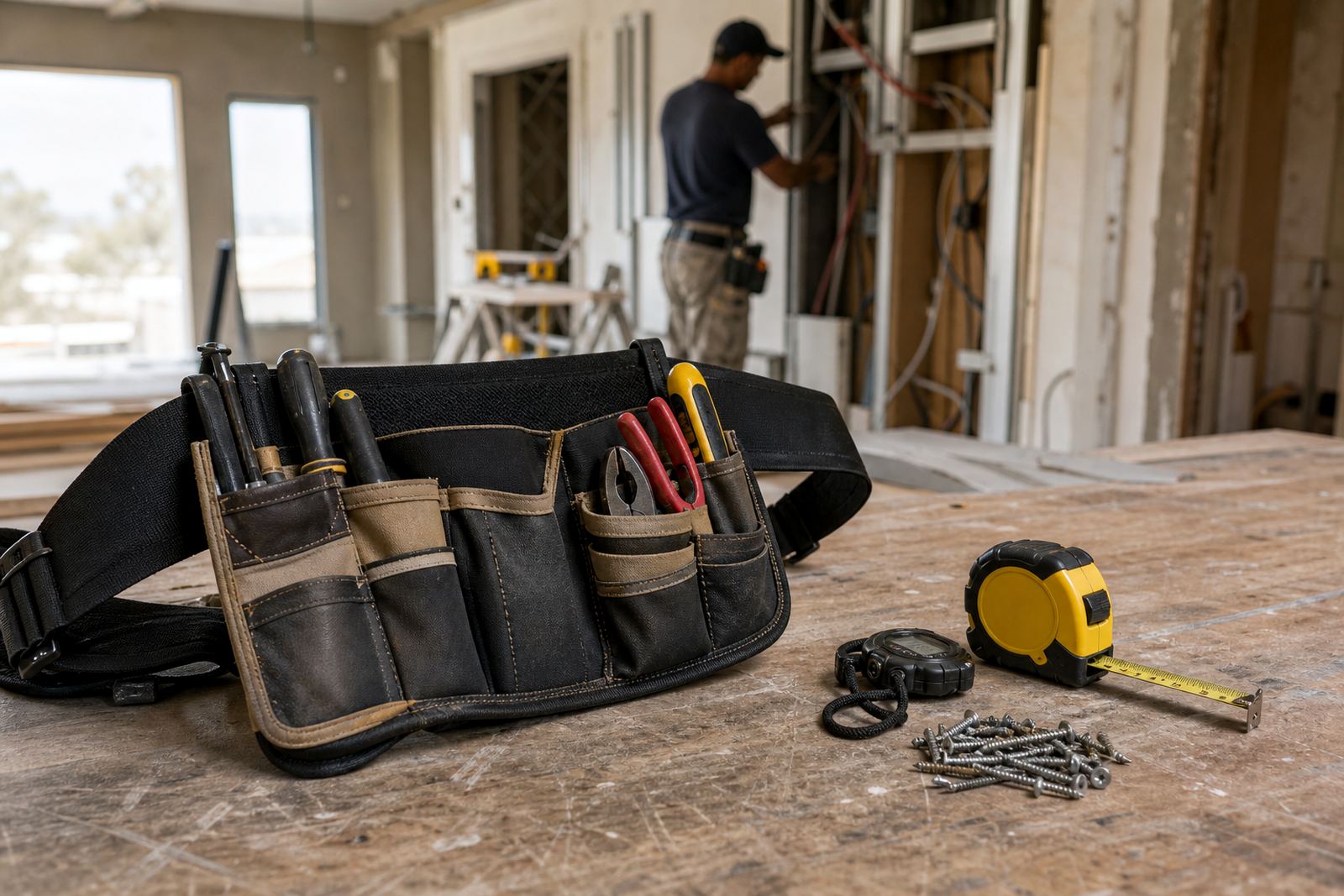
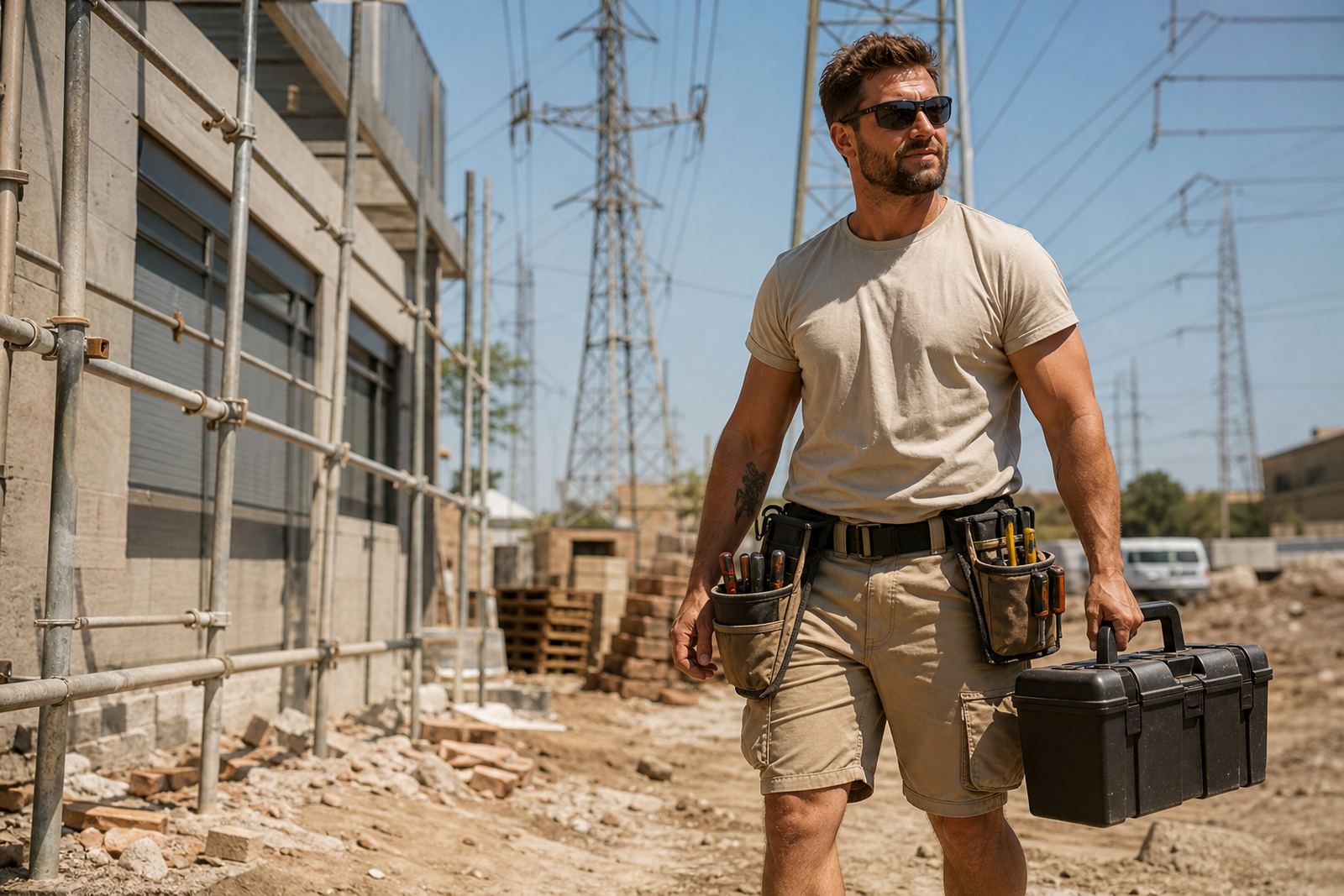
A good belt fit starts with the work itself. A builder carrying nails, pencils, tape, spirit level and a hammer will set up differently from an electrician moving between ladders, conduit fittings and testers. If the belt is loaded for the wrong task, it will twist, pull at the hips and get in the way when you climb, kneel or work overhead.
Before fitting, lay out the items you use most often and decide what must sit on your dominant side and what should stay clear of your front. Heavy items should sit low and close to the body so the belt does not sag. Smaller hand tools can go higher or to the side, where they are easy to reach without forcing you to bend too far. On busy sites in Johannesburg or Pretoria, that small planning step can save a lot of wasted movement over a long day.
- Keep the heaviest tools closest to the centre of the body.
- Place fast-grab items where your hand naturally falls.
- Leave space for crouching, kneeling and ladder work.
- Do not overload one side only, or the belt will ride unevenly.
Measure Your Waist Properly Before Tightening
Many fitting problems start with the wrong size. Measure around the part of your body where the belt will sit, usually above the hips and below the waistline of your trousers. Do this over your work clothing, not over a T-shirt if you normally wear a thicker top or rain layer. A belt that feels fine in the store can become tight once you add a fleece, utility vest or rain jacket.
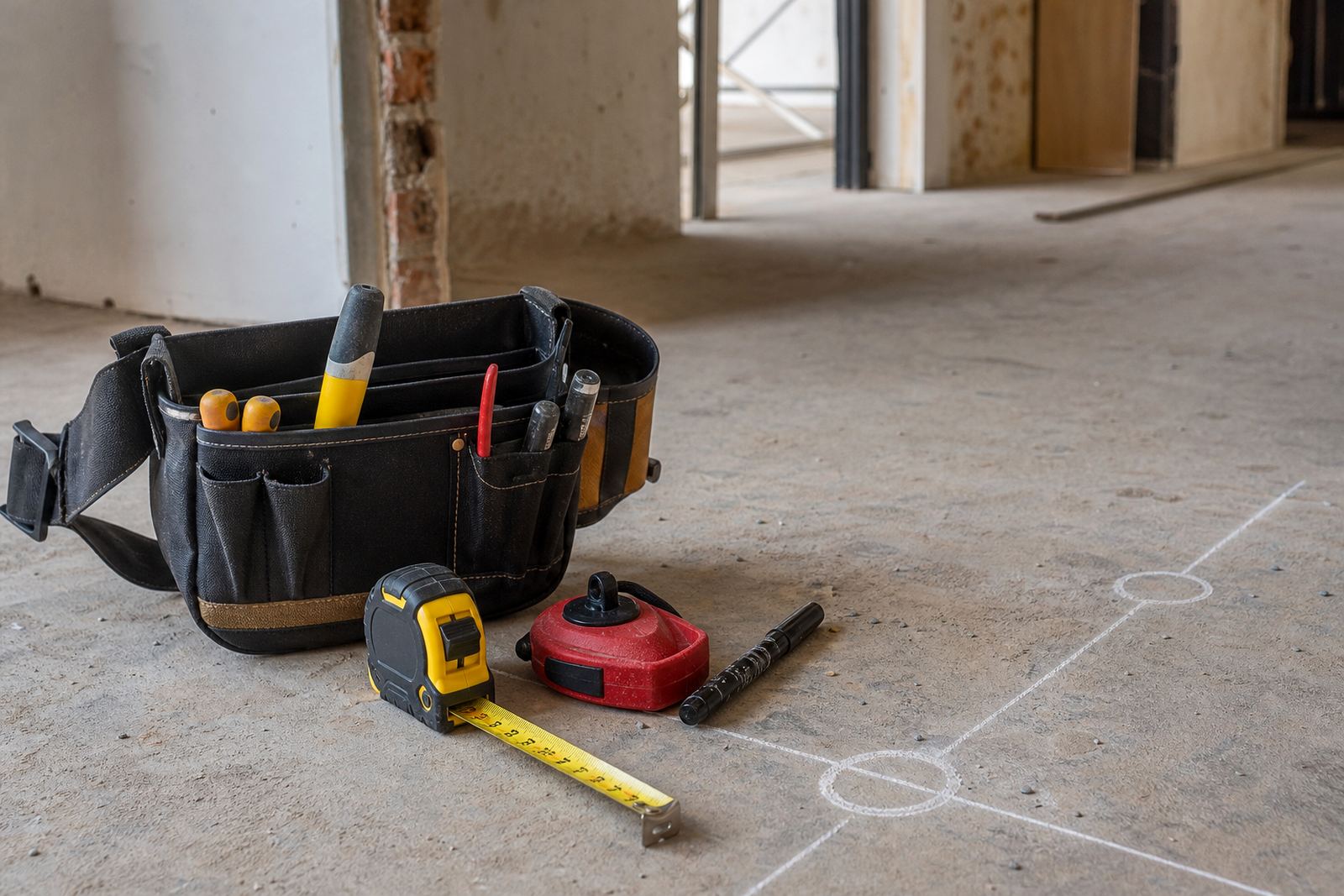
Use a tape measure and make sure you can breathe and bend comfortably. You should be able to slide a hand under the belt once it is fastened, but not so loose that the pouch swings when you walk. If the belt is too tight, it digs into the stomach and lower back. If it is too loose, the pouches bounce, tools shift, and the whole setup feels clumsy. In coastal areas like Durban or Cape Town, where humidity can make clothing sit differently during the day, a little adjustment room matters.
- Measure while standing upright and relaxed.
- Try the belt with the clothes you wear on site.
- Leave enough room for movement and a full meal break.
- Recheck the fit after a week of use, not just on day one.
Set The Belt So The Weight Sits On The Hips
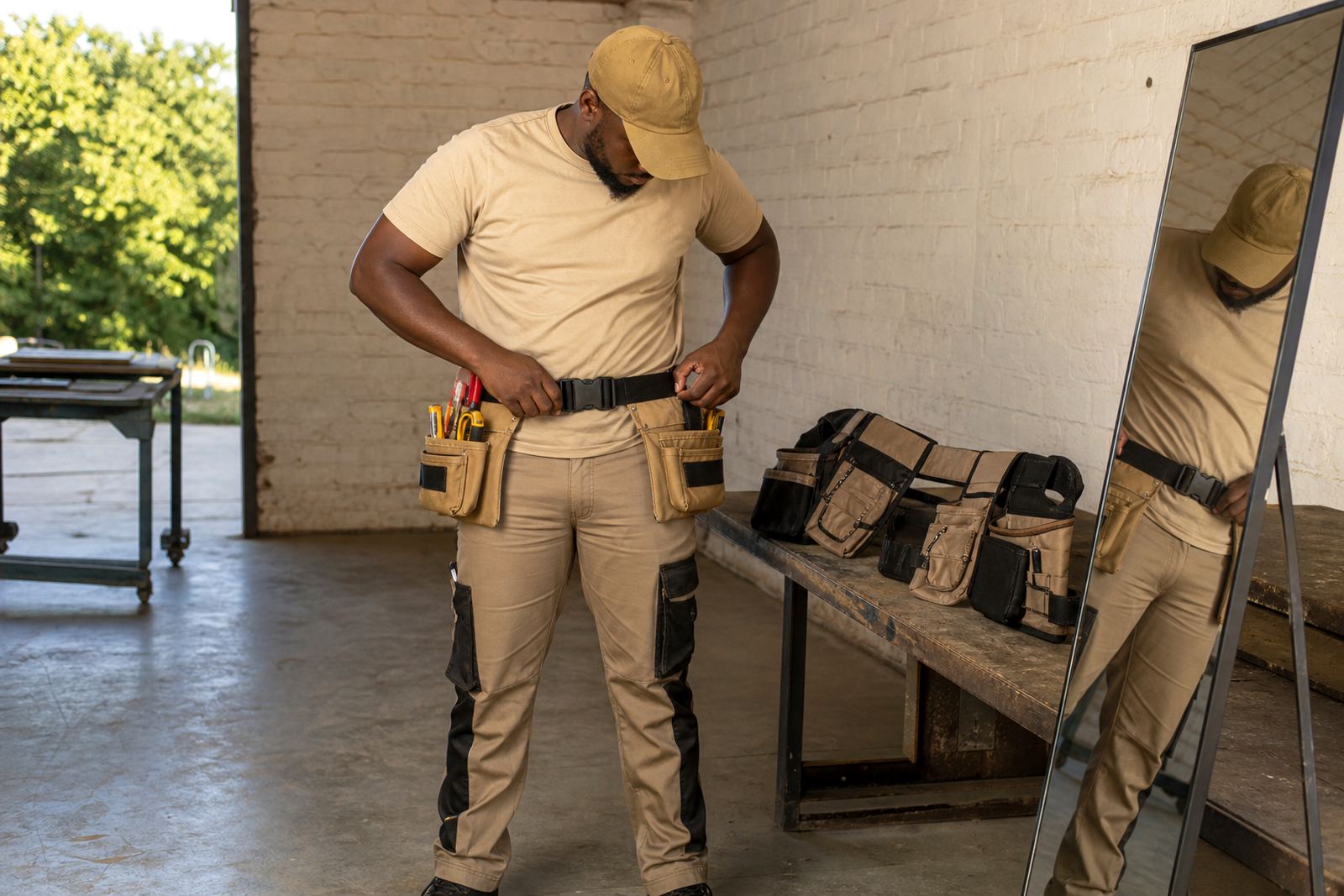
The belt should rest on the hips rather than hanging from the stomach. That is the part of the body that handles weight better, especially when the pouch is loaded with nails, plugs or fixings. If the belt sits too high, it can pull on the back and limit movement when reaching up or twisting side to side.
Fasten the belt, then test it by walking, bending and climbing a few steps. The pouches should stay level, not swing out or tilt forward. If you hear tools clinking sharply as you move, the load may be hanging too low. If the belt presses into the ribs when you sit or kneel, lower it a little. This is especially useful on housing projects and renovation sites where workers keep changing position through the day.
Once the belt is in place, check three points: front, side and back. The front should stay flat, the sides should not pinch, and the back should not drag downward. A fitter setup often feels boring at first because it disappears into the work, and that is exactly what you want.
Balance The Pouches For Comfort And Security
Balance is what keeps a belt comfortable over long shifts. If one pouch is packed with metal fasteners and the other is nearly empty, the belt will pull to one side and create a constant strain. The best setup spreads weight evenly and keeps the most-used items where they can be reached without turning your body too far.
A practical way to test balance is to stand still for a minute, then take a few normal steps. If the belt rotates around your waist, the load is uneven. If one pouch keeps knocking against your thigh, shift some weight to the other side or move the pouch slightly forward. On sites with long walkways, stairs or level changes, a balanced belt helps prevent the repeated tugging that gets tiring by mid-morning.
- Keep bulkier items apart instead of stacking them in one pouch.
- Use separate pockets for loose fixings so they do not mix with hand tools.
- Check that clips, loops and holders are fully seated before work starts.
- Make sure nothing sharp points into the leg or hip when you crouch.
Match The Belt To Load-Shedding, Heat And Coastal Wear
South African working conditions make a difference to belt fitting. In summer heat, a belt can feel tighter as you sweat, while during load-shedding jobs you may be carrying a torch, spare batteries or test equipment that changes the balance of the setup. If you work near the coast, salt air and moisture can also affect the comfort and lifespan of leather, stitching and metal fittings. A belt that fits well on day one should still hold its shape after regular use.
Check the belt after exposure to dust, rain or site grime. Clear out sand, cement dust and offcuts before tightening it again. If the belt has soaked up water, let it dry properly before storing it, otherwise the fit can change and the material may stiffen. A quick wipe-down at the end of the day helps keep the pouch openings neat and easier to use the next morning.
For electricians, it is worth checking that the belt does not interfere with kneepads, harness straps or insulated gloves. For builders, make sure the pouch position still allows room for tape measures, pencils and a small square without crowding the hip. Small adjustments can make a big difference, especially on long projects where comfort matters as much as speed.
A Local Example From An Alberton Site
On a typical residential build in Alberton, a team might start early, work through a hot afternoon and then finish up while chasing delivery delays or power interruptions. In that kind of day, a poorly fitted belt becomes a nuisance very quickly. One carpenter may need room for screws and a tape measure, while an electrician may need a pouch set up for connectors and a tester. If both workers are using the same belt layout without adjustment, one of them will keep shifting the belt back into place.
The better approach is simple: fit the belt to the person, then fit the pouch layout to the task. That means checking the waist size, moving the heaviest pouch to the stronger side, and making sure the front stays clear for bending and stepping over rubble. It sounds basic, but a proper setup usually means less fatigue by lunch and fewer dropped items by knock-off time.
For supervisors, this also helps with team order planning. When each worker has a belt that suits the job, tool sharing becomes cleaner and stock use is easier to manage. The result is less clutter on site and fewer delays while someone searches for the right bit, nail or fitting.
Check The Fit Before Every Shift
Even a good belt needs a quick check before work starts. Fasteners loosen, pouches stretch and the load changes from job to job. A five minute check in the morning can prevent a sore hip or a lost tool later in the day. It is one of those habits that pays off quietly.
- Clip the belt on and walk a short distance before leaving the yard.
- Bend, crouch and reach up once to test movement.
- Listen for shifting tools or loose hardware inside the pouches.
- Adjust the fit again after lunch if the belt has settled differently.
If a belt still feels wrong after adjustment, the issue may not be the fit alone. The pouch layout may need changing, or the belt size may be too small for the clothing and load you are carrying. Sorting that out early is better than pushing through a full day with a setup that keeps fighting your body. For builders and electricians across South Africa, that practical check is often the difference between a comfortable shift and a hard one.