Why carry systems change the pace of the job
On a busy site, every extra walk back to the toolbox costs time. A well-fitted tool pouch or utility belt keeps the most used items within reach, so the job keeps moving. That matters whether you are setting out on a housing development in Alberton, wiring a shop in Pretoria, or doing repairs on a windy coastal site in Durban.
The right carry system also helps with workflow. Instead of juggling screws, cutters, tape and a pencil in your hands, you can keep them in set positions. That small change cuts down on stoppages, drops and the constant shuffle of tools from pocket to pocket.
For many crews, the pouch becomes part of the work rhythm. It is not about carrying everything. It is about carrying the right things in the right place, so the next step is always ready.
What tool pouches do best on South African sites
South African sites can be hard on kit. Heat, dust, concrete slurry and coastal humidity all test the stitching, rivets and fabric. A proper tool pouch is built for daily use, with compartments that keep sharp and small items separated. That helps reduce damage to tools and makes the pouch easier to work from even after long shifts.
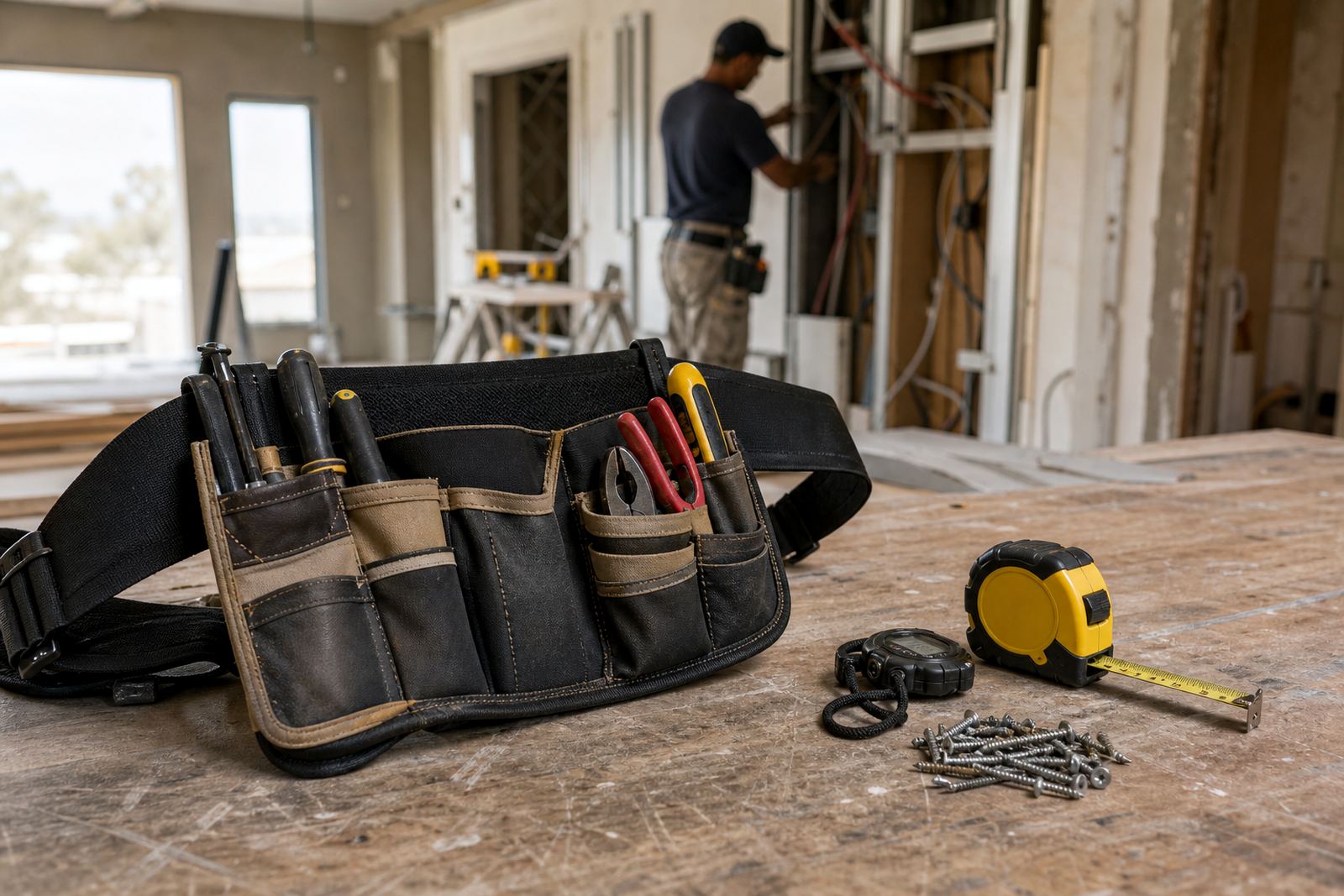
Builders often need fast access to nails, markers, pliers, measuring tape and small fixings. Electricians may want insulated hand tools, connectors, cable ties and a compact tester close at hand. A pouch that matches the trade keeps the load balanced and avoids overstuffing, which is where most carry systems start to fail.
Load-shedding also changes how teams work. Jobs can stretch later into the day, and crews often need to move between tasks quickly while power is on. When your kit is already organised on your belt, you waste less time resetting between tasks and more time finishing the work at hand.
- Keeps common tools separated and easy to find
- Reduces clutter on ladders, scaffolding and work benches
- Helps protect sharp items and small consumables
- Makes it easier to hand over tools on site without confusion
Builders and electricians need different layouts
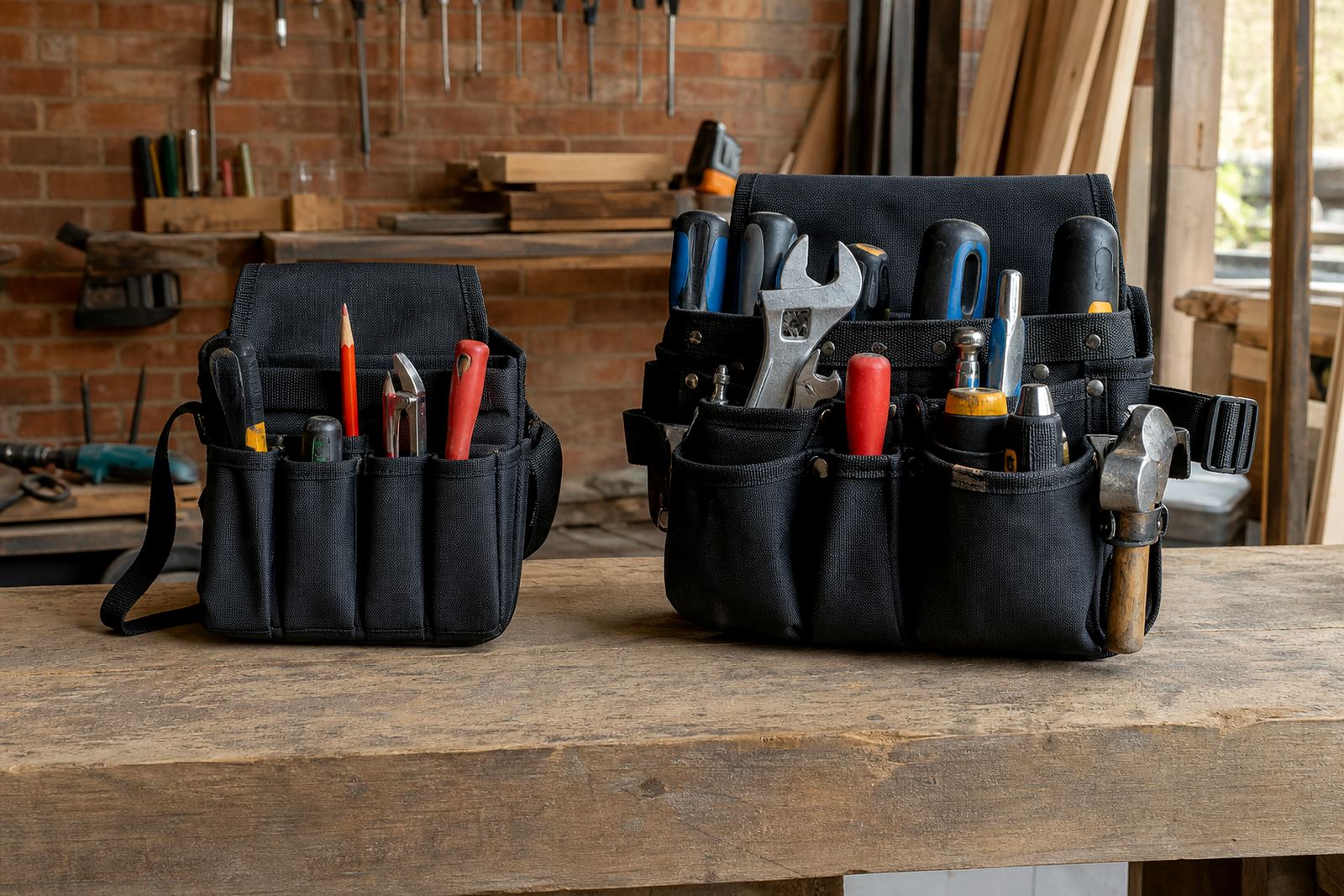
Not every trade carries the same way. A builder might need larger pockets for fixings, chalk, a tape measure and marking tools. An electrician usually wants a tighter layout with smaller sections for terminals, cutters and testing tools. That is why pouch layout planning matters more than people think.
When the layout matches the task, the pouch feels lighter and works better. You are not digging through one big pocket for a small item, and you are less likely to lose screws or cable accessories in the bottom of the bag. A good layout also helps teams standardise how they work, which is useful when more than one person is sharing the same site process.
For contractors managing mixed crews, a side by side comparison of belt size, pouch depth and pocket count can save a lot of frustration later. It is a simple step, but it makes the daily carry more practical.
Comfort matters when the shift runs long
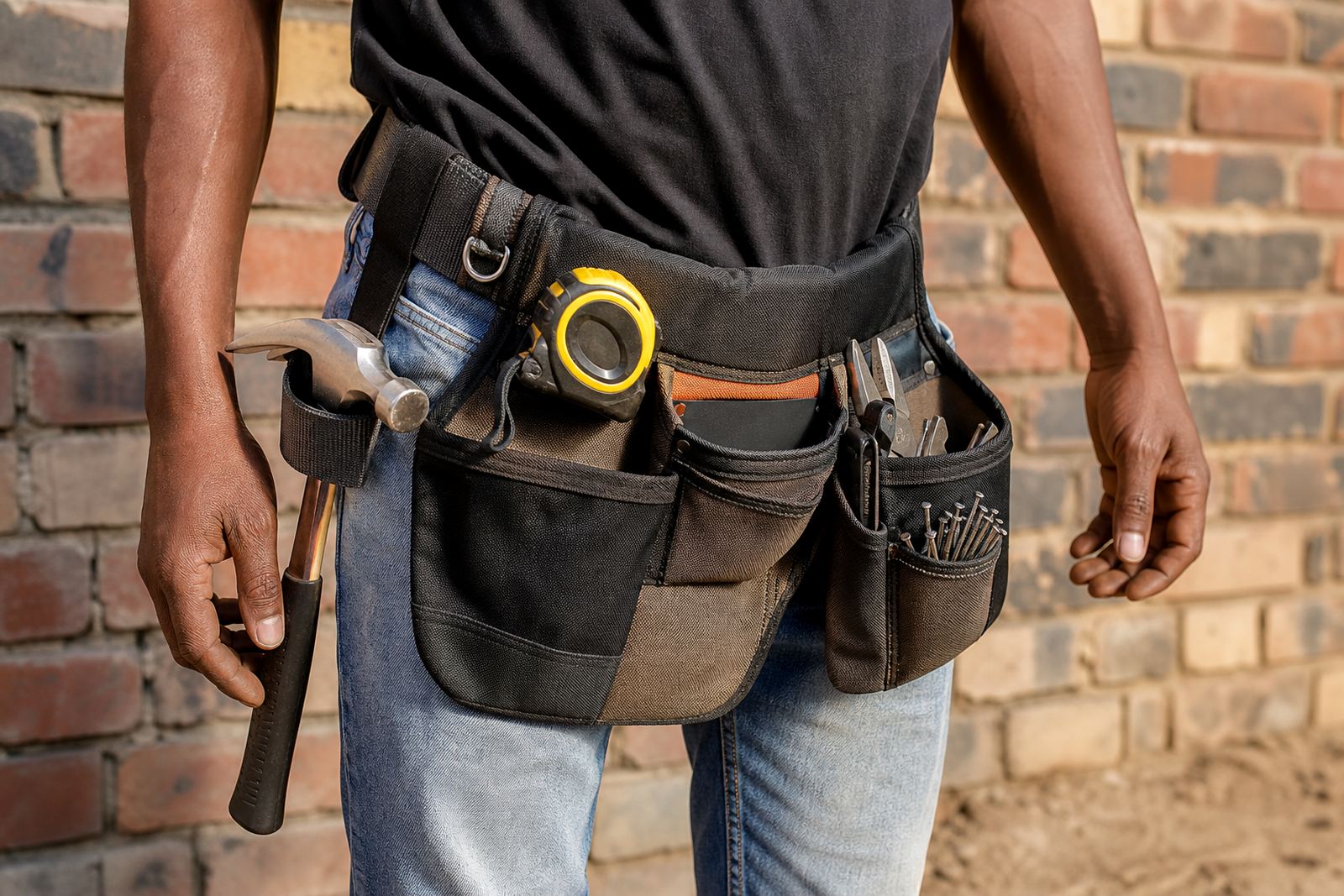
A tool pouch that looks fine in the store can still be tiring after a full day on site. Weight distribution, belt width and the position of the pouches all affect comfort. If the belt digs in, slips down or pulls to one side, the worker ends up adjusting it all day instead of focusing on the task.
Comfort becomes even more important for teams working in long runs, such as ceiling installations, estate work or repetitive repair jobs. When the pouch sits properly, you get better movement up ladders, around corners and through tight spaces. It also helps reduce strain when climbing in and out of vehicles or moving between floors.
A belt should match the user, not just the job. That is why belt size matching is part of a proper supply decision. One size does not suit every person, and a poor fit can turn a useful pouch into dead weight.
- Choose a belt that sits snug without slipping
- Check that pockets do not interfere with bending or kneeling
- Keep heavier items centred to reduce pulling on one side
- Test the setup before issuing it to the full team
How better organisation supports site speed
Speed on site is not only about working faster. It is about wasting less time looking, walking and resetting. Better organisation means a worker can move from measuring to fixing to checking without breaking concentration. Over a full day, those small gains add up.
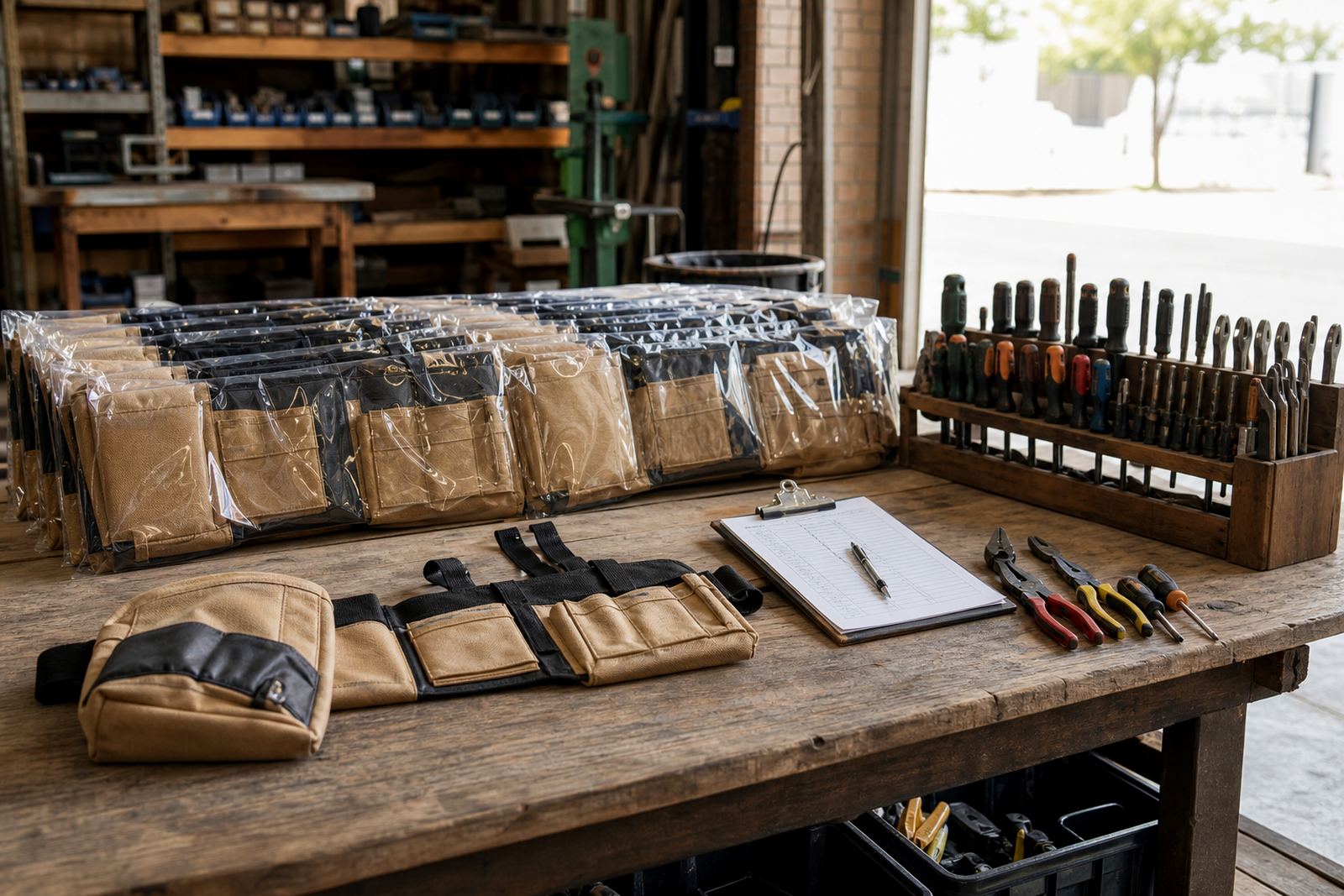
Project rollout supply often needs this kind of thinking. If a contractor is setting up multiple teams across Johannesburg, Midrand or Centurion, it helps to prepare kits in a consistent way. That way each worker knows where the key items are kept and can get straight to work without asking for replacements every few minutes.
Stock replenishment plans also make a difference. When pouches are organised by task, it becomes easier to see what runs low first. That helps avoid last minute shortages and keeps smaller consumables under control. In practice, good organisation is one of the cheapest ways to improve workflow.
A practical example from a Gauteng housing site
On a housing project near Alberton, one crew moved from carrying mixed tools in pockets and buckets to using matched pouches and utility belts. The team was doing repeated fit-off work, with electricians and builders sharing the same access routes and storage area. At first, there was constant backtracking for tape measures, screws and cutters.
After the pouch layout was standardised, the crew cut down on those interruptions. Electricians kept connectors, cutters and small tools in one setup, while builders carried fixings and marking tools in another. It did not change the work itself, but it changed how smoothly the work flowed. The site foreman also found it easier to check kit before each shift, which reduced missing items and avoidable delays.
That kind of result is common where teams work in tight schedules and changing conditions. Whether the job is in Cape Town, Polokwane or Durban, the principle stays the same: when tools are arranged properly, the work starts quicker and finishes cleaner.
Choosing the right pouch for the job
The best pouch is the one that fits the trade, the person and the site conditions. Start with the type of work, then look at pocket layout, belt comfort and the amount of gear carried each day. A builder doing general site work may need a broader setup, while an electrician often benefits from a more compact configuration with tighter sections.
For contractors, it can also help to think in terms of team order rather than one off purchases. Bulk team orders, starter kit builds and mixed trade kits make it easier to equip crews in a consistent way. That consistency matters when multiple people are working under one schedule and the goal is to keep every task moving without fuss.
In the end, a tool pouch is not just storage. It is part of how the job gets done, and the right choice saves time every single day.