Why the first 10 minutes matter at the workshop
Most delays do not begin on the ladder or at the wall. They start when a fitter or electrician is already halfway to site and has to turn back for fixings, insulated screwdrivers, a tape or the right drill bits. A well planned pouch setup cuts that sort of stop-start work down before the crew leaves Alberton, whether the job is in Johannesburg, Pretoria or out toward Polokwane.
For builders and electricians, organised carry is not about looking tidy. It is about having the right items in the same place every time, so the day begins with less shouting, fewer repeat trips and less wear on the team. In a workshop with load-shedding, compressed prep time and a full vehicle to pack, that matters.
Match the pouch to the task, not the other way round
A pouch layout should follow the work you actually do. A general building team needs space for fixings, marking tools, a tape, blades and a few fasteners. An electrical crew may need insulated hand tools, test gear, connectors and small parts kept apart so they do not get mixed up on the way to site. If the pouch is overloaded, people start leaving items behind or carrying tools loose in pockets.
- Use one pouch for fasteners and fixings only
- Keep sharp items in separate pockets where possible
- Place the most used tools in front-facing slots
- Leave one section free for daily consumables
- Balance left and right side weight to reduce strain
The right layout also helps when weather changes. On the coast, humidity can affect metal fasteners and small hand tools if they are left loose in open trays. In Gauteng, dust and building grit can clog pockets quickly if the carry system is not checked and cleaned.
Set up the belt so it works through a full shift
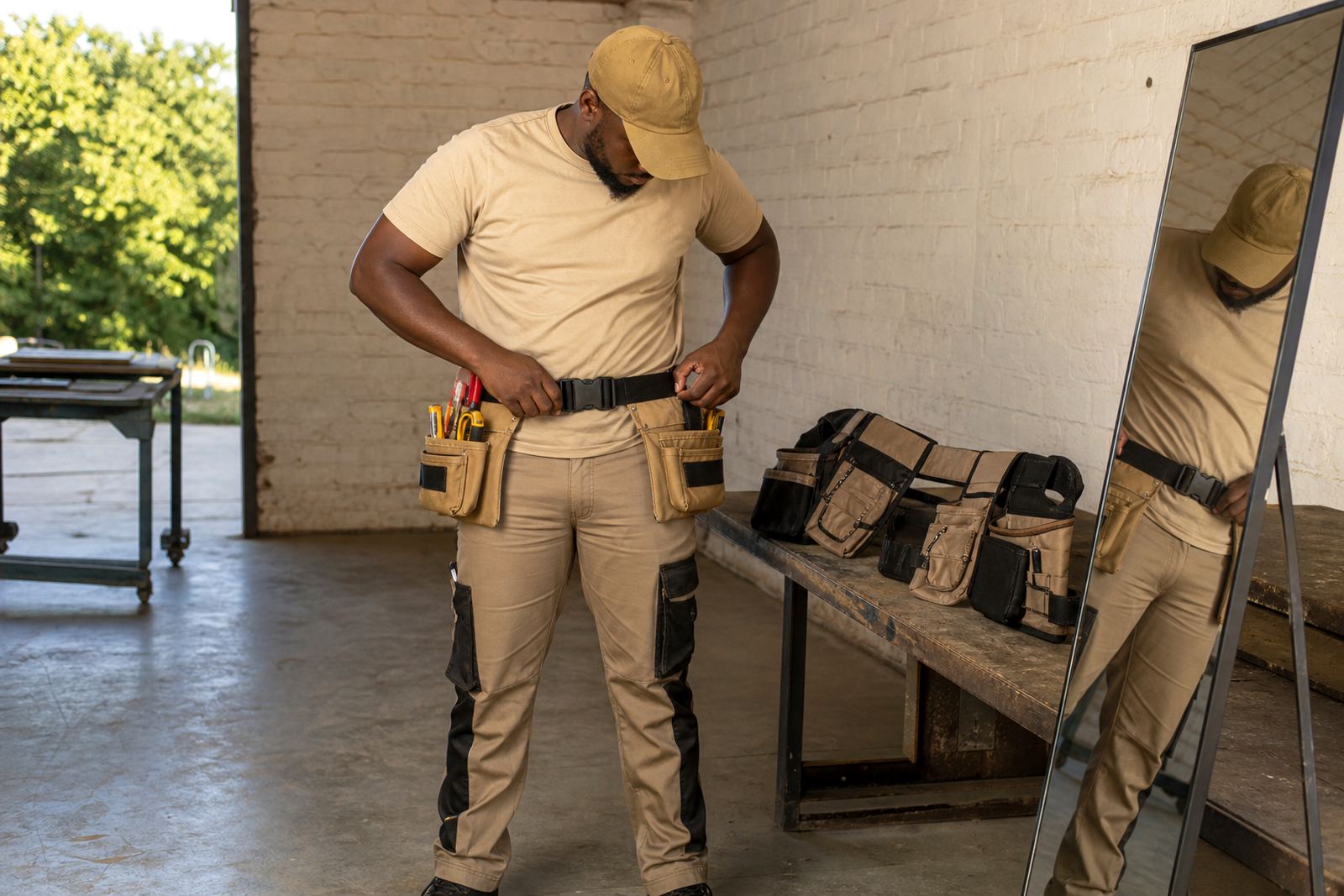
A waist belt should feel secure without biting into the hips or pulling the back forward. If the belt is too loose, the pouch swings and slows the worker down. If it is too tight, movement becomes awkward, especially when climbing scaffolding or kneeling to fix a skirting line. Belt size matching is worth getting right from the start.
Before a rollout, test the belt with the actual load that will be carried. A light starter load may feel fine in the workshop, then become uncomfortable once the pouch is full of plugs, screws and a hammer. That small check saves a lot of complaints later, and it is far easier to adjust before the crew is on the road.
- Check belt fit over work trousers and winter layers
- Test the carry position while bending and climbing
- Make sure the buckle can be opened with gloved hands
- Set the pouch height so pockets are easy to reach
Build starter kits for new hands and new jobs
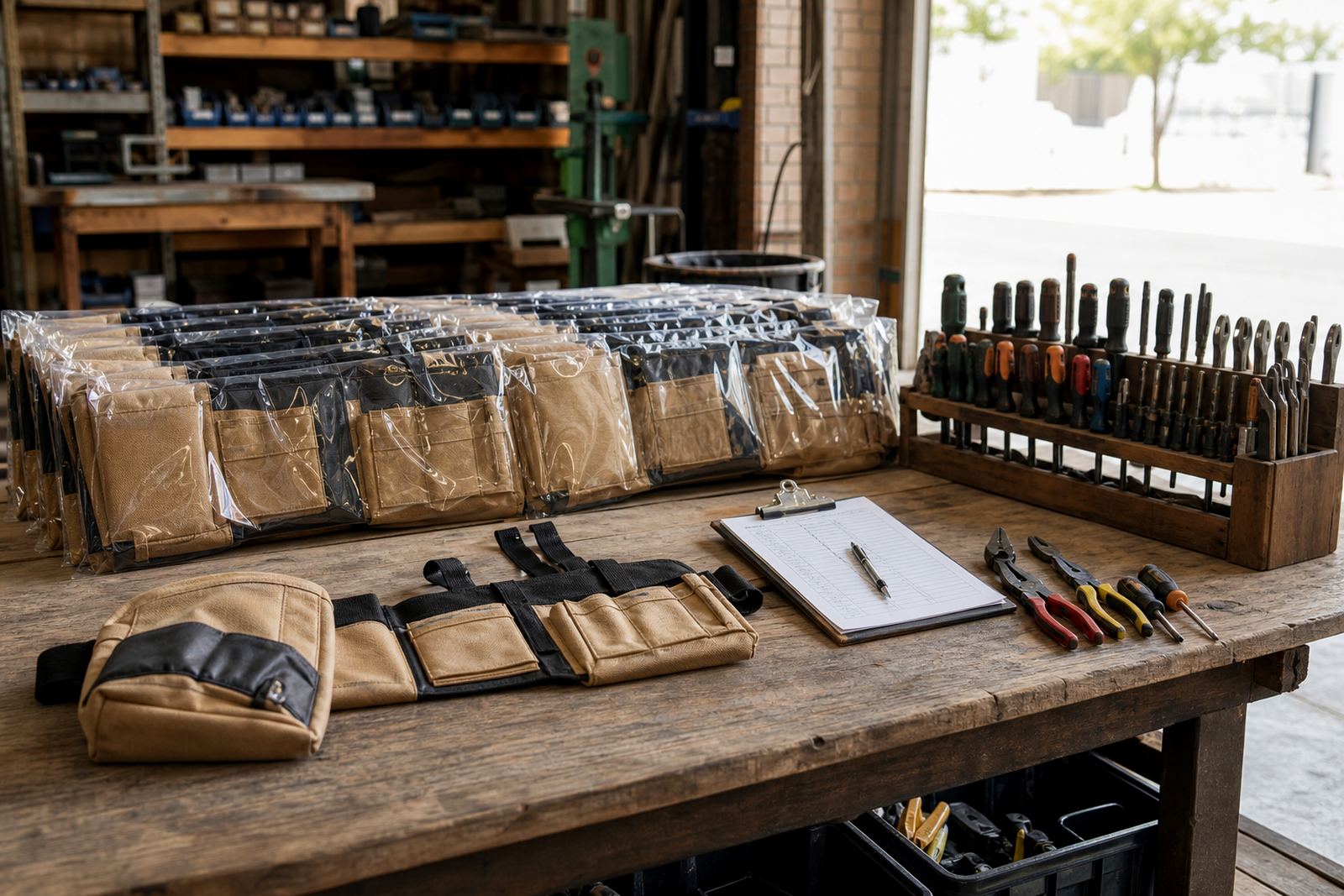
New staff members often arrive with tools in a plastic box, a jacket pocket full of mixed hardware and no proper system. That slows everyone down. A starter kit with a clear pouch layout gives them a clean beginning and makes supervision easier. It also helps contractors who move between housing work, maintenance call-outs and site installations.
For a mixed trade crew, starter kits can be split by role. Builders can be set up with nail bags and fixings pouches, while electricians get tighter pocket layouts for hand tools and small components. The aim is not to carry everything, but to carry the right items in the right order. That way, the kit supports the job instead of becoming clutter.
For larger teams, a simple rollout plan works best. One person checks what each site needs, another matches the pouches, and a third confirms replenishment items before dispatch. It sounds basic, but it prevents the common problem of 20 workers all arriving with different carry setups and no common system.
Keep the van ready for the next call-out
The workshop is only half the story. The van needs the same discipline, because a badly packed vehicle wipes out all the good work done earlier. Keep the pouch sets in the same place every day, and store replenishment stock in labelled containers so the team can top up quickly before heading to the next job. When supplies are scattered, the morning starts with a search instead of a plan.
Delivery planning helps too, especially for contractors working across Gauteng, KwaZulu-Natal, the Western Cape and Limpopo. If stock replenishment is mapped to your weekly route, you can keep the pouches full without holding too much dead stock at site. That is useful for firms that run between Midrand, Centurion, Durban and Cape Town, or split crews across several towns.
- Return empty pouches to the same bin after every shift
- Top up fixings and consumables before the van is locked
- Separate electrical items from general builder stock
- Label team kits so replacement is quick
- Check worn stitching or loose clips weekly
A local example from Alberton to site
A small contractor based in Alberton was losing time each Friday morning because the team loaded the van from three different shelves and two open crates. By the time they reached a job in Johannesburg South, one crew had the wrong pouch, another had no spare fixings and the electrician was still looking for the right connectors. After setting up matched pouch layouts and a basic stock plan, the pack-out became quicker and the site start ran smoother.
That change did not need fancy systems. It needed clear carry rules, a bit of consistency and proper kit selection for the work at hand. Once the team knew where each item lived, the workshop became easier to manage and the van stopped turning into a mobile storeroom. The result was less confusion and better use of time, which is what most contractors want in the first place.
A simple rule for better starts
Before every shift, ask one question: can the crew reach what they need without stopping the job? If the answer is no, the pouch layout, belt fit or stock plan needs a change. Good carry systems do not just make work neater, they help teams start faster and stay focused through the day.
For builders and electricians across South Africa, organised pouches are one of the simplest ways to improve workshop prep. Done properly, they support the job before the first screw is driven and before the first wire is stripped. That is where the savings begin.