Why tight spaces call for a slimmer carry setup
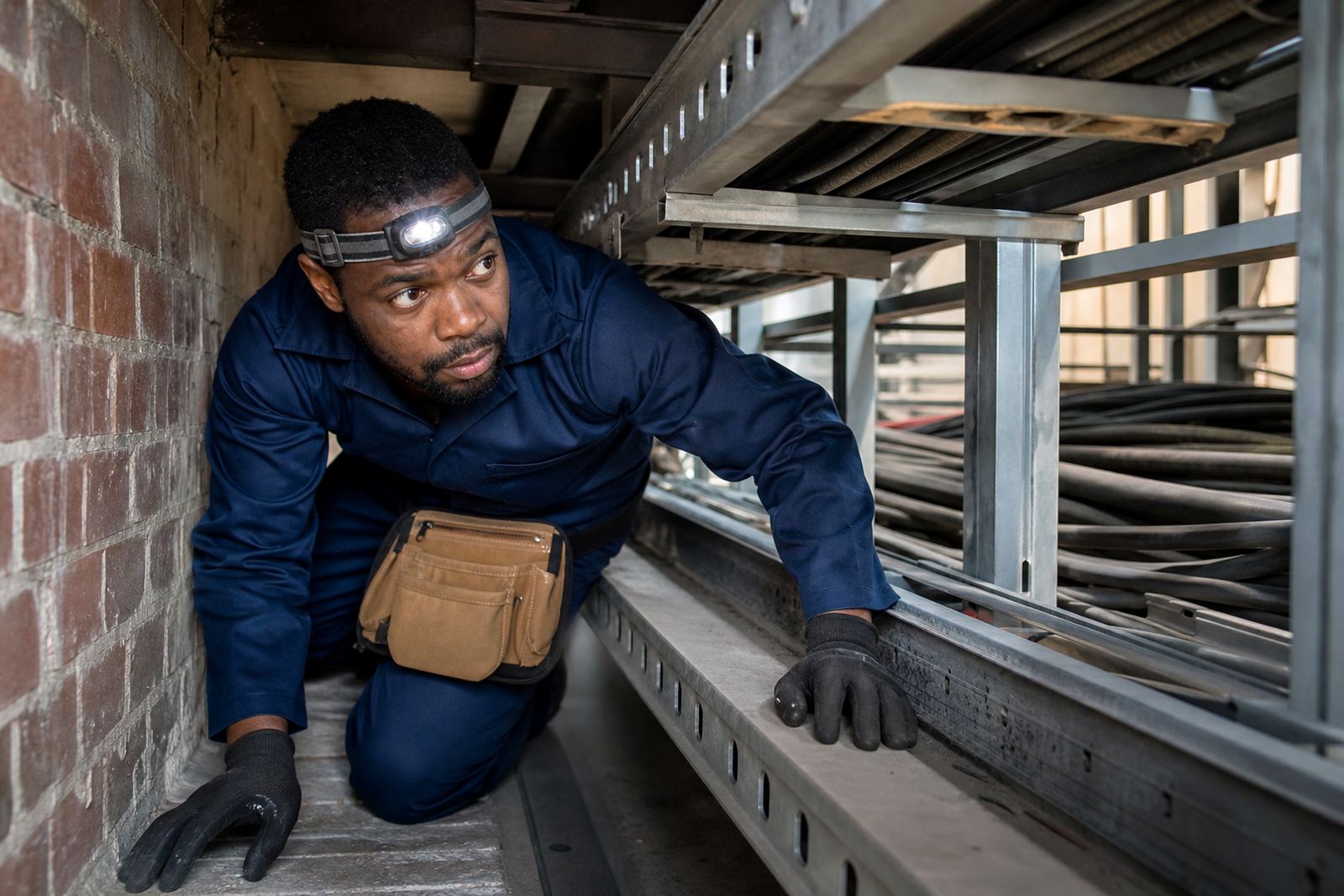
On site, space is rarely kind. In a ceiling void or plant room you may be crouched, reaching sideways, or moving past other trades with only a narrow path to work in. A pouch that sits too deep or hangs too low can catch on pipe brackets, cable trays and framing, which slows the job down and creates extra wear on the kit.
For electricians and builders working in Johannesburg offices, Durban apartment blocks, or retrofit projects in Cape Town, the aim is simple: carry only what you need, where you need it. A flatter profile helps you move through tight access points, while still keeping fasteners, marking tools, bits and small hand tools sorted. It also reduces the constant shifting that happens when weight sits awkwardly on one side.
Low-profile carry is not about carrying less value. It is about carrying smarter. When a pouch is set up properly, you spend less time reaching into a cluttered pocket and more time getting the task done without a lot of unnecessary movement.
What makes a pouch work in ceilings and shafts
The best pouch for tight workspaces has a shape that stays close to the body and a layout that keeps the most used items easy to grab with one hand. For overhead work, the opening should stay firm enough to keep its shape when you bend, climb or kneel. If it collapses too easily, you end up fishing for screws and small fittings in the middle of a busy job.
- Shallow pockets for screws, clips and anchors
- Separate slots for pencils, markers and small screwdrivers
- Strong stitching at stress points and belt loops
- Rounded edges that reduce snagging on clothing and surfaces
- A belt that stays secure without digging in during long shifts
In humid coastal conditions, especially along the KZN coast and around Cape Town, materials need to handle moisture and daily dust without losing shape too quickly. In Gauteng, the bigger issue is grit from construction sites and repeated use during dry, windy weeks. A practical pouch should cope with both.
How electricians can set up for service risers and ceiling runs
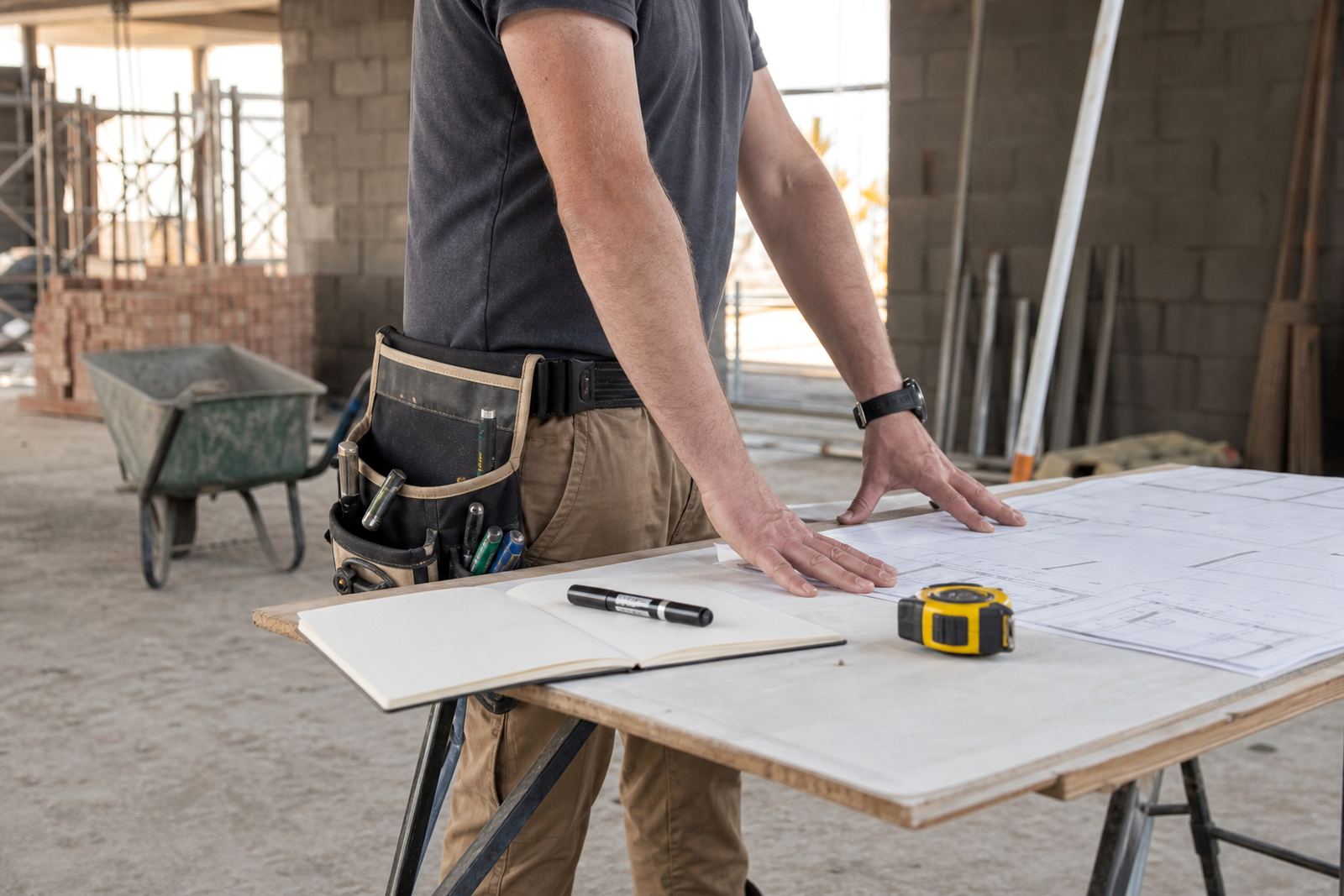
Electricians often need a small set of tools for repetitive tasks: insulated screwdrivers, a marking pen, a tape measure, fixings, cable ties and maybe a compact tester. If each item has its own place, you can work faster in areas where there is little room to move. That matters in service risers, lighting changes, and above-ceiling work where you do not want loose items falling into the void.
Many crews use a two pouch approach for these jobs. One side can handle fixings and markers, while the other carries tools used more often during install and maintenance. It keeps the weight balanced and stops one side from pulling the belt out of line.
- Keep heavier tools low and close to the hip
- Separate sharp items from soft consumables
- Use a slim pouch for above-ceiling access where movement is restricted
- Choose a belt size that fits over workwear without constant adjustment
For contractor teams in Pretoria or Midrand, this type of setup is useful on fit-out jobs where different trades share the same access routes. The less bulk you bring, the easier it is to work without getting in the next person’s way.
Builder tasks that suit a lower-profile pouch
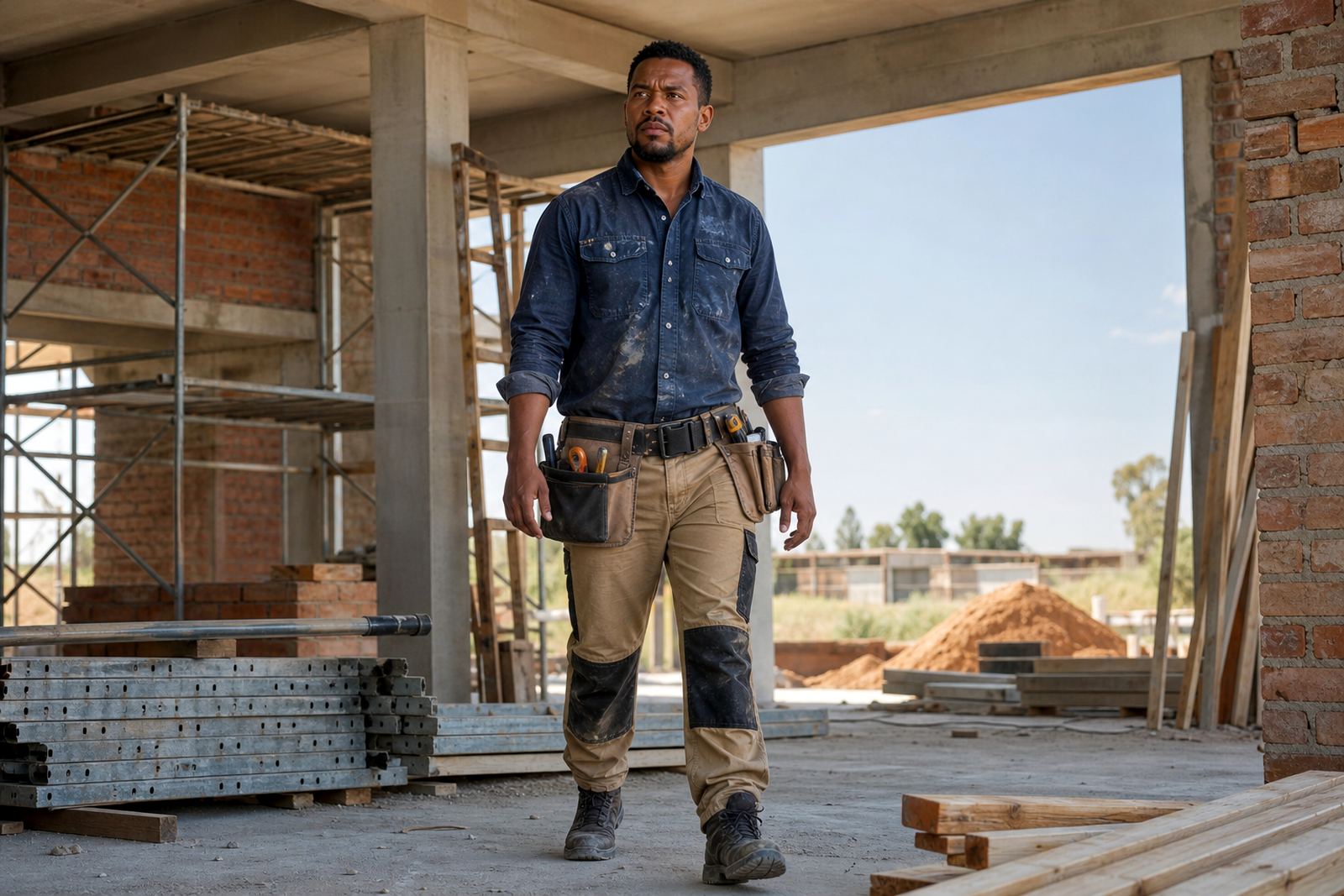
Builders often need a carry option that handles fasteners, marking tools, a small spirit level, tape and a handful of fixings without turning into a heavy rig. In tight interiors, especially on renovation sites, a low-profile pouch keeps the body free enough for crouching, kneeling and moving through doorways and passages.
It is also useful where the work changes quickly. One moment you are fitting out skirting, the next you are sorting a doorway, then moving back to a ceiling line. A compact pouch means the basics stay with you all the time, instead of being left on a bench or floor a few metres away.
For crews doing townhouse projects in Alberton, or a mixed-use unit in Polokwane, that small difference can save plenty of time over a full week. It also cuts down on repeated trips to collect the same bits and tools from a central point.
Choosing the right size instead of guessing
A common mistake is buying a pouch that looks good on the rack but does not suit the job. Too small and it cannot hold the daily essentials. Too large and it starts to drag, especially when loaded with metal fittings. Belt size matters too, because a pouch that rides too low becomes harder to reach when you are bending or standing on a ladder.
When choosing size, think about the actual work pattern. If the job is mostly overhead, keep the load light and neat. If it is a full-day install with multiple fixings, choose a layout that spreads items across the belt instead of stacking them in one area.
- Match the pouch depth to the type of tools you use most
- Check the belt fit with winter clothing and summer workwear
- Think about one hand access for cramped spaces
- Choose a layout that stays balanced when fully loaded
If your crew works across different sites in Johannesburg, Cape Town and Durban, it helps to standardise the carry setup where possible. That makes stock control simpler and keeps everyone working from the same basic layout.
Local rollout for teams and contractors
For teams managing multiple sites, a consistent pouch setup is often better than handing everyone a different carry solution. It helps with training, stock replenishment and job handovers. If a supervisor can see the same layout across the team, it is easier to spot what is missing and what needs replacing.
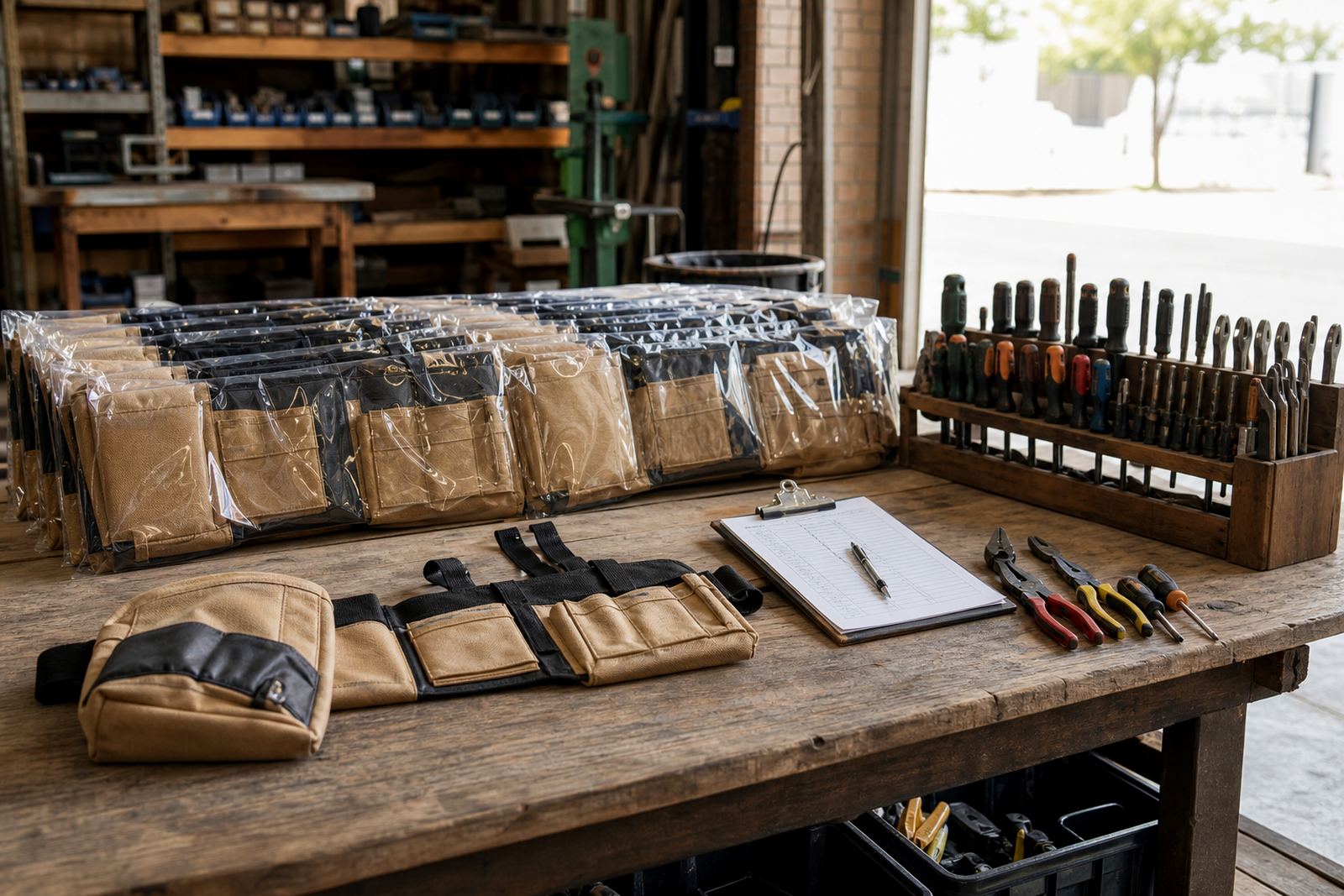
Waistbags Pro works with bulk team orders, pouch layout planning, belt size matching and starter kit builds for contractors who want a practical setup from the start. From Alberton to Centurion, and from Cape Town Supply to Durban Supply, the focus stays on what works on the job, not on fancy extras. Our team can help with project rollout supply, delivery planning and mixed trade kits so builders and electricians get what they need without extra back and forth.
For a site in a crowded retail centre or a fit-out in a busy office block, a slim pouch is often the difference between working comfortably and fighting your own kit all day.
A small pouch can make a long day easier
When space is tight, every extra centimetre matters. The right pouch should stay close, carry the essentials and stay out of the way while you work. That is the practical benefit of a low-profile setup: less snagging, less shifting and less clutter at the hip.
If your crew is working in ceilings, shafts or compact interiors, the best time to sort the carry setup is before the pressure starts. Once the job is underway, small inefficiencies become bigger problems. A well-chosen pouch keeps the work moving and helps the day run a bit smoother, even when the site is cramped and noisy.
For enquiries, clients can use the contact form on our contact page and we will help with the right carry option for the job at hand.