Why builders need a pouch setup that matches the job
On a busy site, a builder does not need every tool on the belt at once, but the right few items must sit exactly where the hand expects them. A good pouch setup reduces walking back to the toolbox, keeps fasteners close and helps avoid mistakes when the workday gets rushed.
For brickwork, you may need a tape measure, pencil, small level, trowel and a pouch for nails or ties. For framing, the load changes and you may want deeper pockets for layout tools, square edges and fixings. General building work often means switching between the two, so a pouch that can handle mixed tasks is usually the safer choice, especially on sites in Alberton, Johannesburg or Midrand where trades often overlap.
The best pouch is not the biggest one. It is the one that stays balanced on the belt, does not pull your trousers off line and keeps the sharp items from snagging on clothing. If the pouch swings too much when you climb scaffolding or carry blocks, it will get in the way fast.
Pouch features that matter on brickwork and blocklaying
Bricklayers and blocklayers need a pouch that opens easily with one hand and holds the small items that get used all day. In dusty conditions, a simple pocket layout is often better than one packed with too many sections, because fine sand and mortar crumbs can build up quickly and make fiddly spaces hard to clean.
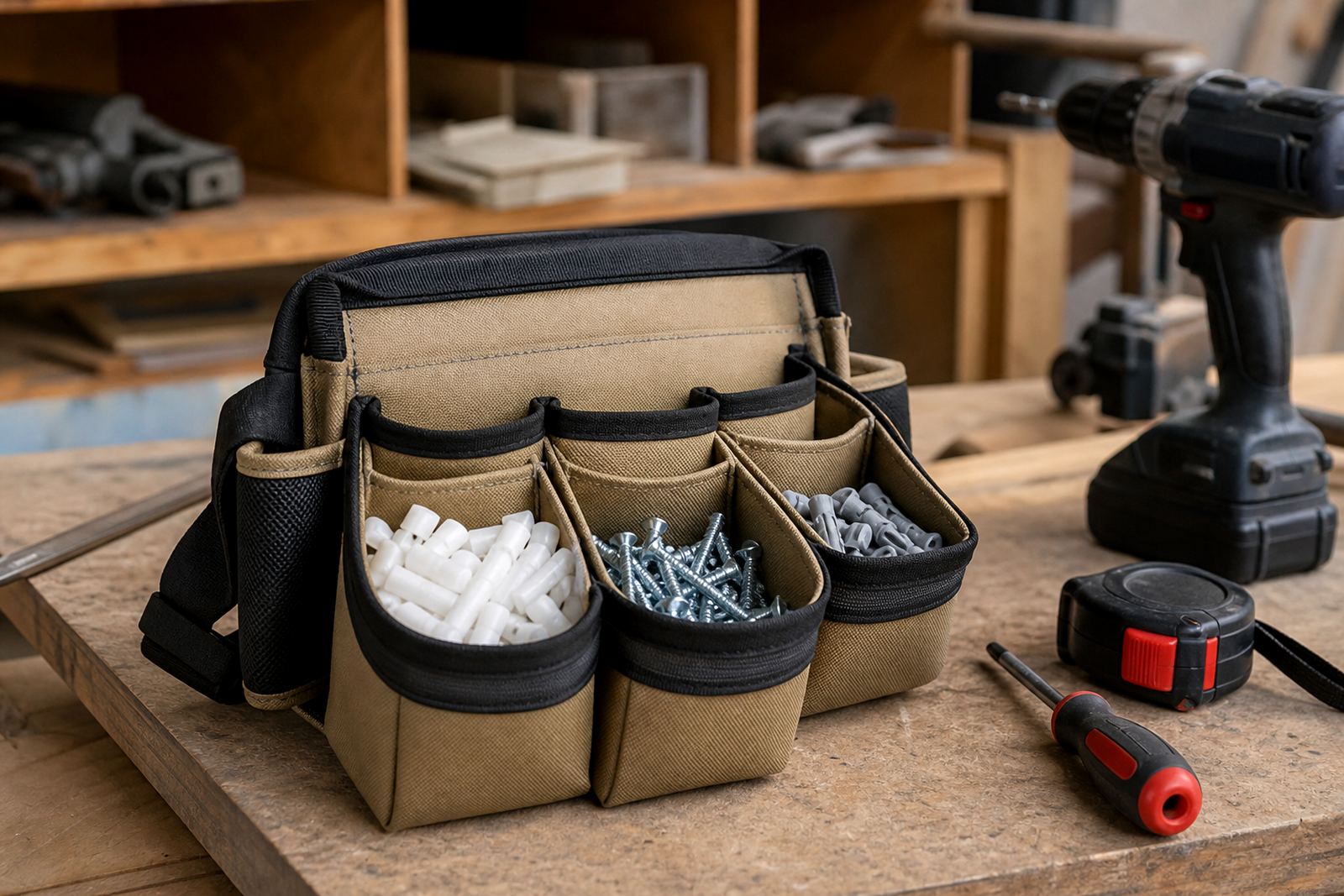
- Deep main pockets for nails, plugs and small fixings
- Reinforced stitching at stress points for daily use
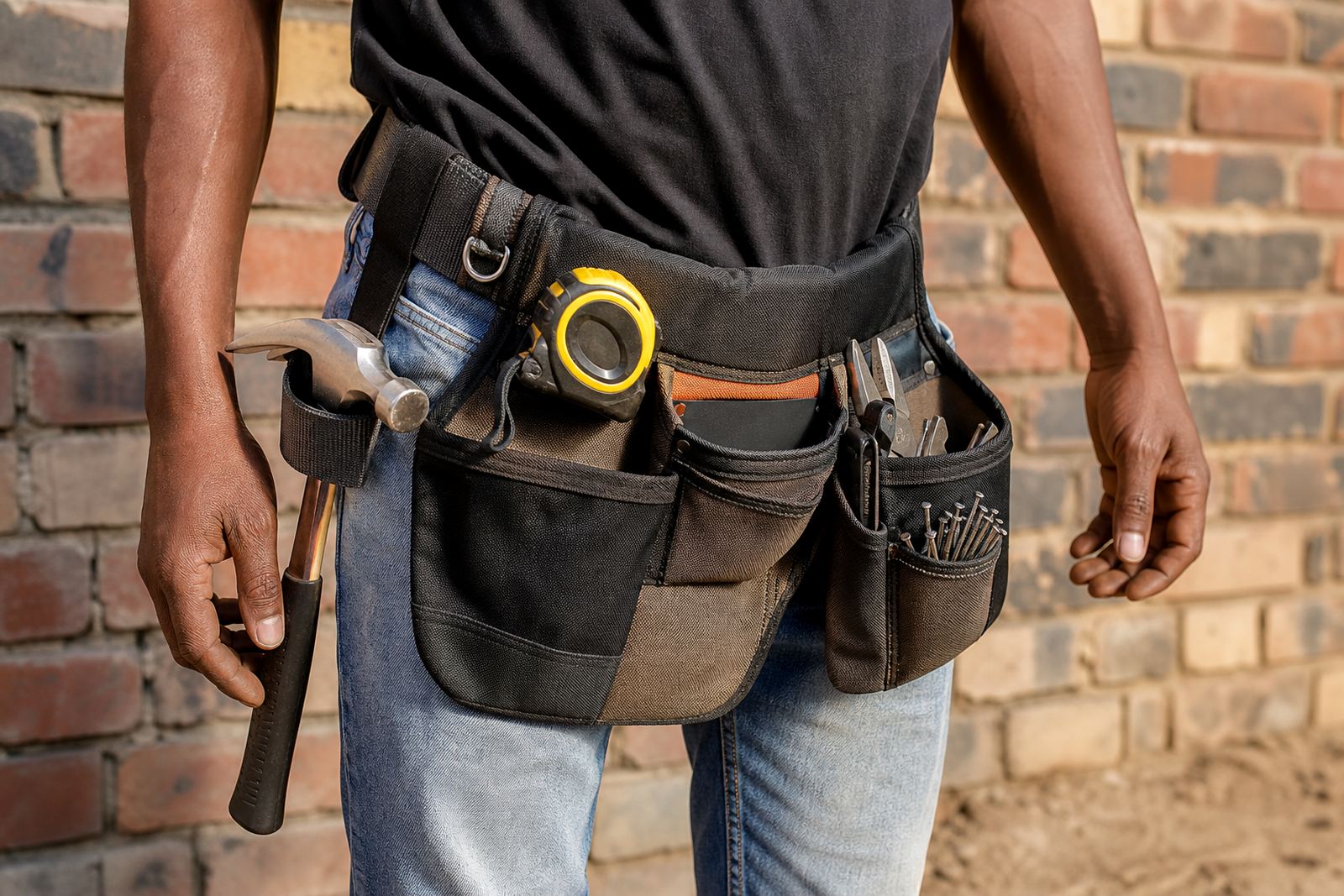
- Tool loops for pencil, scriber or small bars
- Strong belt loops that keep the pouch upright
- Material that can handle dust, light rain and jobsite wear
If you work near the coast, for example around Durban, moisture can be a factor and metal fittings may corrode quicker than you expect. In that case, keep the pouch dry where possible and choose hardware that does not seize after a few wet days. A well made pouch should still be easy to shake out and wipe clean at the end of the shift.
What framing crews should look for in a working pouch
Framing jobs usually call for more measuring, marking and fastener handling than a brickwork shift. That means the best pouch for framing is often one that offers a bit more organisation without becoming bulky. You want enough structure to keep items separate, but not so much that the pouch feels stiff when you bend, kneel or climb.
Look for a pouch that allows you to keep fasteners in one section and hand tools in another. This matters when you are moving between cutting, marking and fixing. A split pocket layout can also help reduce fumbling when wearing gloves, which is common in colder mornings in Pretoria or Polokwane.
- Separate compartments for fixings and tools
- Wide mouth openings for quick access
- Space for a folding rule or compact square
- Comfortable belt support for long shifts
- Low snag design for moving around timber stacks
Framing crews should also think about left- or right hand use. If a pouch is awkward to reach, it slows the whole workflow down. The setup should feel natural from the first hour to the last, not just when the site is quiet.
Choosing between a nail bag, tool pouch and utility belt
Many builders use the terms loosely, but there is a real difference. A nail bag is usually the simplest option, with room for fasteners and a few hand items. A tool pouch offers more structure for mixed tools and daily carry. A utility waist belt is the base that holds everything together and affects comfort just as much as the pouch itself.
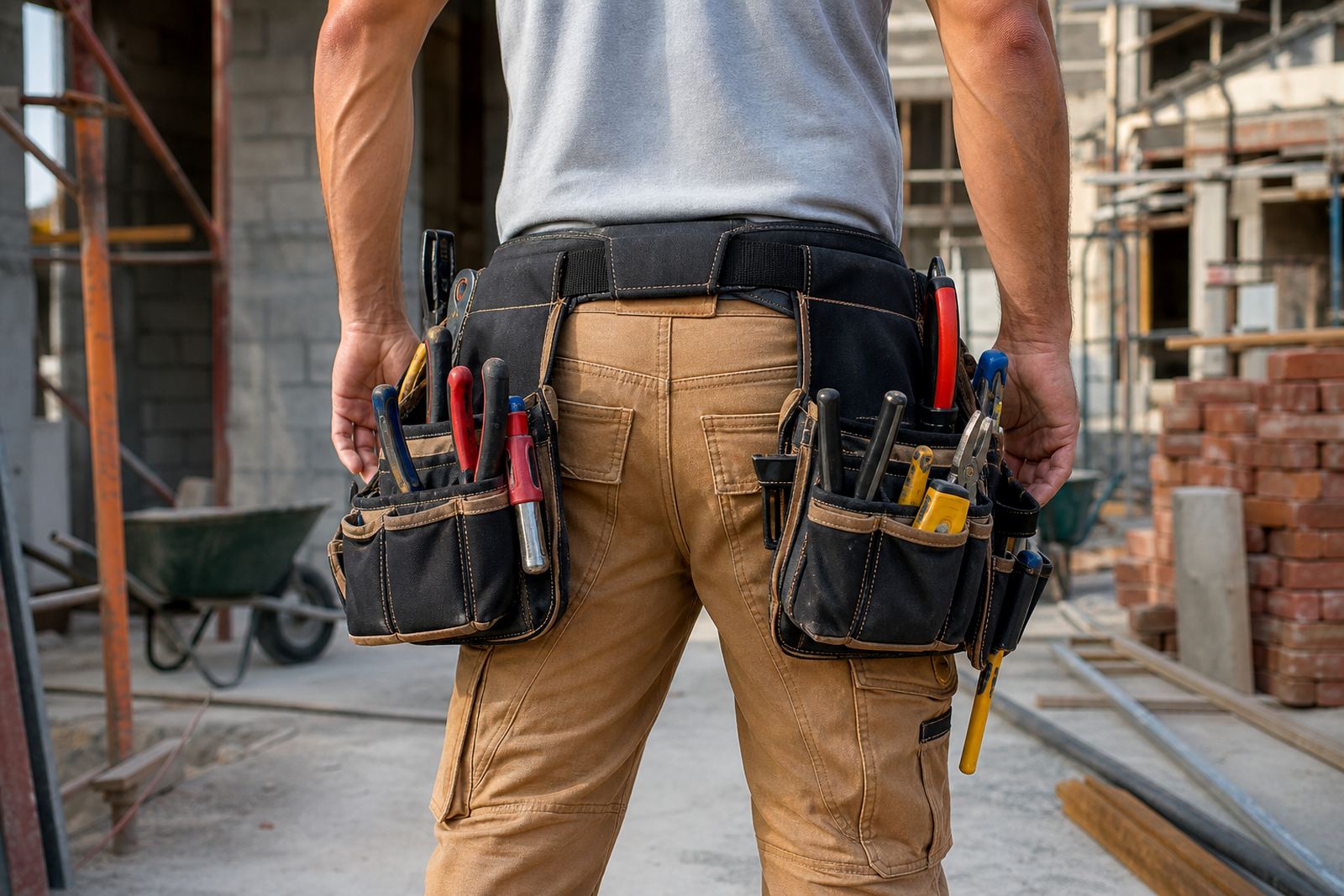
If your work is light and repetitive, a smaller pouch may be enough. If you handle more than one trade task in a day, a wider belt with two pouches can be better. That setup spreads the weight across the hips and keeps the load from pulling to one side. On longer jobs, that makes a clear difference by mid afternoon.
At Waistbags Pro in Alberton, many contractor orders are built around how the team actually works, not just what looks neat on paper. A brickwork crew in Johannesburg may need a different layout from a mixed building team in Cape Town, and a belt that suits one job can feel wrong on another. Getting the size and pocket mix right saves time, money and a lot of irritation.
How to match pouch size to the tools you carry
One of the most common mistakes is buying a pouch that is too small for the real kit. The result is overstuffed pockets, poor balance and tools falling out when you bend over. The other mistake is going too large, which adds weight and makes the belt feel clumsy.
A simple way to check is to lay out the items you use on a normal day. Include your tape measure, pencil, knife, pliers, marker, fixings and any small layout tools. If the pouch has to hold all of that plus extra consumables, then you need a stronger belt and deeper pockets. If it only carries two or three items, a lighter setup may be enough.
- Start with the tools you use every hour
- Add the items you use only on setup or finish work
- Check how the pouch feels when full, not empty
- Make sure the belt closes securely over workwear
- Allow space for winter layers or thicker overalls
It also helps to match the pouch to the type of clothing worn on site. A belt that fits neatly over a T shirt may feel tight over a jacket in July, so size matching should account for the season as well as the task.
A practical local example from Gauteng sites
A small building crew working on a townhouse project in Alberton might split the day between bricklaying, measuring openings and helping with light carpentry. In that case, a mixed pouch setup makes more sense than a single-purpose bag. One pouch can hold fasteners and a second can carry marking tools, while the belt keeps everything steady when moving between units.
The same crew may also be working around load-shedding schedules, which means less daylight in the late afternoon and more pressure to keep tools organised while work speeds up. When the pouch layout is clear, the team can keep going without losing time looking for a pencil or the right fixings. That matters on any project with tight handover dates.
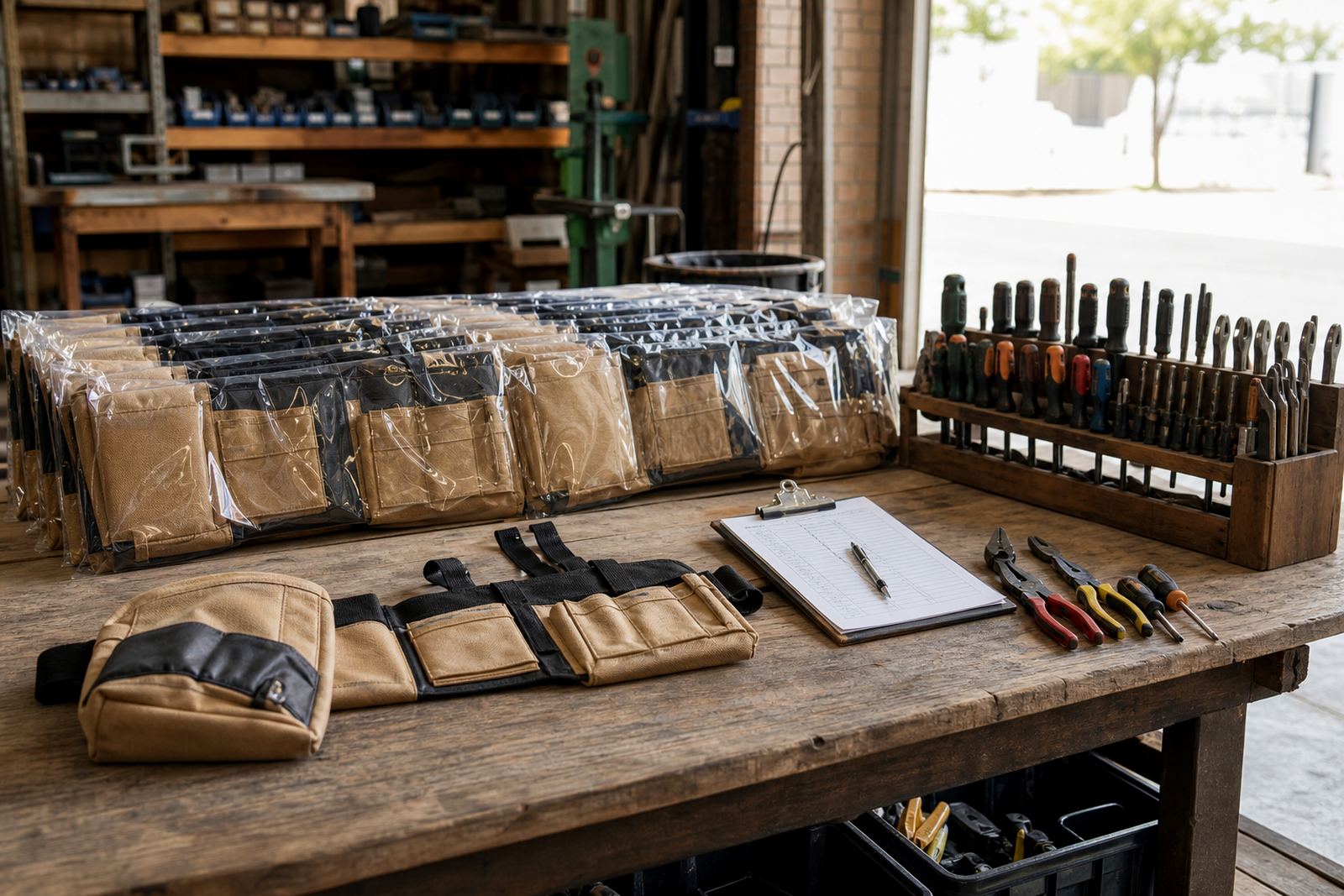
For contractors supplying multiple sites across Johannesburg, Pretoria, Midrand and Centurion, it often helps to standardise the core pouch setup and then adjust one or two items for each crew. That makes stock control simpler and keeps new staff from having to learn a different layout on every project. Small detail, big difference.
What to ask before you place a bulk order
Before you buy for a team, it is worth checking a few practical points. The best builders pouch is not chosen by guesswork. It is chosen by fit, task and daily use on site.
- How many items must each worker carry every day?
- Will the pouch be used for brickwork, framing or mixed tasks?
- Do you need a left hand, right hand or universal setup?
- What belt width and waist size range must be covered?
- Will the team work in dust, rain or coastal humidity?
- Do you need starter kits, replenishment plans or mixed trade kits?
For larger contractor orders, it is worth planning delivery as well as the product mix. If a roll-out is going to Durban, Cape Town or Polokwane, make sure the pouch layout and belt sizes are confirmed before dispatch. That cuts down on returns and keeps the crew ready to start work straight away.