
Why separate pockets matter on a moving site
When you are climbing a ladder, crouching beside a slab or working at a ceiling run, you do not want to fish through one deep pouch for a single screw or connector. Divided pockets keep small hardware in set places so your hands go straight to the right item. That sounds simple, but on a live site it can save minutes on every task and reduce the chance of losing parts in sand, gravel or concrete dust.
For builders and electricians in Alberton, Johannesburg and Pretoria, divided pockets also help with tidiness during inspections. Materials stay sorted, quantities are easier to check, and you can see at a glance whether you are short on nails, plugs or terminals before the day gets away from you.
What divided pockets are best for
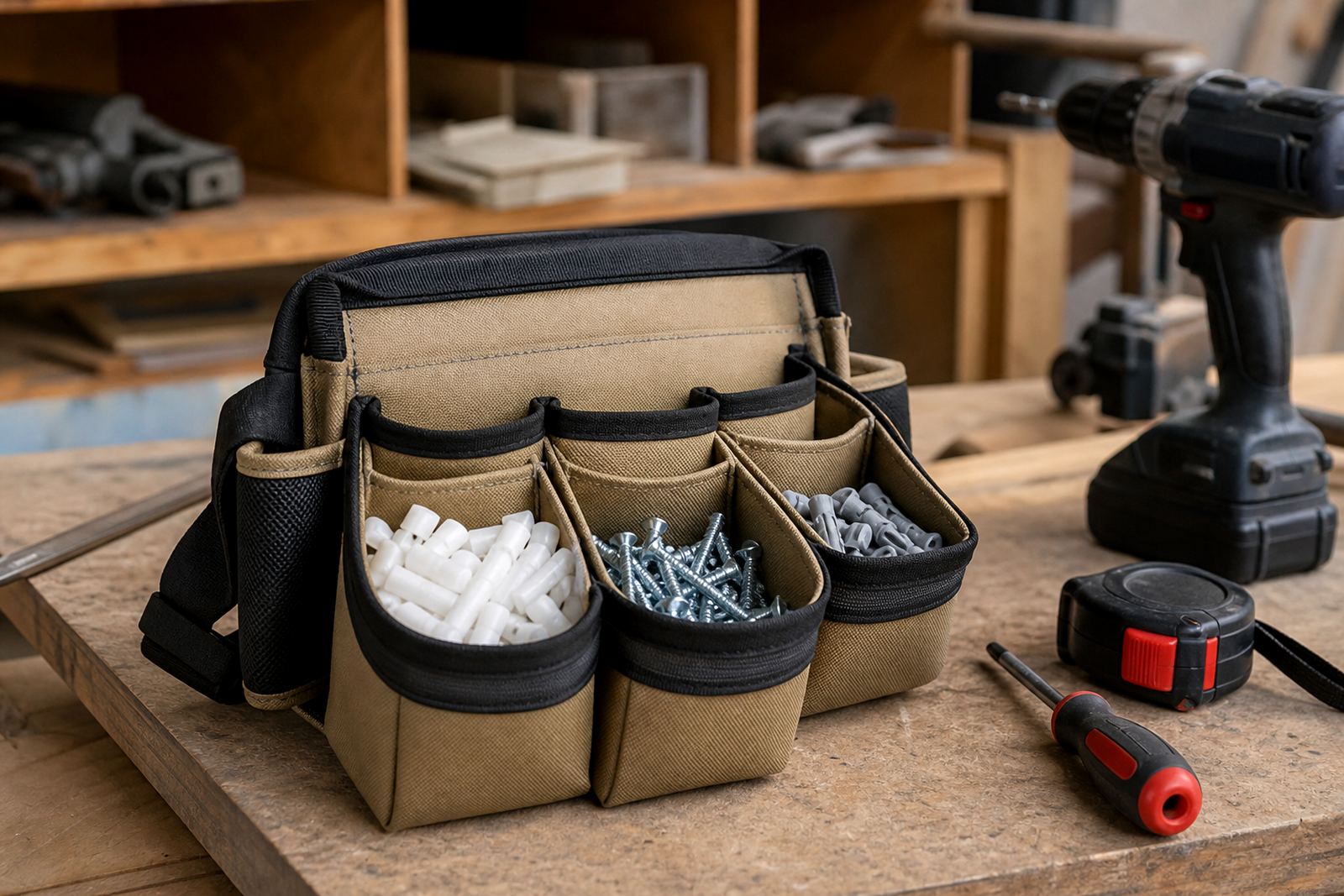
Not every pocket layout suits every trade. A carpenter may want several medium sections for fixings and marking tools, while an electrician often needs a shallow front pocket for connectors and a deeper section for insulated tools or testers. The aim is not to pack in more gear than you can carry. It is to assign each item a place that makes sense for the job.
- Small pockets for screws, wall plugs, cable ties and terminals
- Medium pockets for markers, folding rules, tape rolls and chisels
- Deeper pockets for pliers, side cutters and compact hand tools
- Closed sections for loose items that must not spill on a roof or scaffold
A good layout also helps if you work across mixed jobs. One day you may be setting out on a residential build in Midrand, the next you are doing a quick fault find at a shop in Centurion. Divided pockets let you carry a mixed load without everything jumbling together.
How electricians use divided pockets on the job
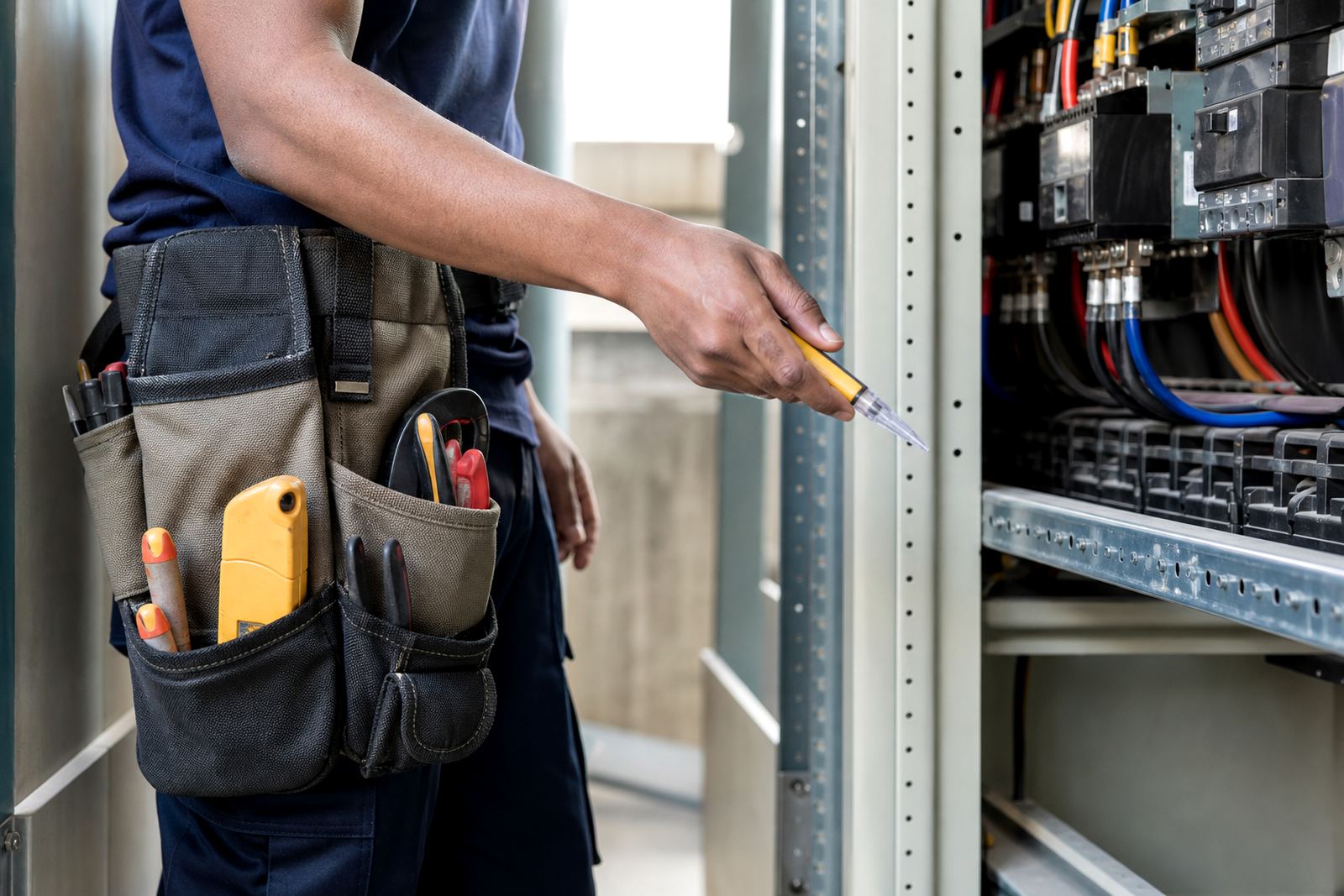
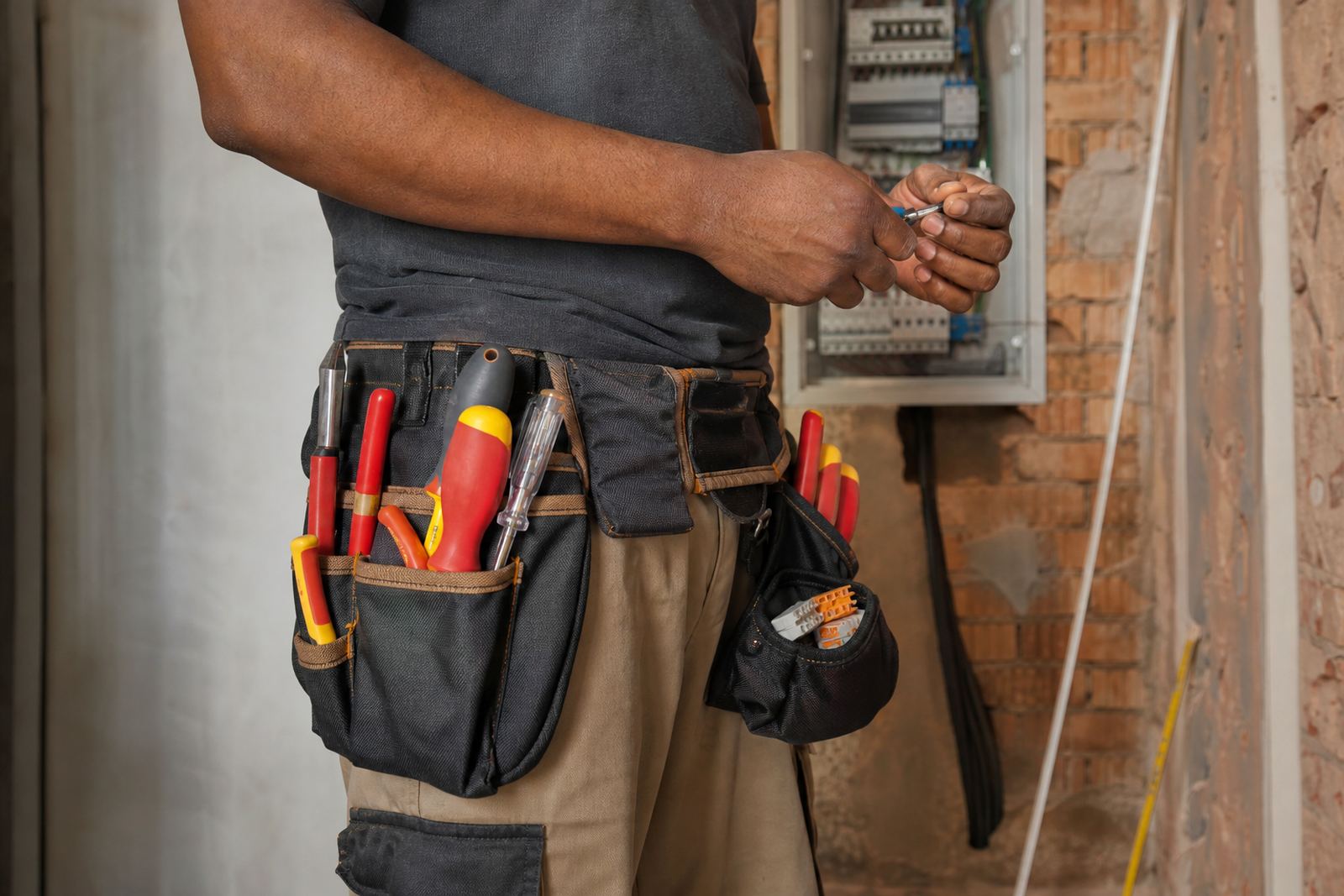
Electricians often work with a lot of small hardware. Connectors, ferrules, screws, clips and cable markers all need to be close at hand. Divided pockets make it easier to separate live job items from spares, so you are not wasting time sorting through one loose bundle. On colder mornings in Gauteng or damp coastal conditions in Durban and Cape Town, that separation also helps keep items cleaner and drier.
A practical setup might include one pocket for fixings, one for test leads or a compact metre accessory, and another for termination bits. It is a small change but it cuts down on mistakes, especially when the site is busy and everyone is moving around you.
- Keep terminals apart from screws so you do not mix them by accident
- Use one pocket for daily-use items and another for spare stock
- Choose a layout that lets you reach with one hand while the other stays on the ladder
- Check pocket depth so small parts do not bounce out during transport
Builders need order when the job gets dusty
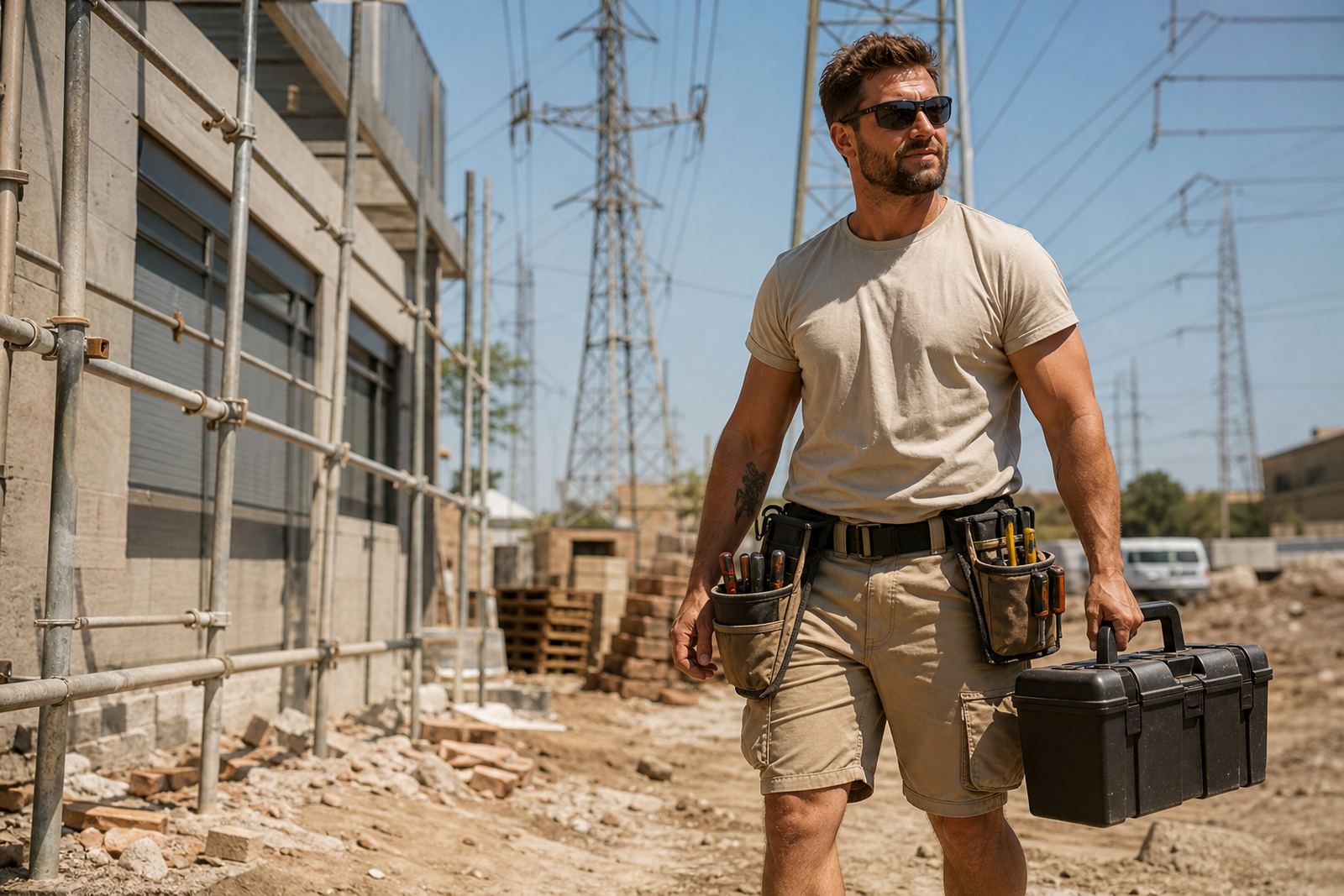
Builders deal with nails, plugs, spacer pieces and layout gear that can disappear quickly into dust, formwork offcuts or rubble. Divided pockets help keep the little bits in order before they become wasted time. If you are working in Polokwane heat or on a windy site near the coast, a sorted pouch is easier to manage than an open mix of loose fasteners.
It also makes handover easier. When a foreman asks for a count of remaining fixings or a repack for the next shift, divided pockets make the check faster and more accurate. That matters on projects where stock needs to be logged and replenished daily, not left to memory.
Choosing a pocket layout that matches your belt
The belt and the pouch should work as one unit. If the belt rides too high or the pockets sit too far forward, you will feel it in your hips and lower back by mid morning. For that reason, belt size matching matters just as much as the pocket count. A good fit keeps the load stable, stops the pouch swinging, and makes the dividers actually useful instead of awkward.
At Waistbags Pro, we see that teams often need different layouts for different roles on the same site. One person may need a simple belt with a few divided pockets for punch list work, while another needs a fuller setup for installation day. That is where starter kit builds and mixed trade kits help. You get the right arrangement for the task, not just the nearest standard option.
- Match pocket count to the tools you use every hour, not the extras you carry once a week
- Check belt width and buckle position for comfort during long shifts
- Keep heavier items close to the body to reduce pulling on the hip
- Ask for site specific selection when teams work on different floor levels or access points
Keeping stock tidy for bulk orders and site rollout
Divided pockets are not only a personal preference. They are useful when contractors are equipping a whole crew and need the same setup across several workers. Bulk team orders work better when each bag has a clear layout, because new staff can find what they need without constant instruction. That helps on project rollouts where the pace is tight and the crew changes from week to week.
For branches and clients across Johannesburg, Pretoria, Durban, Cape Town, Polokwane, Midrand and Centurion, the practical advantage is simple. When the pouch layout stays consistent, stock replenishment becomes easier, the team wastes less time and the gear lasts longer because it is not being forced to carry the wrong mix of items. It sounds basic, but basic order saves real money over a month.
A local example from a fast paced Gauteng site
On a new housing development in Alberton, a mixed team of builders and electricians needed a simple way to keep fasteners, connectors and small marking tools apart. The crew had been using open pouches and the result was slow pick-ups, missing items and extra trips back to the container. Once the team switched to divided pockets with matched belt sizes, they could sort items by task before the shift started and keep them separate through the day.
The change did not make the work easier by itself, but it made the work cleaner and faster. One organiser for nails, one pocket for screws, one for cable bits, and the whole set stayed readable even when the site got dusty and the heat climbed. That is the real value of divided pockets. They do not do the job for you, they just stop the little things from getting in the way.