Why modular pouches suit mixed trade work
On a building site, the job list changes fast. One hour you are marking out, the next you are setting fixings, then you are moving to cable runs or finishing touches. Modular pouches work well because they let you change your carry set-up instead of forcing one pouch to do everything. That matters for builders and electricians who need a practical way to keep tools sorted by task.
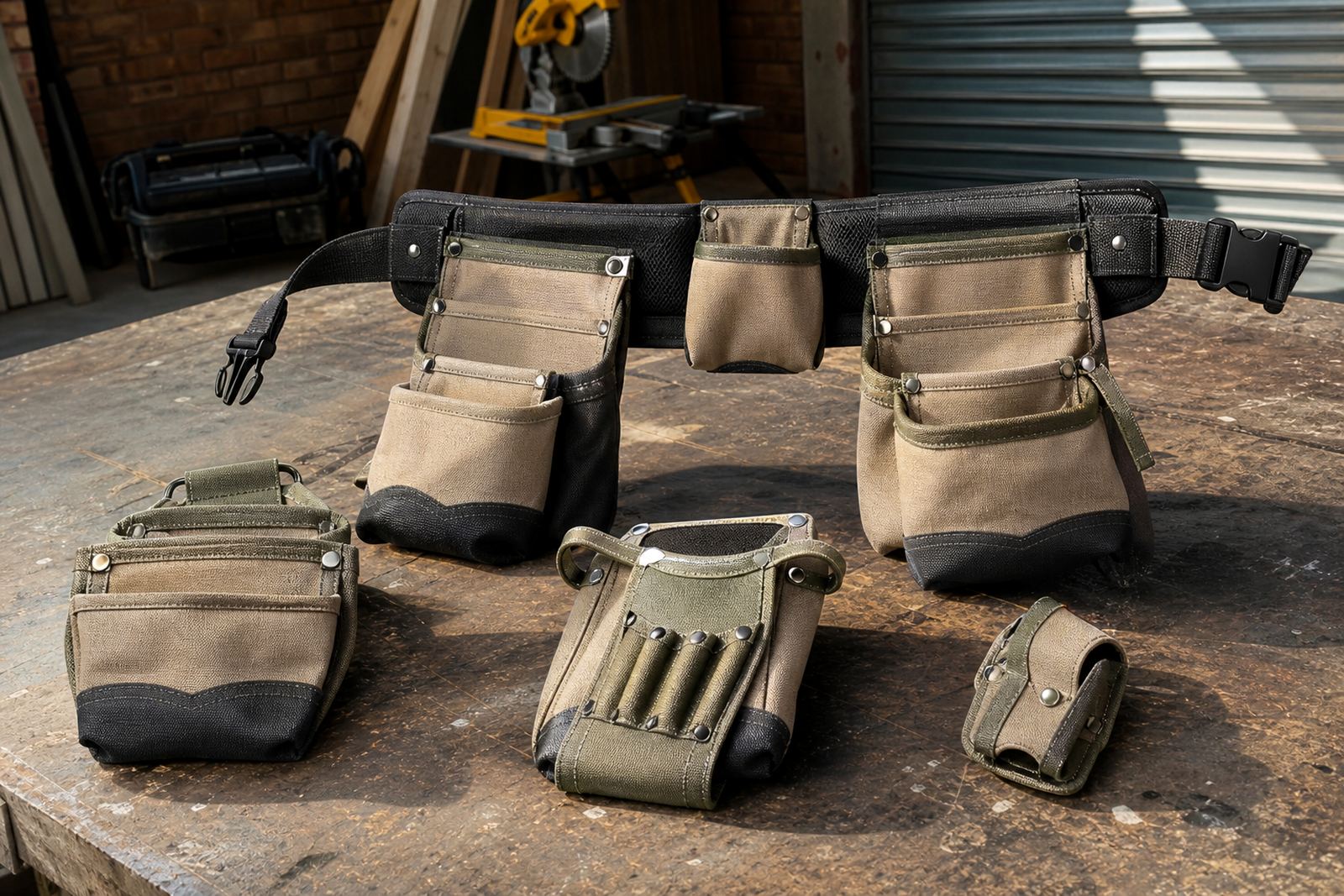
A modular set can be built around a main belt, then added to with a nail bag, tool pouch, or smaller utility pouch as the work demands. You can keep fasteners together, hand tools close by, and small parts where you can reach them without stopping. It is a simple idea, but on a busy Gauteng site it saves time and cuts down on misplaced items.
- Keep only the tools needed for the current task
- Move pouches around for left or right hand access
- Split heavy items across the belt to reduce pull on one side
- Swap layouts between rough-in work and final fixing
Changing layouts as the project moves forward
A project usually starts heavy on measuring, marking and fixing. Later it shifts to fitting, testing, and snag work. Modular pouches support those changes because you can rework the layout instead of starting over with a new belt. That is useful on larger builds in places like Midrand, Centurion and Johannesburg where teams often cover more than one task in a day.
At the early stage, a builder might want a larger pouch for nails, screws and tape, while an electrician may prefer a slimmer set-up for terminals, cutters, pliers and a tester. Once the first phase is done, the same belt can be adjusted for lighter carry and faster movement. This kind of flexibility also helps when different crew members share equipment on a project. It keeps the kit organised and avoids the mess that builds up when everyone stuffs tools into one bag.
- Use larger pouches for bulk fixings at the start of a job
- Switch to slimmer pouches for finishing work and inspection
- Keep speciality items separate from everyday hand tools
- Rebalance the belt as the load changes through the day
Comfort matters when the workday is long
If a pouch system is badly balanced, you feel it by lunch. On South African sites, especially in summer heat or during load-shedding when work gets pushed into tighter time windows, comfort becomes part of productivity. A modular waist belt can help by spreading weight more evenly and reducing the strain that comes from carrying too much in one place.
The best layouts sit close to the body and do not swing around when you climb a ladder, kneel, or bend to mark out a floor. Adjustable belt sizing is important for layered clothing, rain gear, or a thicker shirt on cooler mornings in the Highveld. A clean fit also helps when you are working in cramped areas where a loose pouch would catch on steel, scaffolding or formwork.
For many tradespeople, the real benefit is not just storage, it is movement. When the pouches sit right, you spend less time adjusting your kit and more time on the task. That is a small thing, but it adds up over a full week.
Better organisation for fast access and fewer mistakes
A modular system supports order, and order prevents mistakes. When each pouch has a purpose, you are less likely to mix up fixings, lose small parts, or leave a key tool behind. For electricians, that can mean separating insulated hand tools from general hardware. For builders, it can mean keeping nails, screws, markers and measuring gear in distinct spots.
Clear organisation also helps when more than one person is working from the same supply point. If your team in Alberton or Pretoria uses the same project kit, a modular layout makes it easier to hand over a belt and know what is already included. That reduces repeat picking and helps stock last longer during busy periods.
- Assign one pouch to fixings and one to hand tools
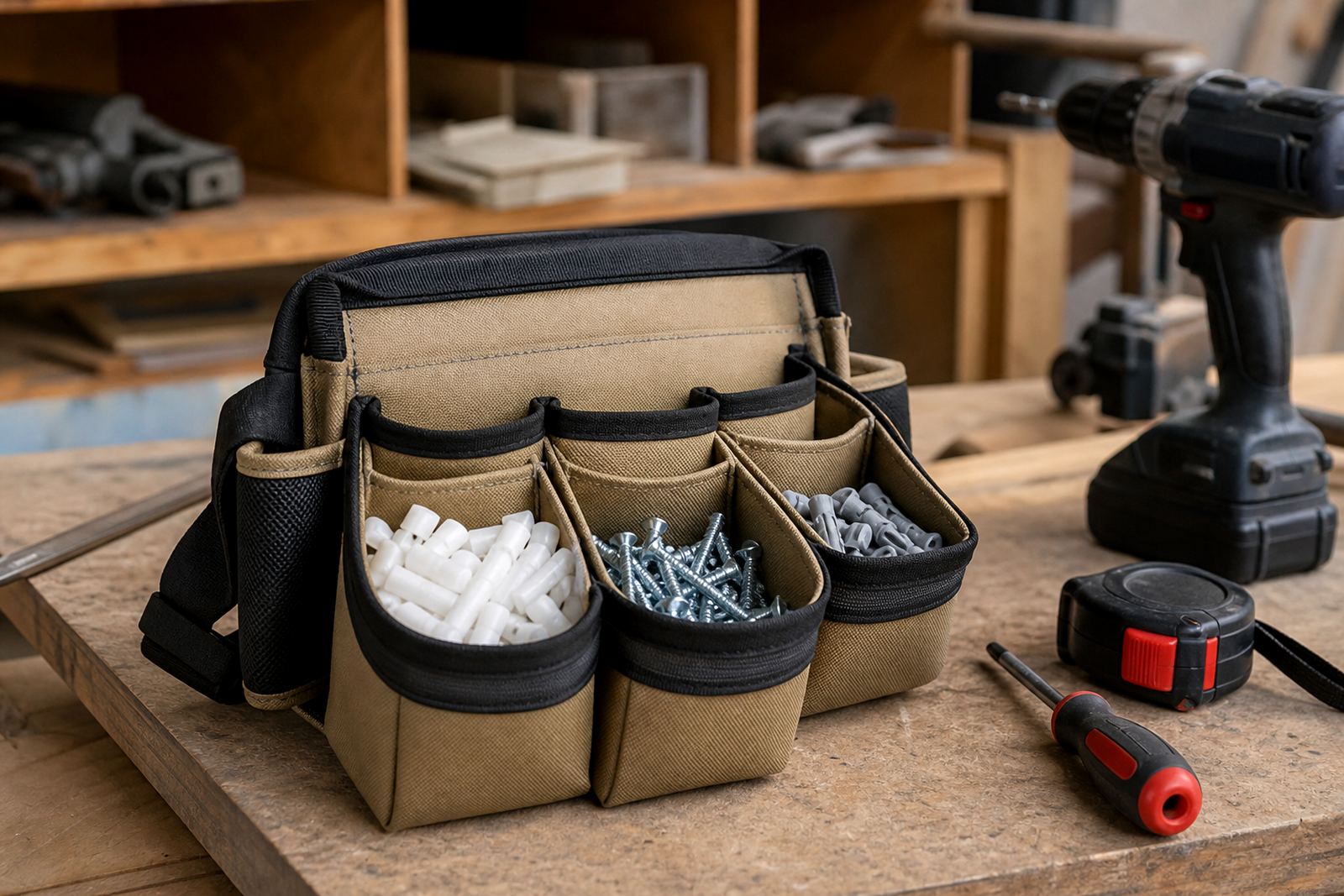
- Keep small parts in a pouch with a secure closure
- Separate daily-use items from low-use spares
- Label kit by task if the same belts move between workers
Selecting pouches for builders versus electricians
Builders and electricians do not carry the same load, so the pouch setup should reflect the trade. Builders often need room for nails, screws, driver bits, tape measures and marking tools. Electricians usually need a different balance, with space for pliers, cutters, screwdrivers, terminals, tape and compact test gear. A good modular set can be configured either way without forcing everyone into one fixed layout.
That is where proper sizing and planning matter. A pouch that is too deep becomes bulky, while one that is too small slows you down. The right mix depends on the type of work, the site layout, and whether the job is a short service call or a full build. For contractor teams, mixed trade kits often work best because they can be set up for the phase of the project, not just the trade title.
- Choose deeper pouches for fasteners and consumables
- Use slimmer pouches for hand tools and test gear
- Match belt size to the wearer before ordering in bulk
- Keep separate layouts for builders, electricians and mixed teams
A local example from a Gauteng rollout
Consider a contractor handling a new residential development between Alberton and Midrand. The same team may start with builders on the shell, then bring in electricians for first fix, and later return for snagging and final adjustments. If every person uses a fixed bag, the kit gets messy fast. A modular pouch system lets the foreman prepare task-specific belts for each stage and swap them out as the work changes.
That approach also helps with stock replenishment. If a pouch layout is planned in advance, it is easier to keep an eye on which items run down fastest and what needs topping up before the next site visit. In practice, that means less downtime, fewer emergency runs to store and a more controlled handover between teams. On larger projects, even a simple system can save a lot of time and hassle.
For South African contractors, especially those dealing with deadlines, weather changes and municipal access rules, that kind of preparation is worth it. It keeps the job moving and gives the team a setup that makes sense from day one to handover.
How to get the most from a modular pouch system
The best results come from thinking about the whole job, not just the pouch itself. Start by listing the tasks your team does most often, then match the carry layout to those tasks. Review the belt after the first few jobs and adjust where needed. A pouch system should work with the job, not against it, and that is why a bit of planning pays off.
For contractors ordering across Johannesburg, Cape Town, Durban, Polokwane or Pretoria, it is often worth setting up a standard layout for each type of crew. That makes training easier and keeps order in the field. It also means new staff can get used to a familiar kit faster, which helps when deadlines are tight and there is little room for confusion.
Modular pouches are not about carrying more. They are about carrying the right things, in the right place, at the right time. That simple shift can make a real difference on site.