What Fitout Crews Actually Need From A Pouch
On a fitout site, the pouch has to do more than hold a few screws. Teams shift between partitioning, cable runs, trimming, fittings and finishing work, so the bag must carry mixed tools without getting in the way. A good pouch should sit flat against the body, open quickly with one hand, and hold shape after daily use in dust, plaster, and rain.
In South Africa, that matters even more when crews work through load shedding, hot inland afternoons, or damp coastal jobs in places like Durban and Cape Town. A pouch that sags or twists slows the day down and can become a safety issue on ladders, scaffolds, and narrow access ways.
- Easy access to fasteners, pliers, tape, knives and markers
- Separate sections for sharp tools and small parts
- Strong stitching and riveted stress points
- Comfort for all day wear on a belt or utility waist belt
- Enough room for a full shift without becoming bulky
Choose A Layout That Matches The Trade On Site
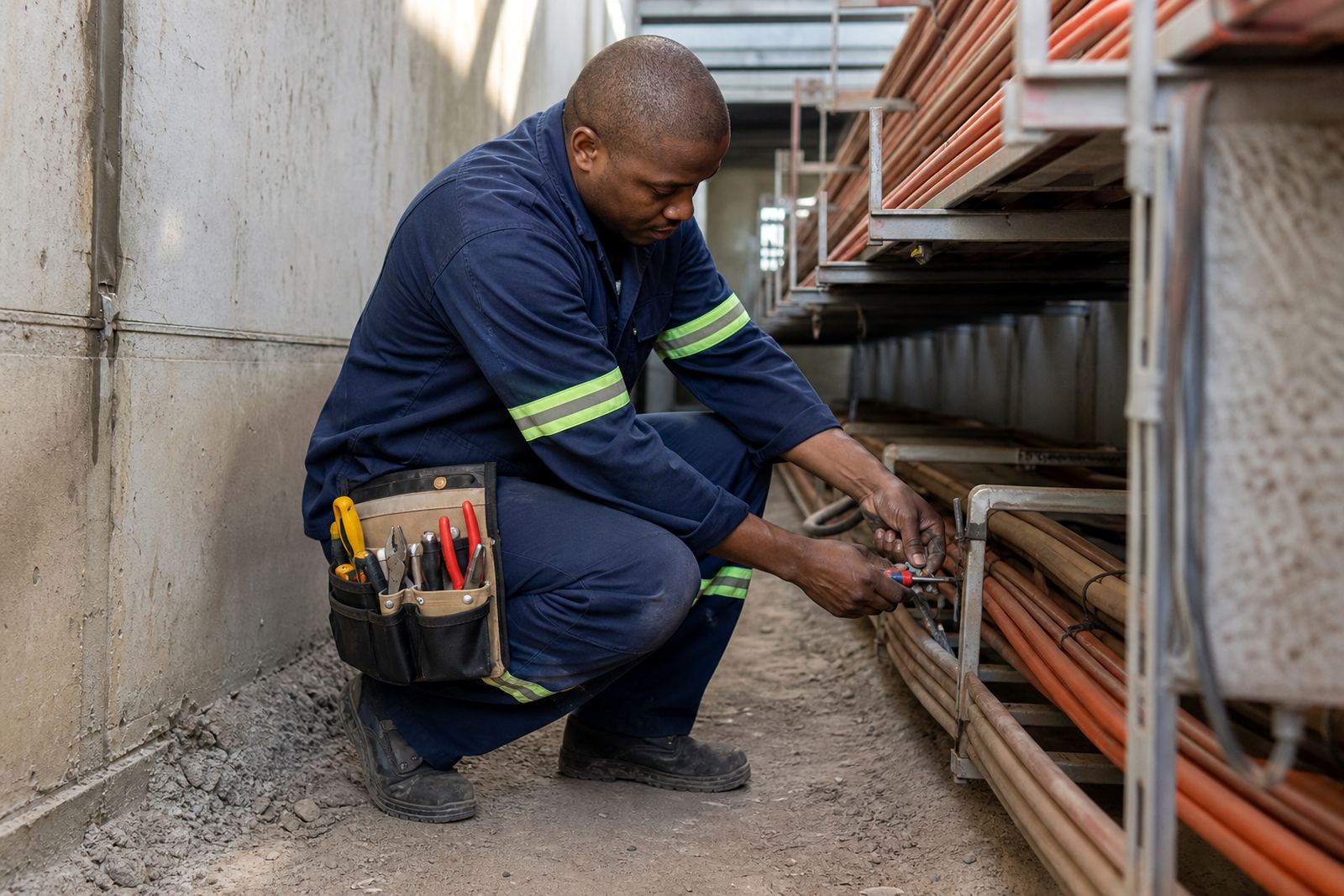
Not every fitout crew needs the same pouch layout. Builders often need open pockets for tape, nails, packs of screws and a measuring tool, while electricians may need narrower slots for hand tools and insulated items. If the pouch layout matches the task, workers spend less time searching and more time finishing work properly.
For mixed teams, the best solution is usually a modular setup. That means one side for bigger tools and the other for small fixings, with a centre section for the items used every ten minutes. It also helps when teams rotate between first fix and final fitoff, because the same belt can be adjusted for different duties.
- Open pockets for builders handling fast-moving fix work
- Tight tool slots for electricians carrying slimmer hand tools
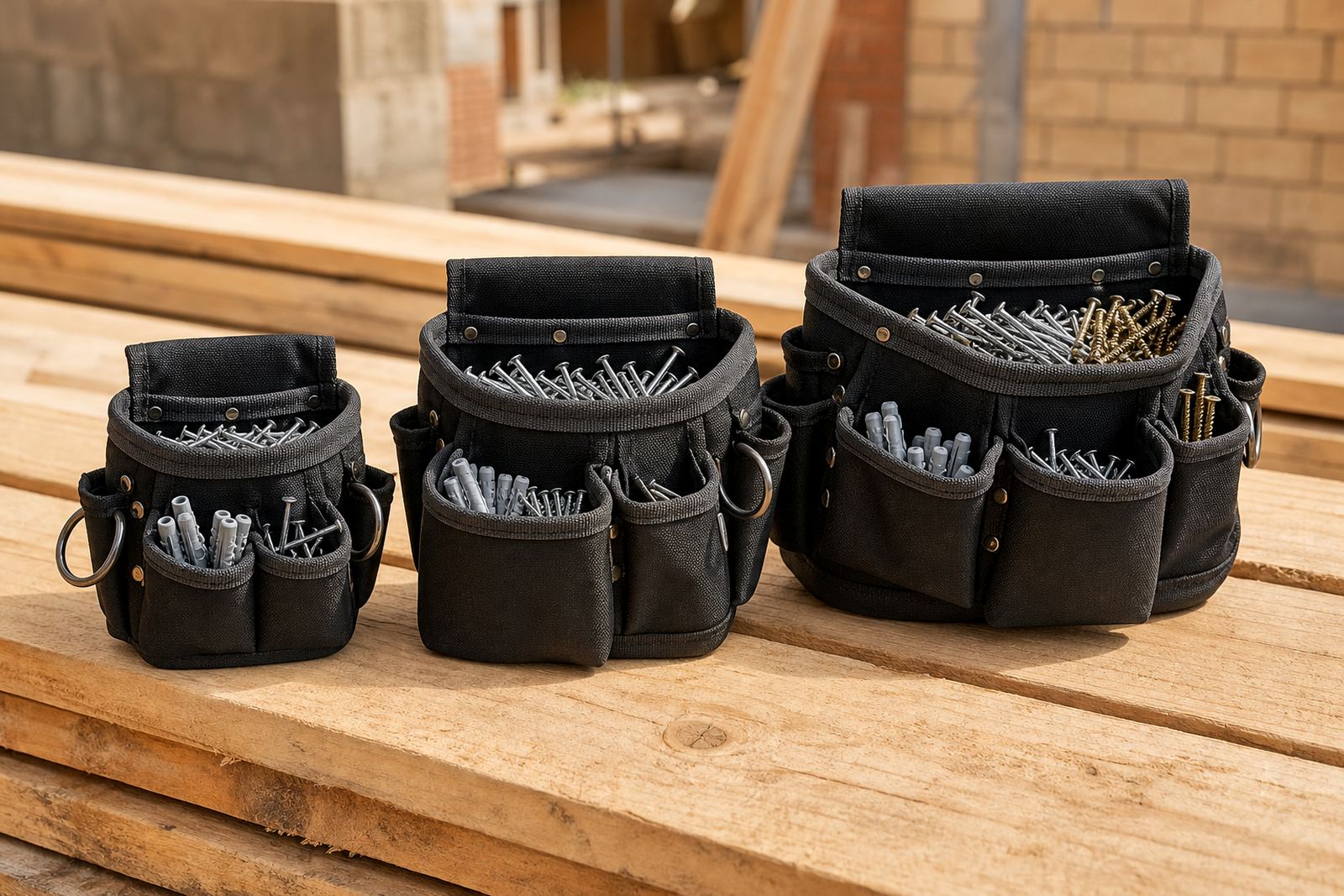
- Deep compartments for screws, wall plugs and clips
- Outer loops for tape measures, pencils and testers
Comfort Matters On Long Days And Tight Access Sites
Fitouts often involve long hours, repeated bending, and moving through corridors, ceilings and service shafts. If the pouch pulls to one side, the worker feels it by lunchtime. That is why belt width, padding and weight distribution are as important as pocket count. A well balanced waist bag reduces strain and keeps the lower back steadier during movement.
Teams should test pouch size with the actual tools they carry. A belt that is too loose shifts on the waist and one that is too tight becomes uncomfortable after a few hours. For larger crews, belt size matching is worth doing before a project starts, especially where the same kit is shared between several workers on different shifts. Small detail but it saves time.
- Look for adjustable belts that hold firm without digging in
- Choose padding if crews move all day or climb often
- Check that the pouch stays centred when loaded
- Make sure pockets do not clash with safety harnesses or kneepads
Material Strength For Dust, Humidity And Daily Wear
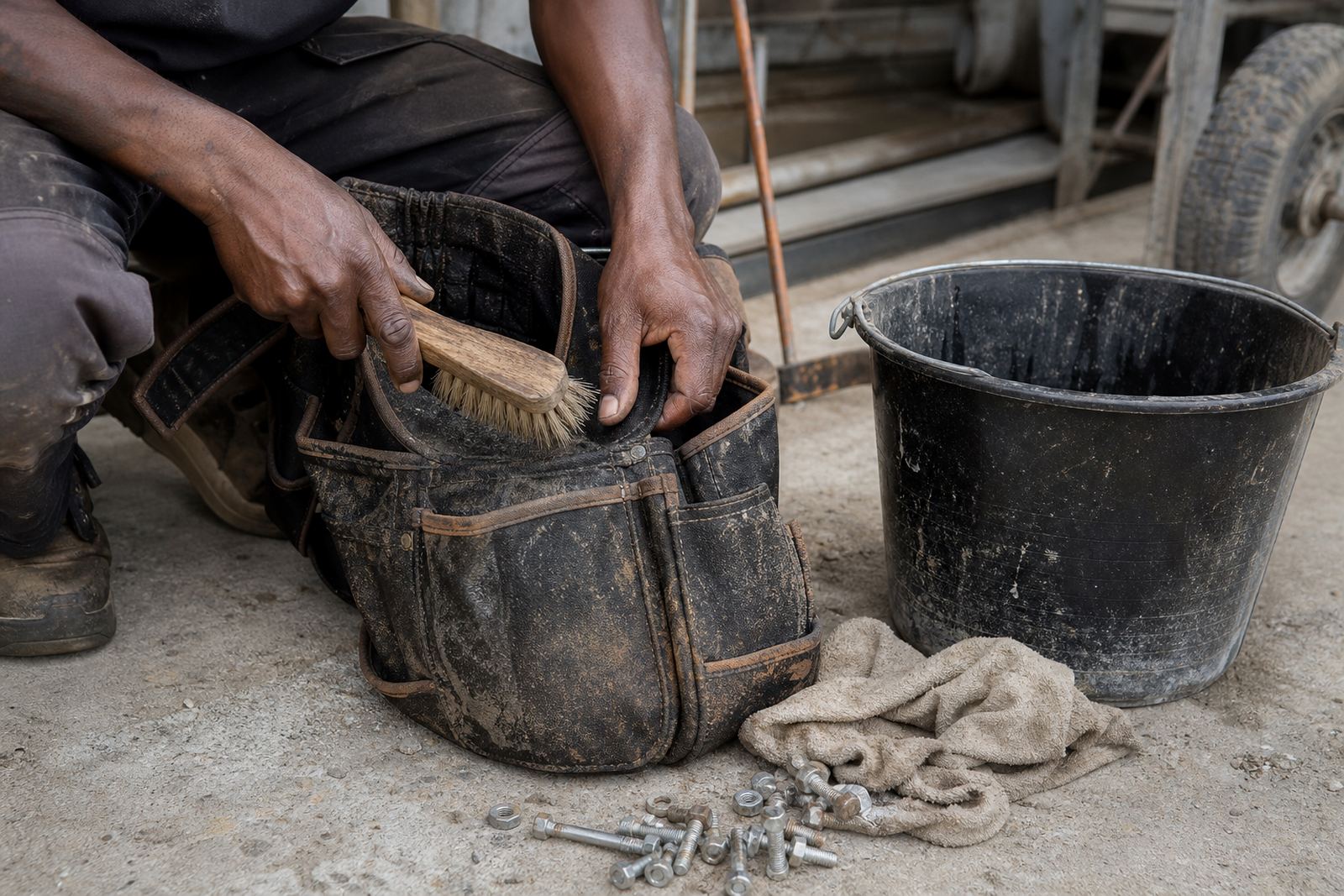
South African fitout work can be rough on kit. Dust from cutting, damp from coastal air, and sharp offcuts all shorten the life of cheap fabric. A good pouch needs tough stitching, thick material, and reinforcement at the corners and stress points. The base should resist wear when the bag is set down on concrete or dropped onto a scaffold plank.
Electricians working in service corridors or plant rooms also need pouches that are easy to wipe clean. Builders on finishing work benefit from pockets that keep dust and small debris from collecting in the corners. If a pouch is used day after day, the material choice affects not only how long it lasts but also how neat the tools stay inside.
For project managers, this is where bulk buying makes sense. One stronger pouch choice for the whole team is usually better than mixing different styles that wear out at different rates.
Starter Kits And Mixed Trade Sets For Fitout Teams
Some projects need a full rollout from day one. In that case, starter kit builds and mixed trade kits help teams get moving without piecing together separate setups from different stores. A kit can be matched to the job type, the number of workers, and the pace of the site. That is useful on school upgrades, office refurbishments, retail revamps, and sectional work in apartments.
When planning a rollout, think about the trade sequence. A builder may need one pouch layout during framing and a different one during finishing. An electrician may need a cleaner pouch for initial wiring, then a more compact layout for final testing and fitoff. Good planning keeps the kit useful across the whole project, not just the first week.
- Bulk team orders for larger fitout crews
- Pouch layout planning for task specific use
- Starter kit builds for new sites and new teams
- Stock replenishment plans for ongoing projects
A Local Example From Alberton To A Gauteng Office Fitout
Take a mid-sized office fitout in Alberton with partitions, lighting changes and final finishing running at the same time. One team is on framing, another is on electrical works, and a third is handling trims and snagging. If every worker uses the same pouch style, the system breaks down quickly. The framer wants deeper pockets, the electrician wants slimmer tool slots, and the finishing crew needs lighter carry with space for blades, tape and markers.
In that kind of job, a site specific selection works better than a one-size-fits-all approach. The foreman can set up different pouch layouts for each task and keep spare belts ready for new hands joining mid project. That makes stock easier to control and reduces the time lost when someone is hunting for a missing tool at the wrong end of the site.
For fitouts in Johannesburg, Pretoria, Midrand or Centurion, the same thinking applies. The right pouch is not the fanciest one, it is the one that suits the work flow and keeps the crew moving without mucking around.
How To Pick The Best Pouch Before The Project Starts
Before ordering, list the tools each person carries, the job phase they work on, and how many hours they wear the belt per day. Then match the pouch to those details rather than guessing from a picture. The best pouch for fitouts is usually the one that is simple, steady, and sized for the actual load on site.
Teams can also ask for contractor order support when they need help matching pouch types to a project plan. That is useful for multi-site rollouts across Johannesburg, Pretoria, Durban, Cape Town and Polokwane, where different crews may need slightly different kit. The aim is to keep the process practical, with no wasted gear and no awkward belt that ends up unused after the first day.
- Match the pouch to the phase of work, not just the trade
- Check belt sizing for every worker
- Keep one layout for common tools and one for specials
- Plan delivery so the team starts with the right kit on site