
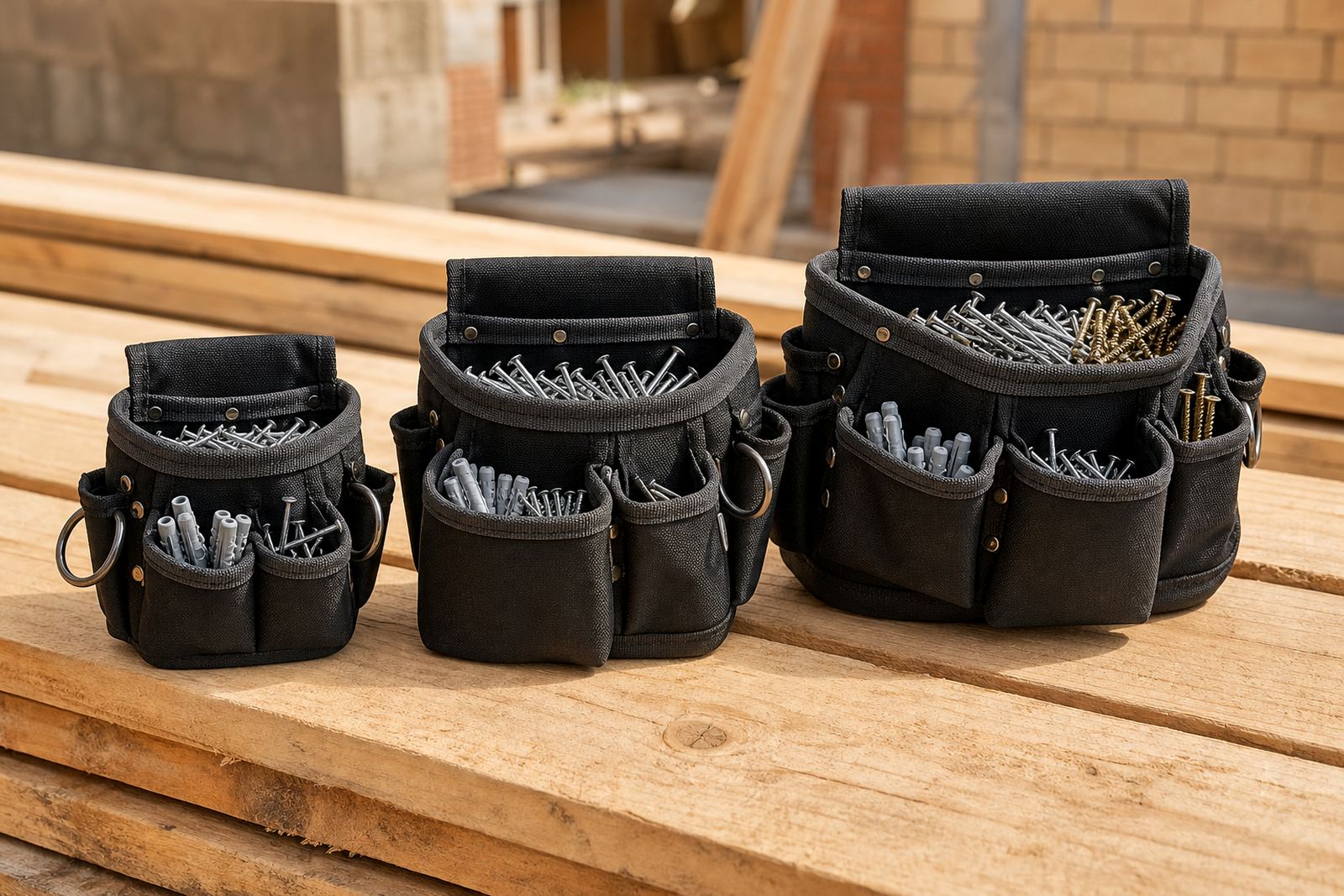
Start with the fasteners you actually use on site
Before you choose a nail bag, look at the fasteners and small fittings you carry on a normal day. Builders often need mixed nails, screws, wall plugs, washers and a few marking items. Electricians may carry terminal lugs, clips, screws, cable ties, glands and small fixings. If you are only carrying a handful of items for short callouts, a compact pouch is often enough. If you are doing framing, fixing, or first-fix work, you will usually need a deeper bag with more room and stronger shape retention.
A good rule is to pack for the job you do most often, not the biggest job you do once in a while. A pouch that suits a quick repair in Alberton may not suit a full-day installation in Pretoria. When the bag matches your usual load, it stays neater and easier to reach into, which matters when you are working in hot weather or under pressure.
- Light callout work: small pouch for screws, plugs and clips
- General building work: medium bag for mixed fasteners and marking items
- Busy site work: larger bag for higher volumes and split compartments
Match the bag depth to your movement on site
Size is not only about storage. It also affects how freely you can move. A deep bag can carry more, but if it hangs too low it may catch on scaffold rails, ladders, or timber offcuts. A shallower bag sits tighter against the body and is easier to manage when you are bending, crouching, or working overhead. For electricians working in ceilings or plant rooms, this can make a big difference.
Think about where the bag will be worn. On a busy building site in Durban, for example, workers often move between indoor and outdoor areas with tools clipped on and off throughout the day. If the bag swings too much, it becomes a nuisance. If it is too tight, you end up stopping every few minutes to reach fasteners, which slows the job and can be frustrating.
- Short movement tasks: compact size keeps weight close to the body
- Longer site days: medium size gives better capacity without bulk
- Overhead or ladder work: slimmer profile is usually safer and easier to manage
Choose compartments that suit your trade routine
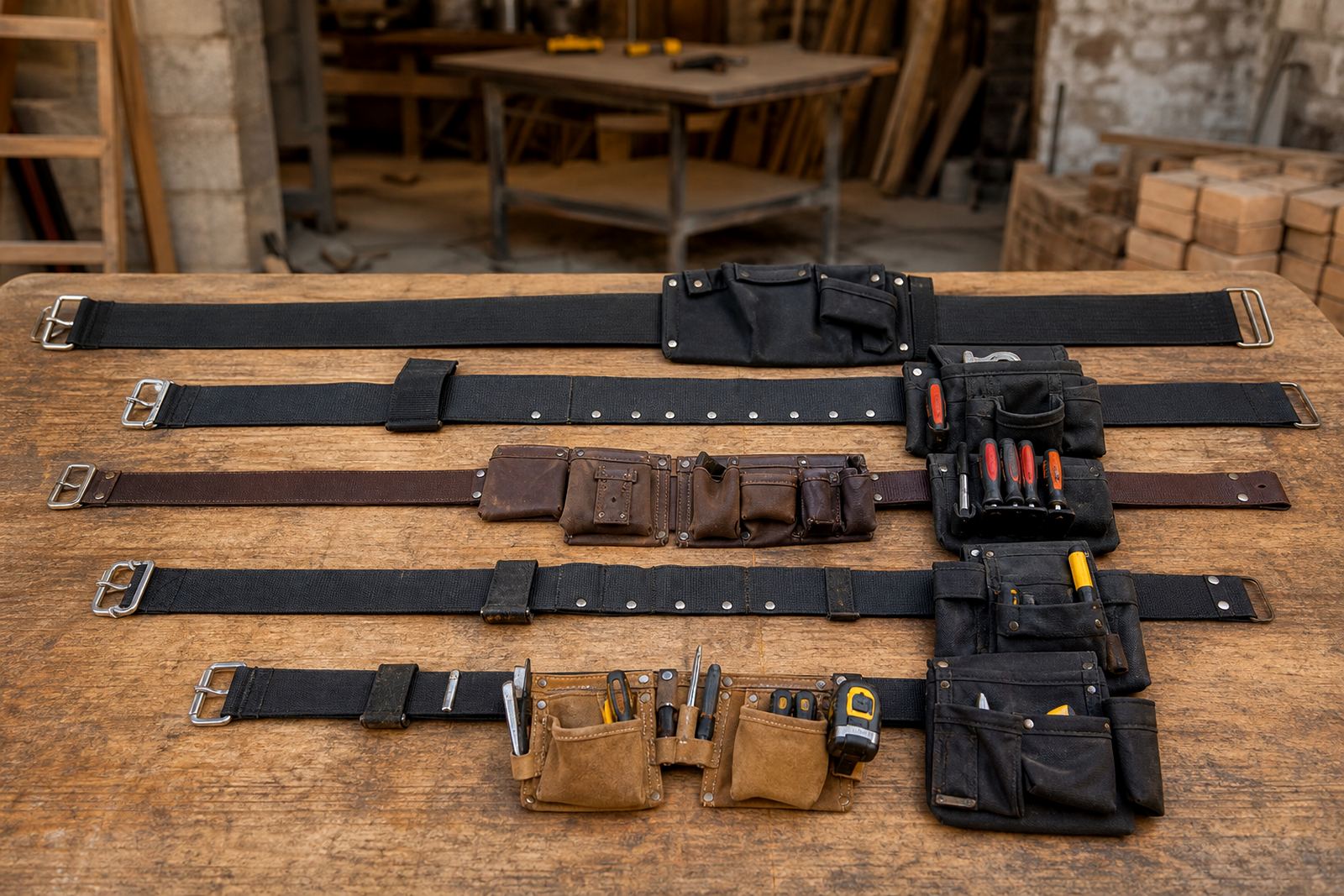
Two bags can be the same size on paper but feel very different in use. The number of pockets, dividers and loops matters just as much as the overall volume. Builders often prefer wider openings for quick access to nails and screws. Electricians usually want more separation for small parts so nothing mixes together. If your tools and fasteners are constantly jumbling up, you lose time and end up searching with dirty hands.
For teams working across Johannesburg, Cape Town or Polokwane, a well laid out pouch can also help with stock control. When the layout stays consistent, each person knows where the items go and what needs topping up. That makes replenishment easier and keeps starter kits more practical for new staff. It also helps when several workers share similar gear on the same project.
- Open pouch style: quick reach for common fasteners
- Split pocket layout: better separation for mixed small parts
- Loop and slot features: useful for pencils, scrapers or small marking tools
Balance comfort with load weight for a full shift
A nail bag should carry enough without pulling your belt down. Once the pouch gets overloaded, it changes how you stand and walk. That can become uncomfortable by lunchtime, especially if you are wearing it for a full shift in summer heat or during load-shedding downtime when work speeds change and tasks pile up quickly. Comfort is not a small thing on site, it affects how steadily you work and how long you can keep going.
If you know you carry a heavy mix of fasteners, choose a size that spreads the weight better and pair it with a proper utility belt. Belt size matching matters more than many people think. A good fit keeps the pouch from tilting forward and reduces strain around the hips. For bigger teams, this is worth checking before bulk orders go out, because one size does not suit everyone and some staff need a larger belt setting than others.
- Heavier loads: use a stronger belt and a bag with stable side support
- Lighter loads: choose a smaller pouch to reduce strain
- Mixed crews: confirm belt sizes before ordering for the full team
Use the job type to decide the right nail bag size
Different trades need different bag sizes, even on the same site. A builder fitting skirtings, framing or site timber may need more volume than a tradesperson doing fine finishing. An electrician often needs a tidier pouch with fewer loose items and better separation. The right choice depends on whether your work is fast and repetitive or detailed and selective.
For municipal or commercial sites, small details matter too. Some sites have stricter access rules, limited storage, or narrow walkways where bulky gear is a problem. In those settings, a compact pouch can be more practical than a large one. If you are working in a residential area in Midrand or Centurion, a neater setup also helps when you need to move between inside and outside without laying tools around. That keeps the job site cleaner and reduces the chance of losing small parts.
- Builders: medium to larger bag sizes often suit fastener-heavy work
- Electricians: smaller, better organised pouches often work best
- Contractors: standardise sizes across crews for easier issue and return
Think about replacement stock, projects and team consistency
If you are buying for one person, size is a straightforward choice. If you are buying for a crew, the decision needs a bit more planning. Teams working across multiple projects often need the same bag layout so replacement stock and spare pouches stay consistent. That helps when equipment gets damaged, when a new worker joins, or when a project rolls over from one phase to the next. It also makes it easier to build mixed trade kits that suit both builders and electricians on the same site.
In Alberton and the wider Gauteng area, many contractors prefer to set one standard pouch size for most workers, then keep a few smaller or larger options for special tasks. That approach saves time and makes ordering simpler. It is a practical way to avoid overbuying bags that sit unused in the store room, or underbuying and having to split supplies across too many staff.
Choosing the right nail bag size is really about matching movement, fastener volume and daily routine. When those three things line up, the pouch disappears into the work and stops being a problem. That is what you want on site, a bag that fits the job, not one that fights it.