
Why renovation work needs a different carry setup
On a renovation site, the job rarely stays the same for long. One hour you are removing skirting in a lounge, the next you are marking out in a kitchen, then checking power points in a passage. That means your carry system has to support small changes quickly, not just hold a full kit for one trade.
Builders and electricians in Alberton, Johannesburg and Pretoria often work in occupied homes or half finished units where space is tight. A heavy bag gets in the way, catches on door frames and slows down movement through stairs, passages and balconies. A lighter waist setup keeps the right tools at hand without making every room feel crowded.
Build one pouch set for the core tools you use all day
The best renovation carry starts with the tools you reach for most often. For many mixed-task jobs, that means a tape measure, pencil, utility knife, screwdrivers, pliers, insulation tape, a marker and a few fixings. If you are doing snag work or small repairs, you may also need plugs, screws, wall anchors and a compact tester.
- Keep the front pockets for fast access items like pencils, a knife and fasteners.
- Use deeper pockets for heavier tools so the pouch stays balanced.
- Separate sharp items from soft consumables to avoid wear and damage.
- Match the pouch layout to your dominant hand so retrieval feels natural.
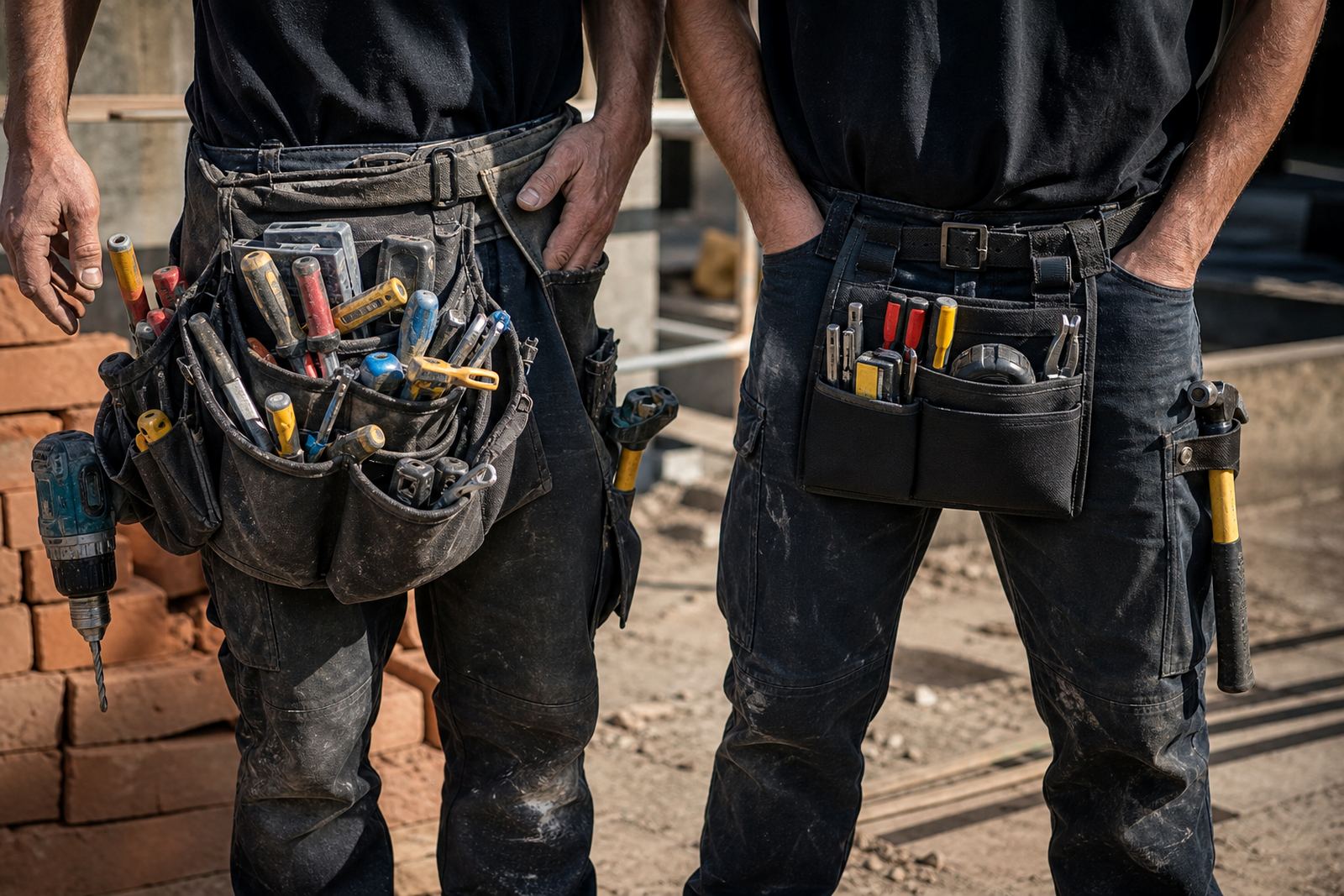
A common mistake is loading every pocket because it is available. That adds weight, slows you down and can pull the belt out of line by lunch time. A better approach is to carry only what supports the current phase of the renovation and restock from the vehicle when needed.
Shift your carry by room, not by habit
Renovations are room specific. What you need in a bathroom is different from what you need in a ceiling repair or kitchen fit-out. This is where a small carry change makes a big difference. Instead of using the same load for the whole day, set up for the room you are entering.
For example, a painter or general builder may only need a light pouch with marking tools, scraper blades and a small selection of fixings for one room. An electrician might swap in a tester, cutters, insulation tape and a few connectors. This room-by-room thinking keeps your waistbag from becoming a moving storage unit.
- Bathroom work: compact tools, moisture-safe fixings, cleaner hand tools.
- Kitchen work: more measuring tools, alignment aids and installation fixings.
- Ceiling work: lighter carry, better balance and less loose material.
- External repairs: weather aware packout and extra grip for ladders and stairs.
In coastal areas like Durban and Cape Town, humidity can affect metal tools and fasteners if they sit loose in an open pouch for too long. Keeping items sorted and covered between tasks helps protect them and saves time on cleaning later.
Choose belt support that stays comfortable on long days
A renovation day can stretch from early site access to late afternoon clean-up, and a poor belt setup becomes a problem fast. If the belt slides, digs in or shifts when you bend, you lose concentration and waste energy correcting it. Comfort is not a luxury on site, it is part of working safely.
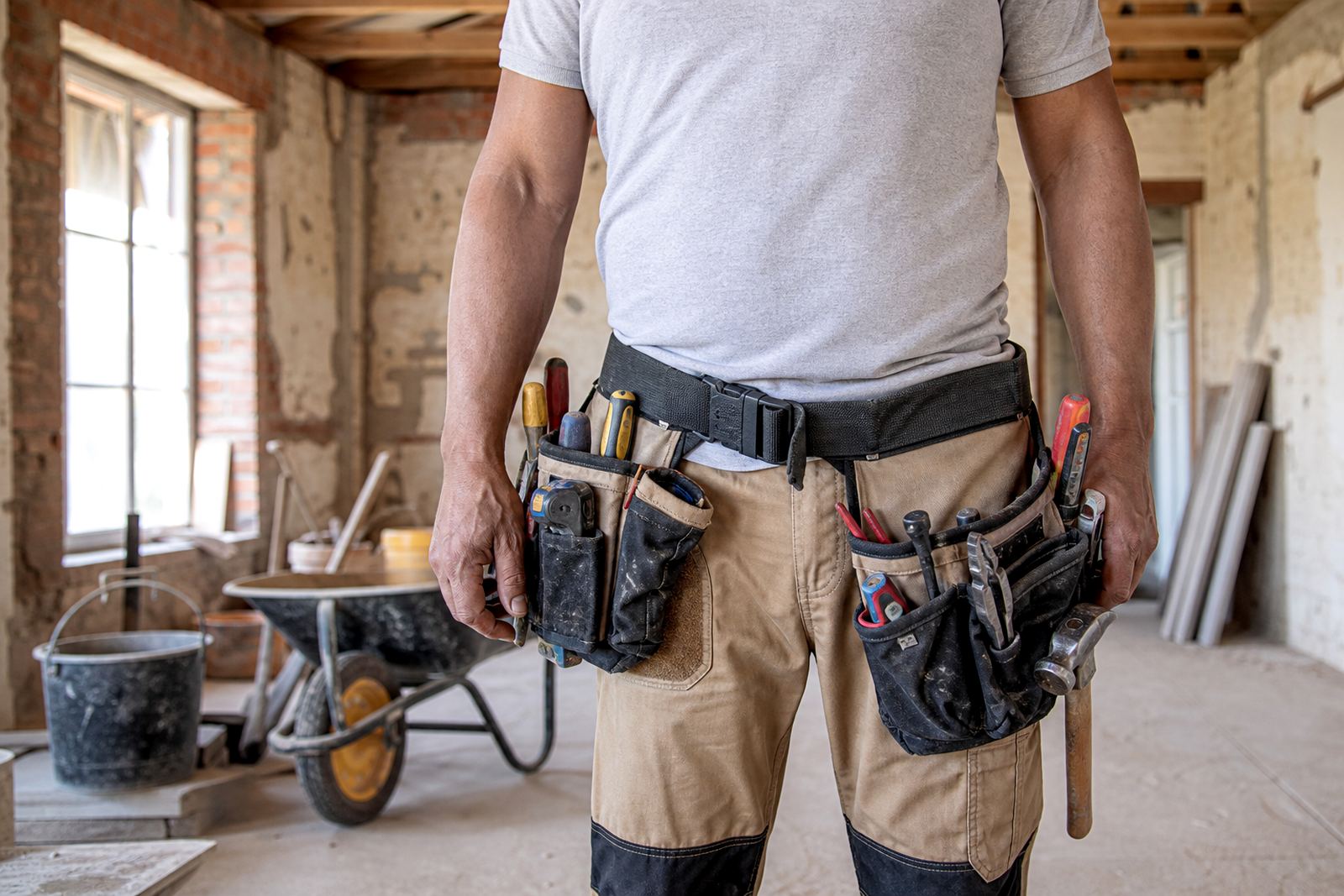
Look for a waist belt that holds weight evenly around the hips rather than hanging everything on one side. This matters when you are carrying screwdrivers, pliers and small hardware all at once. A good fit also makes it easier to climb stairs, crouch near skirting and work overhead without constant readjustment.
- Match the belt size before the job starts, especially for layered clothing in winter.
- Check buckle security if you move between indoor and outdoor work often.
- Keep the load centred when carrying heavier items like a hammer or cordless accessory pouch.
- Replace worn belts before they twist or loosen under weight.
On Gauteng sites, especially during load shedding periods, crews often move between daylight work and backup lighting. A stable belt lets you keep moving while carrying a torch or testing gear, instead of stopping every few minutes to fix your kit.
Use separate pouch layouts for builders and electricians
Mixed renovations often bring builders and electricians onto the same property, sometimes on the same day. Shared access is easier when each trade has its own pouch layout. That way the carpenter is not hunting through electrical fixings, and the electrician does not need to unpack a general trade bag just to find the right connector.
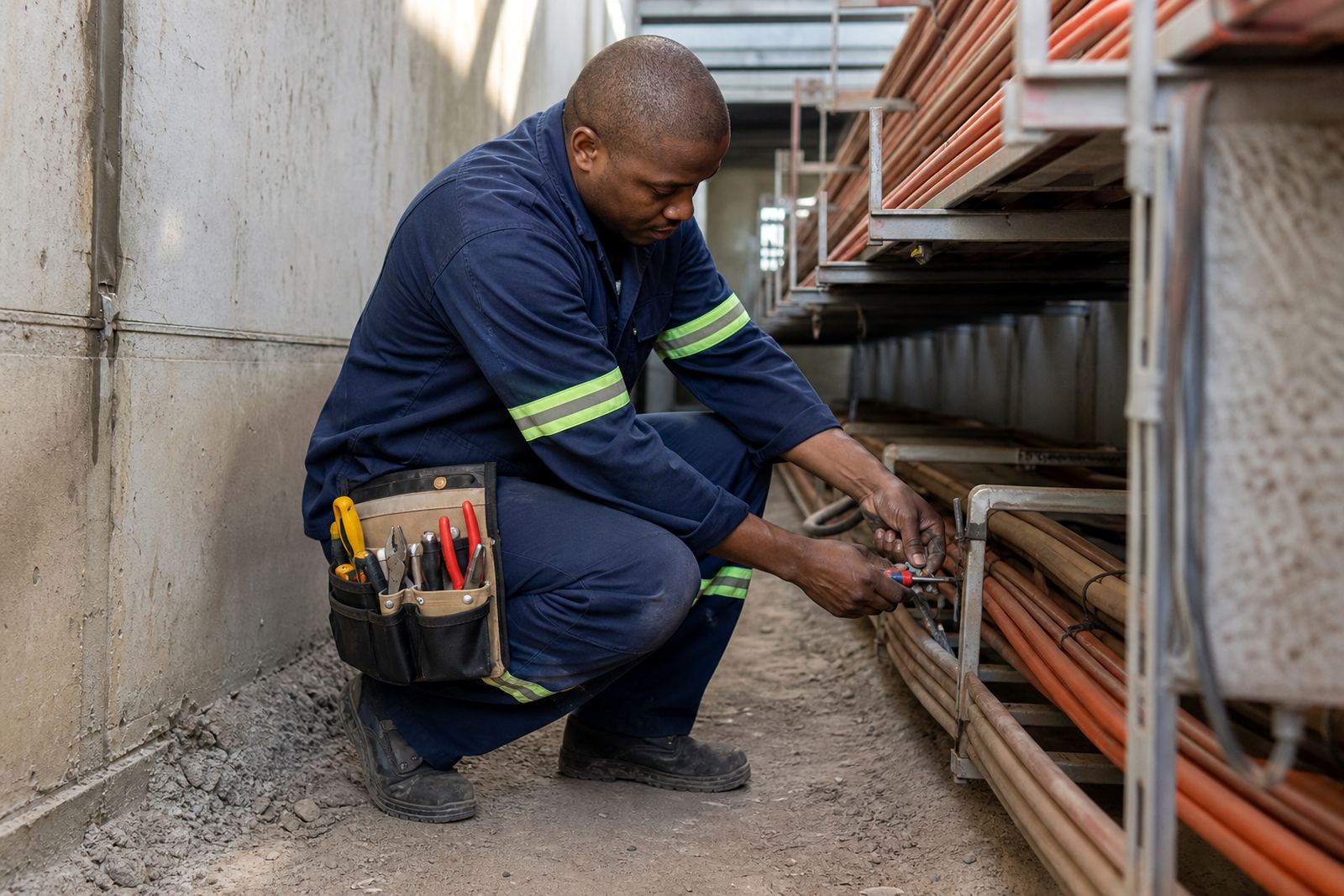
For builders, pouch space usually needs to support marking, cutting, fixing and patching. For electricians, the carry set should make room for test items, terminals, cutters and insulated tools. The shape of the pouch matters as much as the number of pockets because the wrong layout slows down hand movement and creates clutter.
When you are planning a mixed job in Midrand or Centurion, keep a small task list for each room and build the pouch around that list. It saves time during final snagging when the client is watching and the schedule is already tight.
Keep stock moving with a simple restock plan
Renovation work often fails on small shortages. A few missing screws, the wrong size anchors, or an empty fixings pocket can stop progress for half an hour. That is why many contractors keep a replenishment plan that covers both the vehicle and the pouch. It is not just about carrying more, it is about not running out.
A practical restock system is simple. Empty pockets at the end of each day, count what was used, and refill before the next site call. For teams working across Johannesburg, Pretoria, Durban, Cape Town and Polokwane, this helps keep the same working standard on every project, even when the crew changes from one suburb to the next.
- Top up fast-moving fixings after each site handover.
- Check wear on stitching, loops and belt points weekly.
- Keep one starter kit ready for small callouts and emergency repairs.
- Use project-specific kits for bathroom, kitchen or ceiling work where possible.
This is where a well planned supply partner helps, because you can order the same pouch styles, belt sizes and mixed kits in one go rather than patching together a new setup every month.
A practical renovation example from Alberton
A local contractor in Alberton renovating a townhouse complex had to move between a stripped bathroom, a lounge repaint and a small electrical fault in the passage. The first week they used one oversized bag for everything, and it kept getting left in doorways or on top of stored furniture. Tools were also getting mixed up between trades.
After switching to a lighter waistbag setup, the crew split the load by task. The builder carried marking tools, fixings and a knife. The electrician used a separate pouch for testers, cutters and small parts. The result was quicker room changes, less wasted movement and cleaner work areas because each person knew exactly what was on their belt. That kind of change matters on live renovation sites where tenants are still around and access is tight.
For renovation work, good tool carry is not about looking organised, it is about staying productive when the job changes every few metres. A sensible pouch and belt setup keeps the day moving and makes the handover at the end easier for everyone.