

Common Pouch Overloading
Home / Journal / Common Pouch Overloading

Journal

Common Pouch Overloading

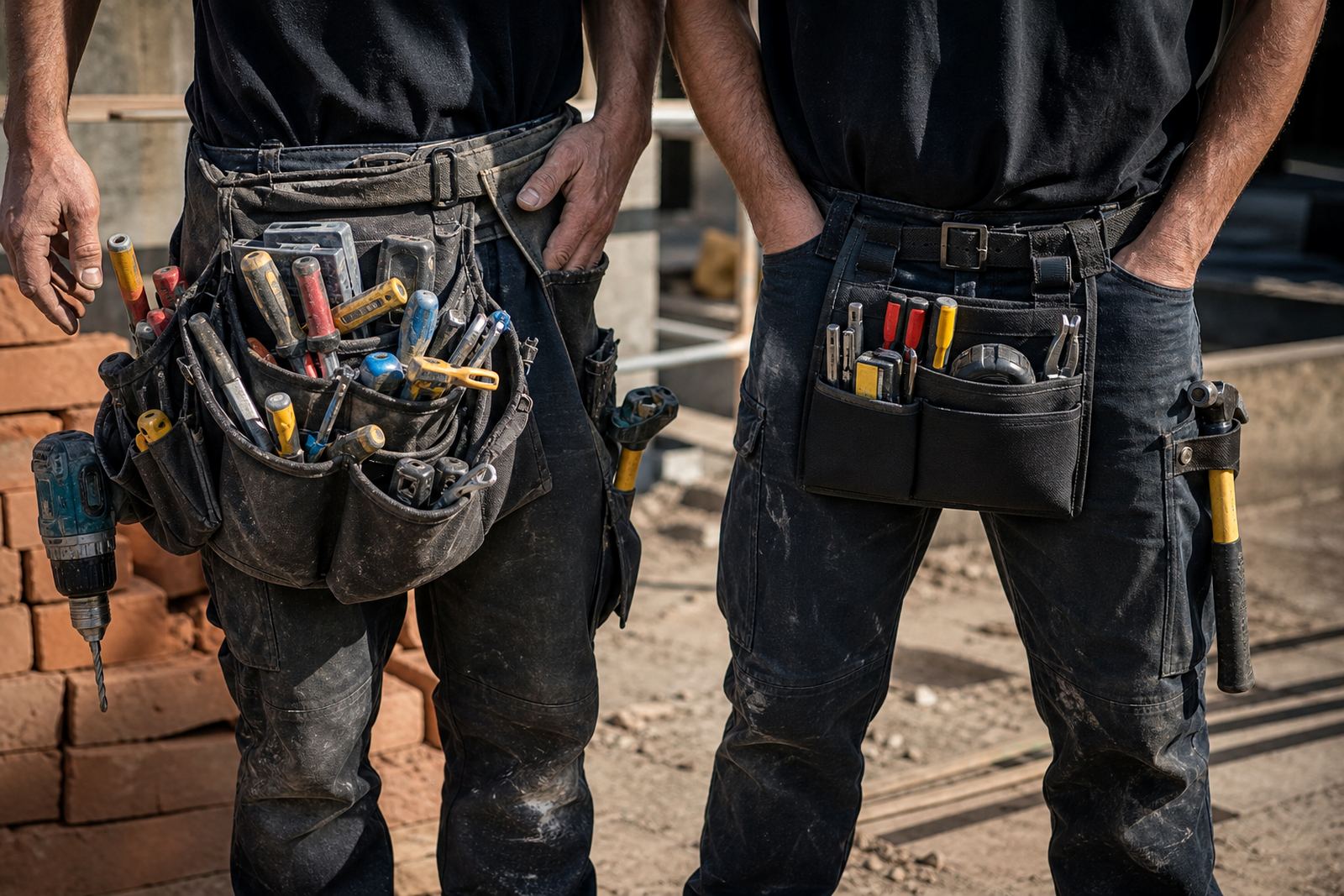
An overloaded pouch sounds efficient until it starts slowing your hands, pulling at your belt and damaging the stitching. On sites from Alberton to Cape Town, the extra weight usually costs more time than it saves.

Why overloading feels handy at first

Most tradespeople start by carrying a few extra items just in case. A bigger pouch seems sensible when the day includes callouts, odd fittings, and last-minute changes. The problem is that a pouch is meant to carry what you need for the next task, not every tool in the vehicle.

Once the pouch gets too full, you start feeling it in your back, hips and stride. The belt shifts, the pouch swings and tools are harder to find by touch. On a ladder or scaffold, that small delay can become a real safety issue. In hot Gauteng afternoons, the extra bulk also adds unwanted strain and sweat, which makes the belt sit worse and rub more.

For electricians and builders, overloading often happens because the day starts with one job and ends with three. If you pack for every possible task, the pouch quickly turns into a mixed bag of screwdrivers, pliers, fasteners, tape and off-cuts. It looks prepared, but it is less controlled.

The signs your pouch is carrying too much

You do not need a scale to know when a pouch is overloaded. The signs usually show up on the body and on the gear itself. If the belt keeps sliding, the seams are stretching or the pouch sits crooked, it is already carrying too much.

  • Tools are digging into your hip or thigh
  • The pouch hangs lower on one side than the other
  • You keep taking items out just to reach the one underneath
  • Fasteners and small parts spill when you bend over
  • The belt holes or buckle area are wearing quickly

Another warning is when your pouch becomes a storage point instead of a work point. If you are carrying old screws, bits you have not used in days and spare cutters from another job, it is time to reset the load. A pouch should support the task in front of you, not keep every leftover item from the last site.

On windy coastal sites around Durban or Cape Town, loose packing becomes a bigger issue because small items can scatter the moment you open the pouch. That means more time searching, and more chance of losing materials before the job is even done.

How extra weight slows the work

Overloading does not just make you tired. It changes how you move. A heavy pouch pulls your body off centre, so you twist more when reaching, bend differently and take longer to move between tasks. That extra effort adds up over a full shift, especially when you are climbing, crouching or walking long distances across a site.

For builders, the delay often shows up in small pauses. You stop to sort through mixed tools, unclip the pouch, or check which pocket holds what. For electricians, it can mean fumbling for cable ties, stripping tools, testers or screwdrivers while standing at a ceiling point or behind a panel. Those seconds count when the job is tight and the client is waiting.

Here is the simple truth: if you have to dig for the right item, the pouch is already carrying too much. It should save time, not create another step.

  • Keep only the tools needed for the current task
  • Use separate pockets for fasteners, hand tools and consumables
  • Move spare stock back to the vehicle or site box
  • Repack at lunch if the job changes

What heavy loads do to belts and stitching

Belts and pouches wear out faster when they are overloaded every day. The pressure sits on the same seams, the same buckle point and the same pocket corners. Over time, the material stretches, the threads loosen and the shape starts to sag. That is when even a good belt begins to feel tired before its time.

In South Africa, weather makes this worse. Coastal humidity softens materials and encourages wear, while dust on inland sites gets into folds and rubbing points. In winter mornings around Pretoria or Polokwane, a pouch may feel stiff at first and then soften unevenly through the day. That constant change is hard on the stitching.

If a pouch is packed beyond its intended use, the belt often pays first. You will see the buckle biting into the strap, holes elongating and the waistband losing support. Once that starts, the whole setup becomes less comfortable and less reliable, which can force an early replacement.

Smarter packing for builders and electricians

The answer is not to carry less for the sake of it. The answer is to carry better. A pouch should be set up around the day’s work, the crew’s layout and the site conditions. A first fix installation does not need the same load as a finishing job. A builder doing shutter work will pack differently from an electrician doing a panel change, and that is how it should be.

Good pouch layout planning starts with separating must-have items from backup stock. Keep the main tools in the pouch, the extras in the vehicle or a site box, and use a belt size that gives proper support without cutting into the waist. If the job has repeated tasks, a starter kit or mixed trade kit can be built around that workflow. It keeps the weight manageable and the pockets easier to use.

  • Choose a pouch size that suits the task, not the biggest one available
  • Match belt length to the clothing and the season
  • Split fasteners by type so they do not mix and spill
  • Use site specific selection when the job changes from day to day

A local example from a Gauteng site

On a mid-rise job in Alberton, a small team was carrying too much in one pouch because the supervisor wanted everyone ready for any task. The result was a slow start every morning, with workers sorting through mixed tools before the first fix even began. One belt pinched badly enough that the wearer kept loosening it, then tightening it again later in the day. It was wasting time, simple as that.

After the pouches were repacked by trade type, the difference showed up quickly. The electricians carried fewer heavy items and the builders split their nail stock from the hand tools. There was less bending, less rummaging and less wear on the belts. The site did not become lighter by magic, it just became better organised.

That is the point for teams across Johannesburg, Midrand and Centurion too. A pouch that is overloaded every day is not saving effort. It is creating it.

When to reset the load and replace worn gear

Do a quick reset whenever the task changes, after lunch, or when the pouch starts to sag. If the belt keeps slipping or the pouch no longer holds shape, check the stitching and the load before the next shift. Small changes now can prevent a bigger failure later.

Replacement should be based on use, not pride. If a belt or pouch has been carrying too much for too long, it will eventually give up. Contractors who run team orders or stock replenishment plans usually save more by rotating gear early than by squeezing one more month out of a tired setup. That approach keeps workers moving and reduces surprise failures on site.

For builders and electricians working across South Africa, the goal is simple: keep the pouch light enough to work with, and strong enough to last. Anything more starts costing money in slow hands, sore backs and worn-out gear.

Questions we get asked

What is the main problem with an overloaded pouch?

It slows movement, makes tools harder to reach and puts extra strain on the belt and stitching.

How do I know if my pouch is too full?

If it hangs crooked, digs into your side, spills small items or makes you search for tools, it is carrying too much.

What should I do instead of stuffing everything into one pouch?

Carry only the tools for the current task, keep spare stock separate and set the pouch up for the trade work you are doing that day.

Planning something? Send the team a message.

Contact form