Small Tasks Need Less Carry, Not Less Planning
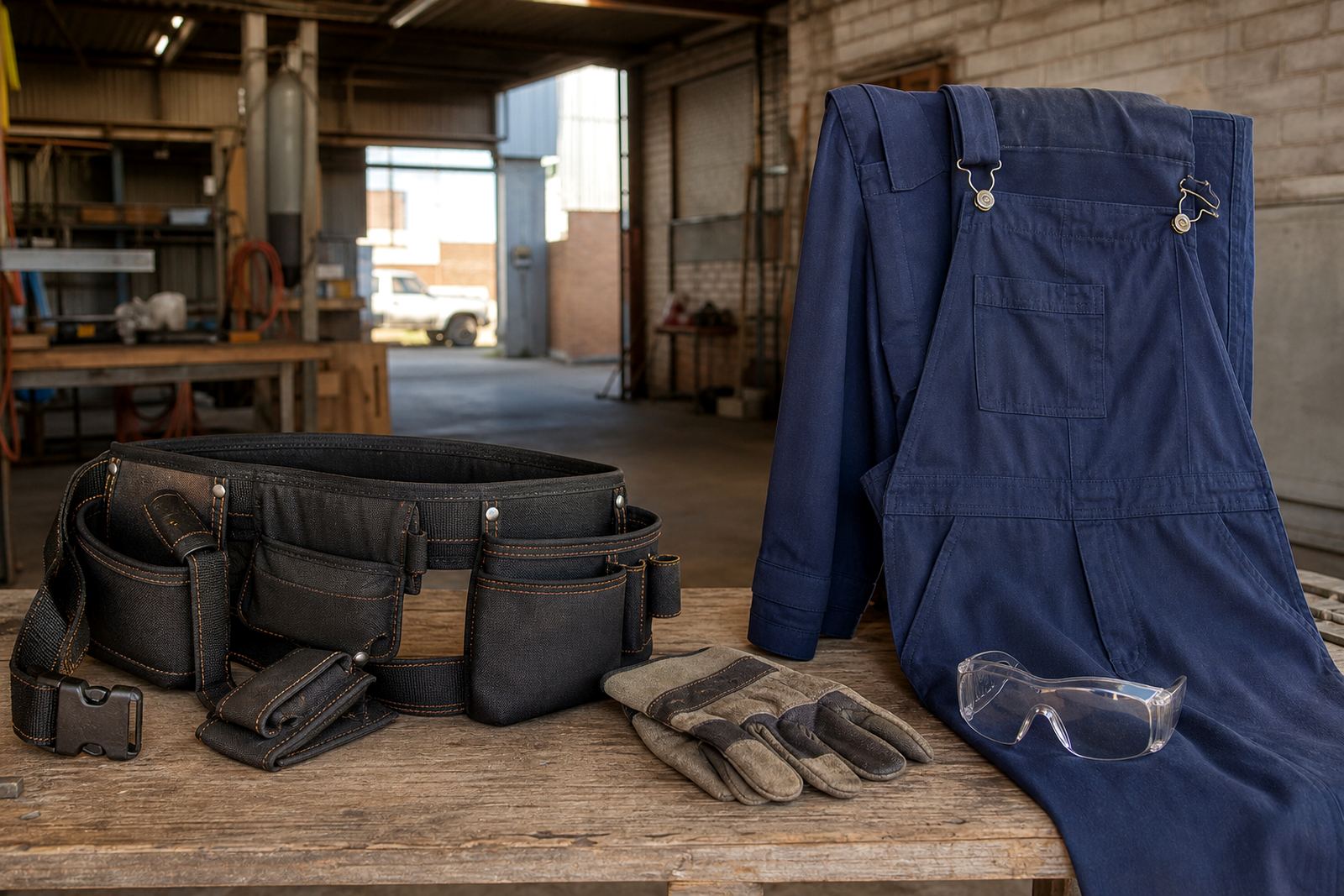
A compact pouch is the right choice when the job is short, the tools are few, and you are moving between points often. If you are marking out, fitting small hardware, testing a circuit, or handling punch list work, a lighter setup is easier to wear for the whole shift. On South African sites where the day can start cold and end in heat, a bulky rig can become tiring long before the job is finished.
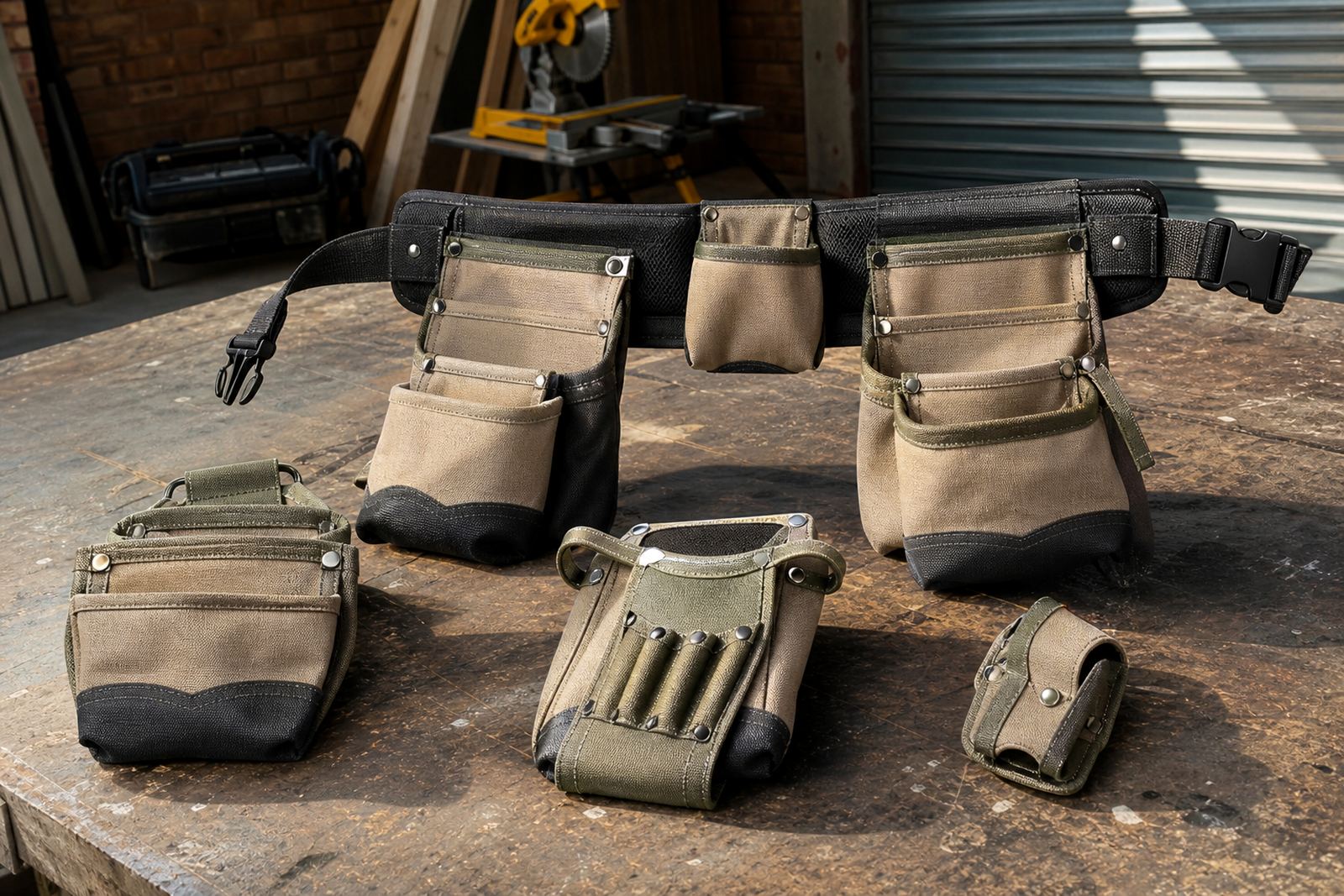
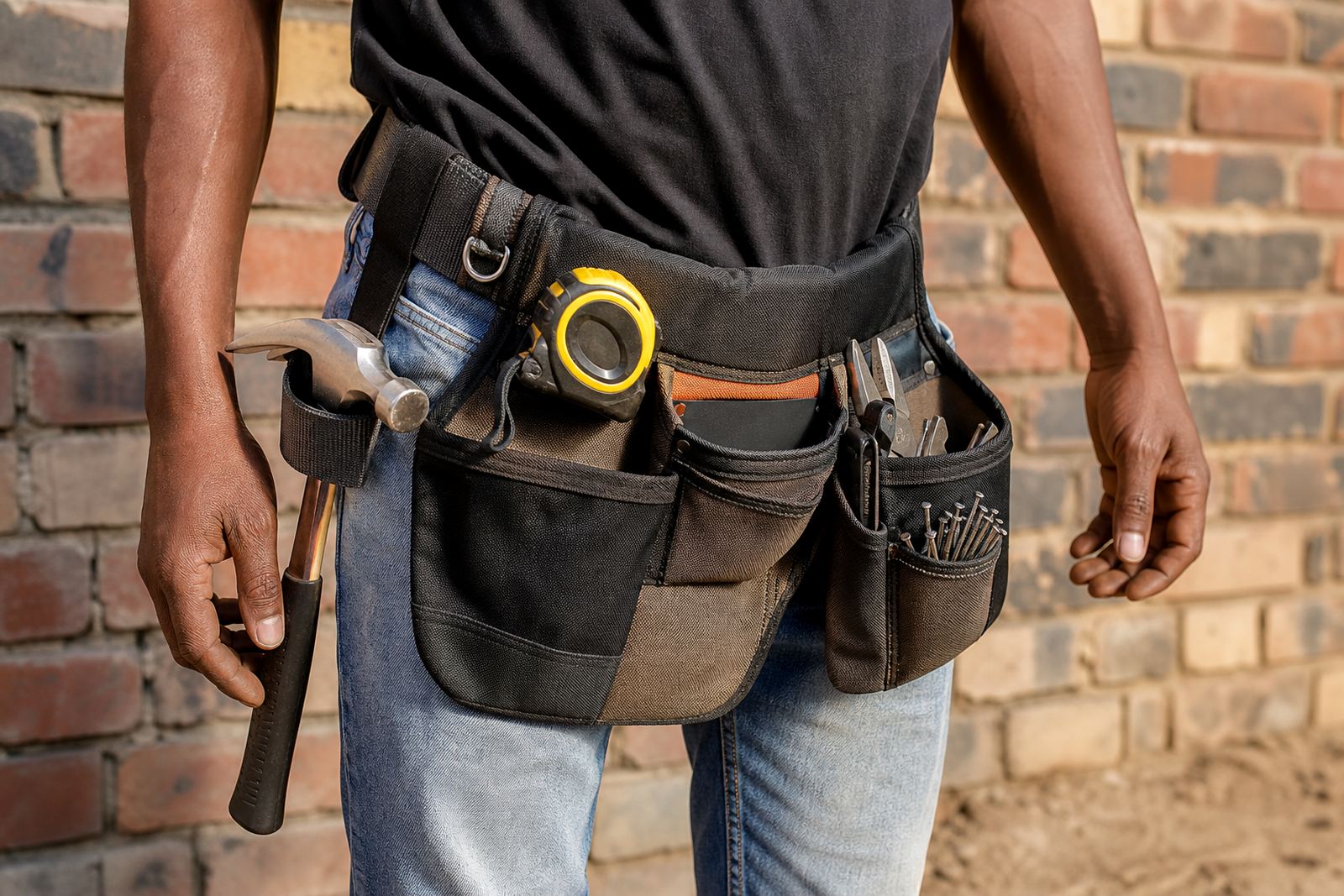
Use a compact pouch when you only need the basics. That might be a tape measure, pencil, utility knife, pliers, a driver bit set, cable ties, and a few fixings. You still stay organised, but you are not carrying unused space and weight. For many tradespeople, that is the difference between working neatly and constantly adjusting a heavy belt.
Best Fit Jobs For Compact Pouches
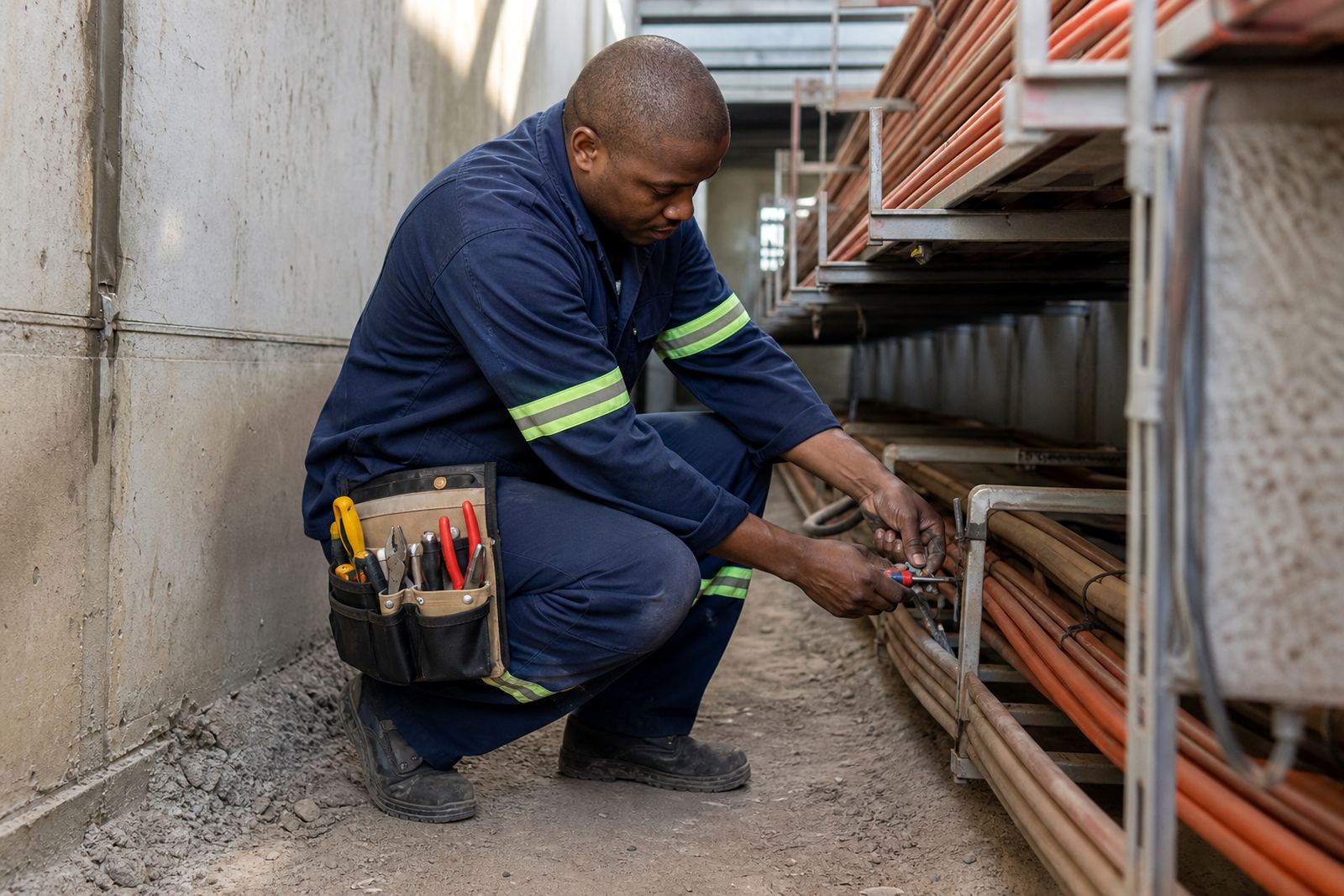
Compact pouches work especially well on jobs where access matters more than storage. Builders and electricians use them for repair calls, snag work, fittings, inspections, and light installation tasks. If you are climbing ladders, moving through a finished home, or working in a plant room with limited turning space, a smaller pouch keeps you from catching on doors, ceilings, or scaffolding.
- Electrical fault finding and quick repairs
- Small carpentry fixes and finishing work
- Site inspections and measurements
- Appliance connections and final fit-offs
- Maintenance calls in offices, flats, and retail units
In these situations the pouch should feel like part of the kit, not extra baggage. A good compact setup keeps the right items at hand without making you bend awkwardly or overfill pockets.
When Full Rigs Slow The Job Down
A full tool rig has its place, but it is not the answer for every task. If you are only on site for a few hours, or the job changes from room to room, a larger belt often carries more than you need. That extra weight can pull on your hips, get hot under the sun, and become a problem when load shedding delays your work and you end up waiting around with your gear on.
Compact pouches also make sense for teams that rotate between tasks. A site supervisor, electrician's assistant, or builder doing finishing work may need speed and mobility more than a full loadout. In many cases a smaller pouch lets the worker focus on the job instead of the kit. One minor thing people often forget is how much time gets lost fishing through oversized pockets, and that adds up over a week.
- Choose compact when you need to move fast
- Choose compact when the tool list is short
- Choose compact when space is tight or climbing is involved
- Choose compact when comfort matters over carrying capacity
How To Pack A Compact Pouch Properly
A compact pouch only works well when it is packed with intent. Keep the everyday items in the main pocket and place the most used pieces where you can reach them with one hand. Heavier items should sit lower so the pouch does not tilt, and anything sharp should be secured properly. If you carry mixed fixings, small pouches or sleeves inside the main compartment can stop everything from rattling around.
For electricians, a neat layout may include insulated hand tools, a voltage tester, screwdrivers, cutters, tape, and cable markers. For builders, the usual load might be a tape, pencils, marking chalk, a small hammer, utility knife, and fasteners. The aim is to create a setup that matches the task, not to pack every item you own just because there is space.
Comfort Matters On Long Gauteng Days
In Alberton, Midrand, and across Gauteng, summer heat and winter layers can change how a pouch feels on the waist. A compact pouch reduces bulk when you are working in roof spaces, walking a large site, or moving between the workshop and the building area. It is also easier to share between team members when everyone needs a similar basic loadout for the day.
For coastal jobs in Durban or Cape Town, smaller pouches help limit sweat build-up and keep tools drier when the weather turns damp. On inland jobs in Pretoria or Polokwane, the same pouch can be used over a shirt in the morning and over a jacket later on. The point is simple: when the day is varied, a smaller setup usually adapts better than a heavy one.
A Local Example From A Mixed Trade Site
Consider a contractor working on a small refurbishment in Alberton. The electrician is doing final connections while the builder handles skirting, touch-ups, and hardware changes. Neither worker needs a full rig because the task list is narrow and the access is cramped. A compact pouch lets them keep the essentials close, move through the rooms without knocking fittings, and finish the day with less strain.
That same approach suits contractors managing separate teams across Johannesburg, Centurion, or Durban. Instead of issuing one oversized setup for every worker, it often makes more sense to match the pouch to the job. Starter kit builds, belt size matching, and project rollout supply can help you set each person up correctly, so the team is not carrying more than it needs.