Start With A Daily Shake Out
At the end of a shift, empty the pouch fully and shake out loose dust, nails, screws and plaster crumbs. That small routine matters because fine grit works its way into stitching, rivets and pocket corners. If it sits there overnight, it keeps rubbing every time the pouch is moved or clipped on the belt.
On sites in Alberton, Boksburg and Johannesburg, we often see pouches that still look fine on the outside but are packed with cement dust inside. The outer shell may be strong enough, but the inside is where wear starts. A quick shake out after knocking off takes less than a minute and helps stop that grinding action.
- Turn the pouch upside down and tap it lightly against your palm
- Check the bottom seams for trapped grit
- Remove loose bits from tool slots and small loops
- Open any flap pockets before storing it
If the pouch gets wet from sweat or rain, empty it fully before you put it away. Leaving metal fittings inside with moisture can lead to rust marks and a stiff feel in the pocket linings.
Clean Dust Before It Becomes Wear
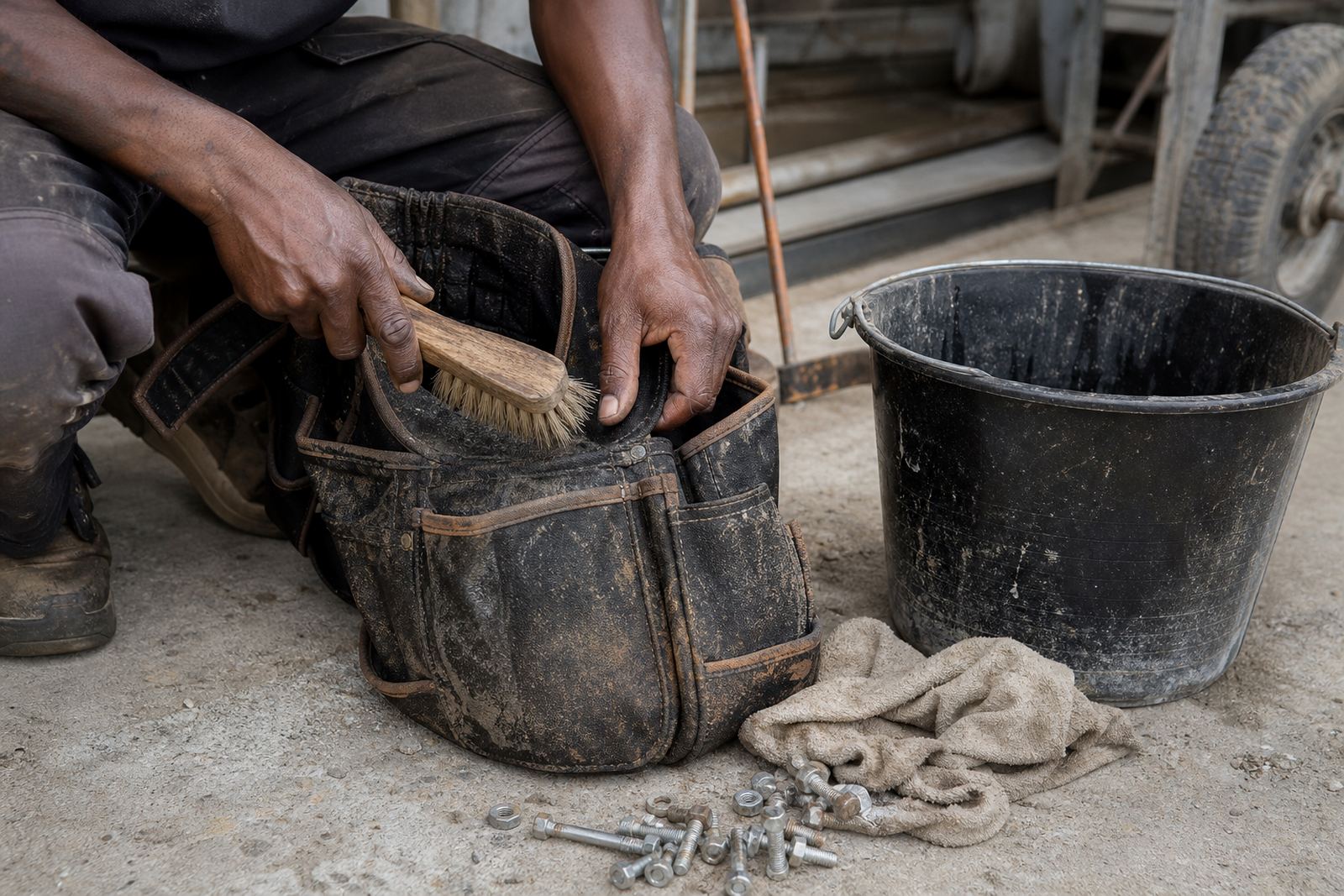
Dust is part of the job in most South African build environments, especially on concrete slabs, paving jobs and renovation work. The trick is not to wait until the pouch looks dirty. Light cleaning done often is easier than a hard scrub later. Use a soft brush to lift off sand and dry cement from the fabric, then wipe the surface with a damp cloth. Do not soak the pouch unless the care instructions allow it.
For leather trim or reinforced panels, use a barely damp cloth and dry it straight after. For synthetic pouches, a mild soap solution works for light marks. Avoid harsh thinners, strong bleach or anything that can weaken stitching and coating. If the pouch has picked up paint, plaster or adhesive, let it dry first then remove the residue gently. Scraping while it is still soft often pushes the mess deeper into the fibres.
- Brush first, wipe second
- Use clean water only, with mild soap if needed
- Dry in shade, not direct sun for hours
- Never put a wet pouch straight back into a closed toolbox
At coastal jobs in Durban, extra moisture in the air can keep dirt sticky for longer. There a quick wipe-down after work helps more than a once-a-week clean.
Check Stitching, Rivets And Belt Stress Points
Every pouch has weak points, usually where the belt passes through, where the base carries weight and where pockets get pulled open with one hand. These spots need regular checking. If you spot loose thread, stretched webbing or a rivet that has started to move, sort it out before the damage spreads. Small repairs early can save the whole unit.
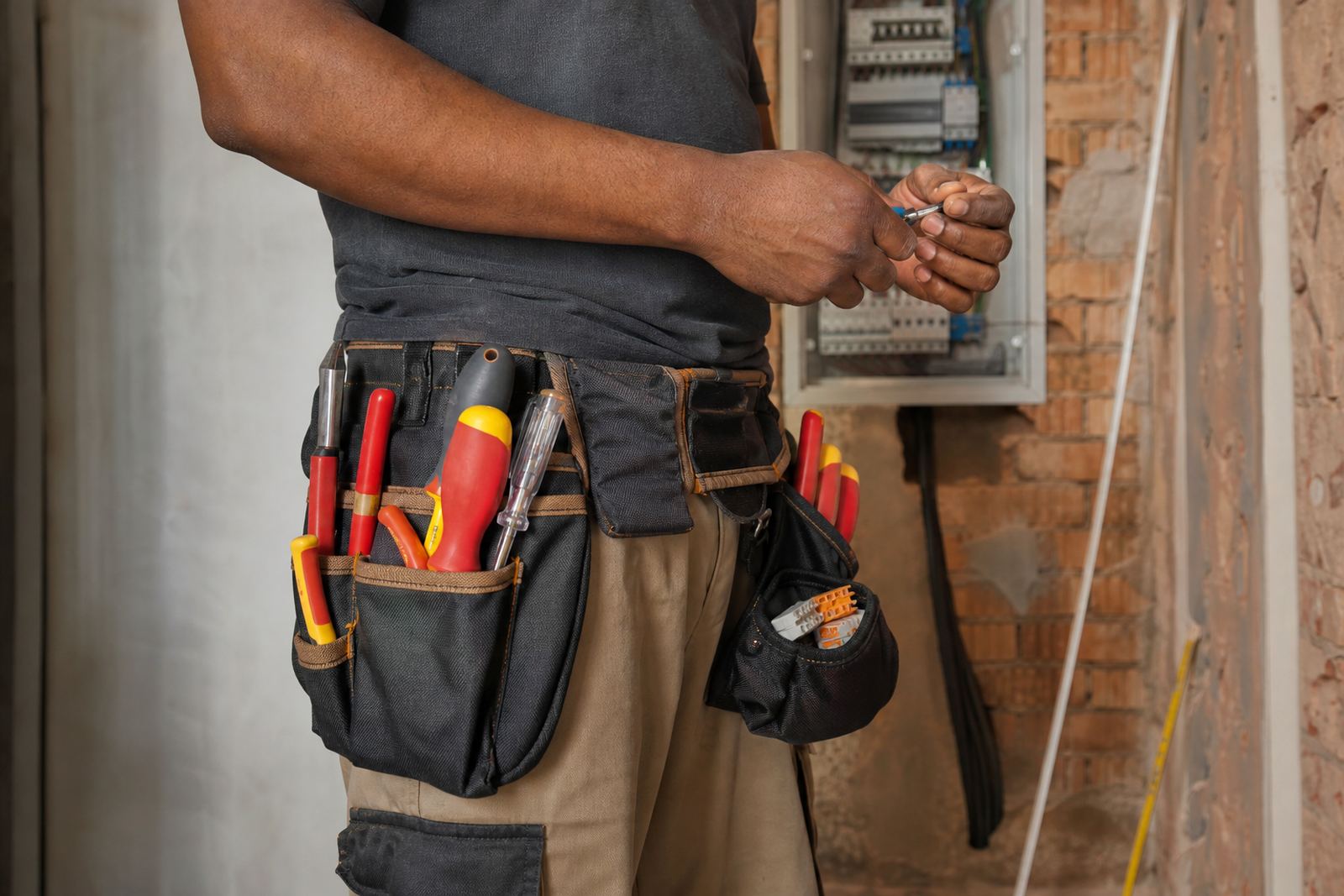
Electricians often carry screwdrivers, testers and fittings that dig into the same side pocket day after day. Builders may overload one pouch with tape measures, chisels and fixings. That uneven weight makes the belt twist and puts strain on one hip more than the other. A quick monthly inspection is worth doing, especially if the pouch is used on multiple projects or passed between team members.
Look for these signs:
- Frayed stitching around pocket tops
- Belt holes that have stretched out of shape
- Cracks near rivets or metal clips
- Seams that open when the pouch is loaded
- One side sagging lower than the other
If you catch these early, you can often keep the pouch in service with a simple repair or a replacement strap. If the base has gone soft and the pouch no longer holds shape, that is usually a sign it is time to replace it.
Store Pouches So They Keep Their Shape
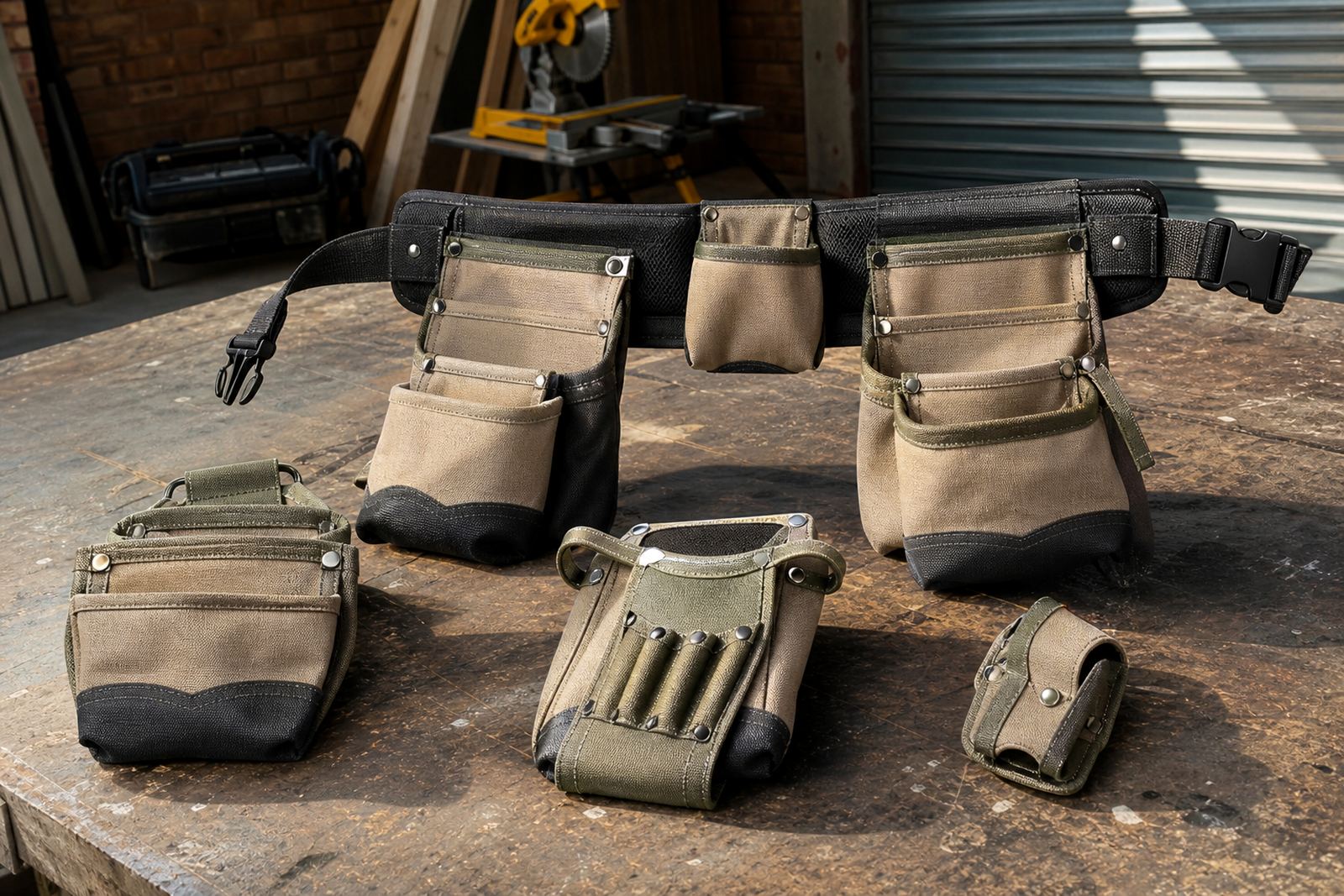
How you store a pouch between jobs matters nearly as much as how you use it. Do not leave it crushed under a stack of timber, tossed in the back of a bakkie or folded in half for days at a time. Constant pressure changes the shape of the pockets and weakens the support panels. A pouch should be hung or laid flat where it can dry and keep its form.
For contractors working on project rollouts, it helps to keep spare waist belts and pouches separated by size and trade type. That makes it easier to rotate stock and prevents one heavily used set from taking all the wear. In a warehouse or site storeroom, a simple hook rack or shelf is better than a pile on the floor, especially where dust and damp are present.
If you are storing gear over a weekend or during a shutdown, empty every pocket first. Leaving screws, drill bits or sharp fixings inside can mark the lining and create tiny cuts that get worse over time.
Match The Load To The Belt And Job
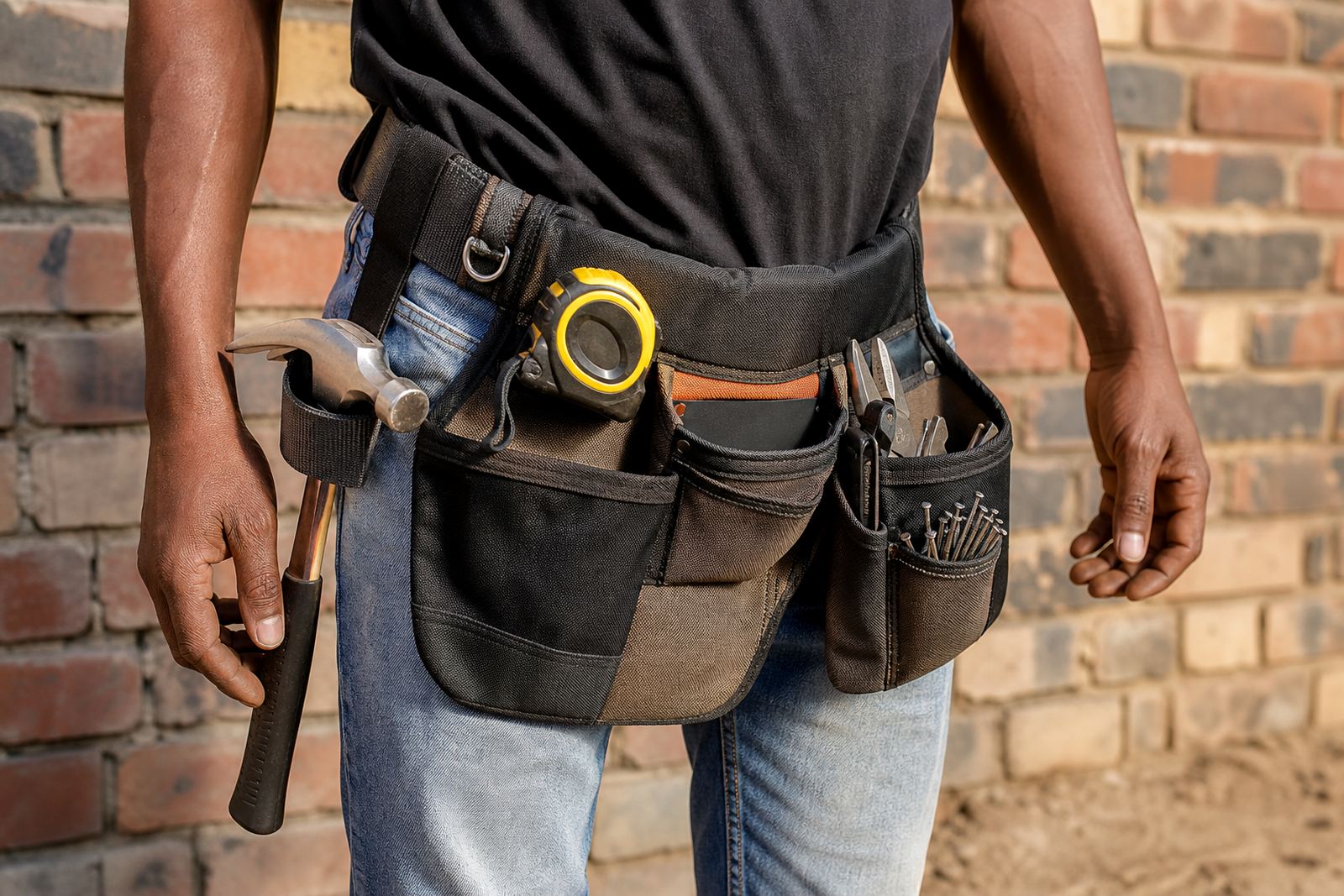
Good care is not only about cleaning, it is also about using the right setup for the task. A pouch that is packed too full will wear out faster than one that is matched to the work. Electricians usually need a cleaner pocket layout for smaller tools and fixings, while builders may need more room for nails, markers and hand tools. If the load is wrong, the pouch gets tugged, tipped and scraped more often.
That is why belt size matching and pouch layout planning are useful. A belt that sits properly on the waist spreads the weight better and keeps the pouch from swinging. When the fit is correct, there is less strain on the seams and less chance of the pouch hitting ladders, scaffolding or sharp edges as you move.
- Use one pouch for fast access items and another for heavier hand tools
- Keep sharp tools in separate slots where possible
- Do not overfill pockets just because there is space
- Adjust the belt before starting work, not halfway through the day
On busy sites around Pretoria and Midrand, this kind of fit check can save time too. Less shifting means less fumbling, and less fumbling means fewer knocks on the pouch itself.
A Small Habit Plan For Teams On The Move
For crews working across Gauteng, the Western Cape, KwaZulu-Natal and the North West routes, simple habits keep the whole team’s gear in better condition. Set one rule for end-of-day cleaning, one rule for weekly checks and one rule for storage. That way the pouch care does not depend on memory alone.
A practical team routine might look like this: shake out the pouch every afternoon, brush it every Friday and inspect the belt once a month. If a site is very dusty, increase the cleaning frequency. If the team is working near the coast or in wet weather, dry the pouches properly before loading them back into the vehicle. These little steps help keep the kit ready for the next shift and reduce unnecessary replacement costs.
For bulk teams, it also helps to keep a spare pouch on hand so nobody is forced to use damaged gear while waiting for a new one. A clean, well-kept pouch is easier to work from and gives better access to small tools when the job is moving fast.