
Why winter changes the way a tool belt feels
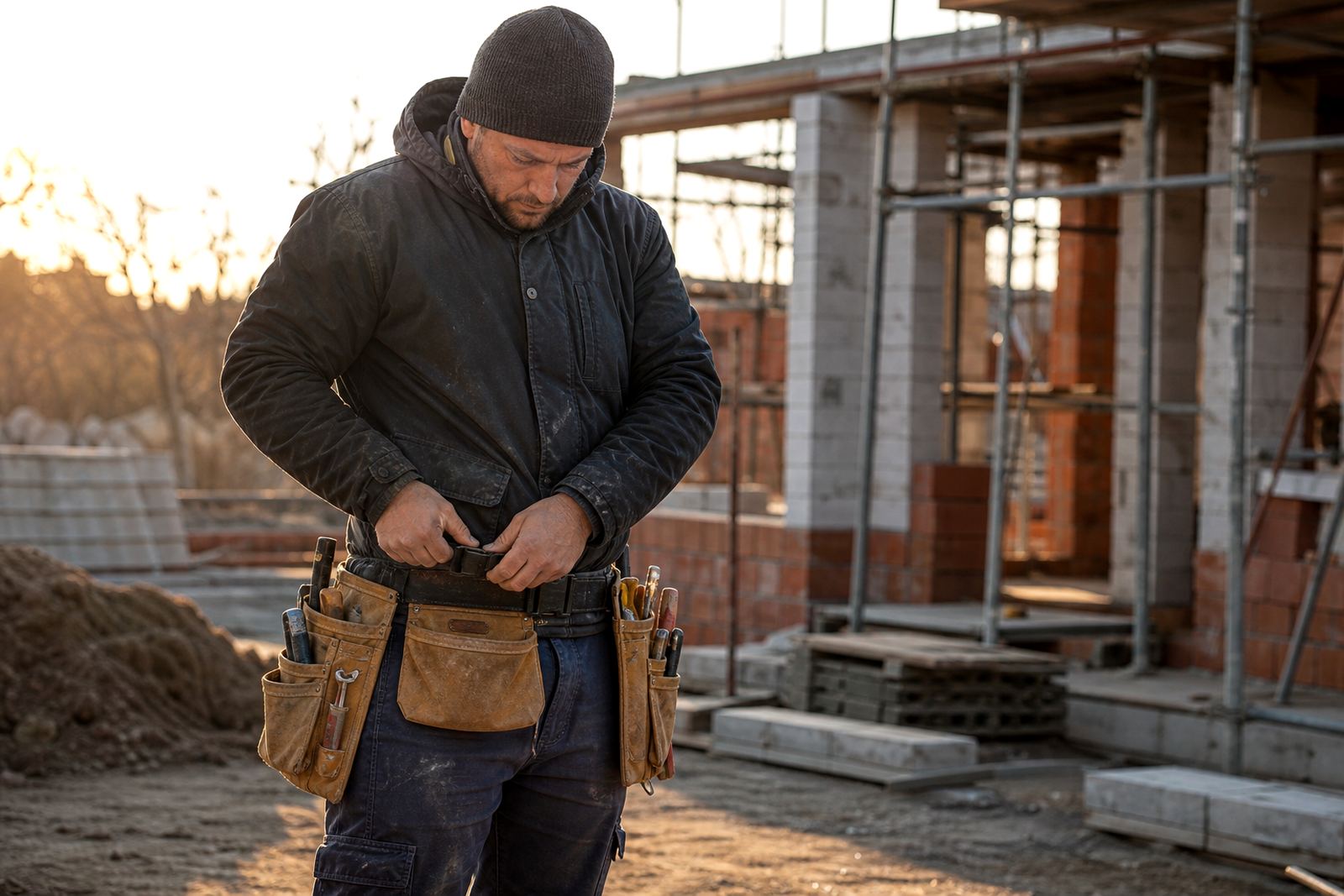
When the temperature drops, most tradespeople add a hoodie, thermal top, or heavier jacket before first light. That extra bulk sits under the belt and changes the way the load is spread around your hips and waist. A belt that felt fine in summer can start riding up, twisting, or pressing into your ribs once you have two or three layers on.
For builders and electricians, this matters because a bad fit does not only feel uncomfortable. It slows down pouch access, makes you reach awkwardly, and can leave you adjusting your belt instead of getting on with the job. On a cold site in Alberton or Midrand, that wasted time adds up fast.
- Check the belt fit over the clothes you actually wear in winter, not over a T-shirt.
- Allow a little extra room for layered clothing but keep the belt snug enough to stay in place.
- If you move between early morning chill and midday heat, plan for a belt that can be tightened and loosened quickly.
How to position pouches over bulk clothing
Winter layers do not mean you need to carry less. It means the placement of each pouch becomes more important. If you stack too many items on one side, the belt pulls unevenly and the pouches may tilt forward or dig into your thigh when you crouch. That makes it harder to grab screws, pliers, a tester, or nails with gloved hands.
A better approach is to spread the weight across the front and sides, keeping the most used items within easy reach. Put the heavier pouches where they can sit flat against the body and keep lighter items higher up or further back. This is especially useful for electricians carrying small parts and builders moving between cutting, fixing, and fastening tasks.
- Keep frequently used tools near your dominant hand.
- Move heavier items to the side that causes less strain when climbing ladders or scaffolding.
- Test the layout while bending, kneeling, and reaching up, not only while standing still.
Gloves, zips and cold fingers on site
Cold fingers make even a simple pouch layout feel awkward. In winter, many workers use gloves in the morning and then take them off later when the sun comes out. If your pouch opening is too narrow, or your fixings are buried under clothing, you waste time every time you reach for a fastener or small hand tool.
Choose a setup that gives you a clear opening and enough space to get a hand in quickly. Fast access is important when load-shedding shifts your start time and the crew is trying to make the most of daylight, or when a job in Cape Town gets hit by a sea breeze that cuts through your jacket. Good pouch access helps keep the pace up without forcing you to fumble around.
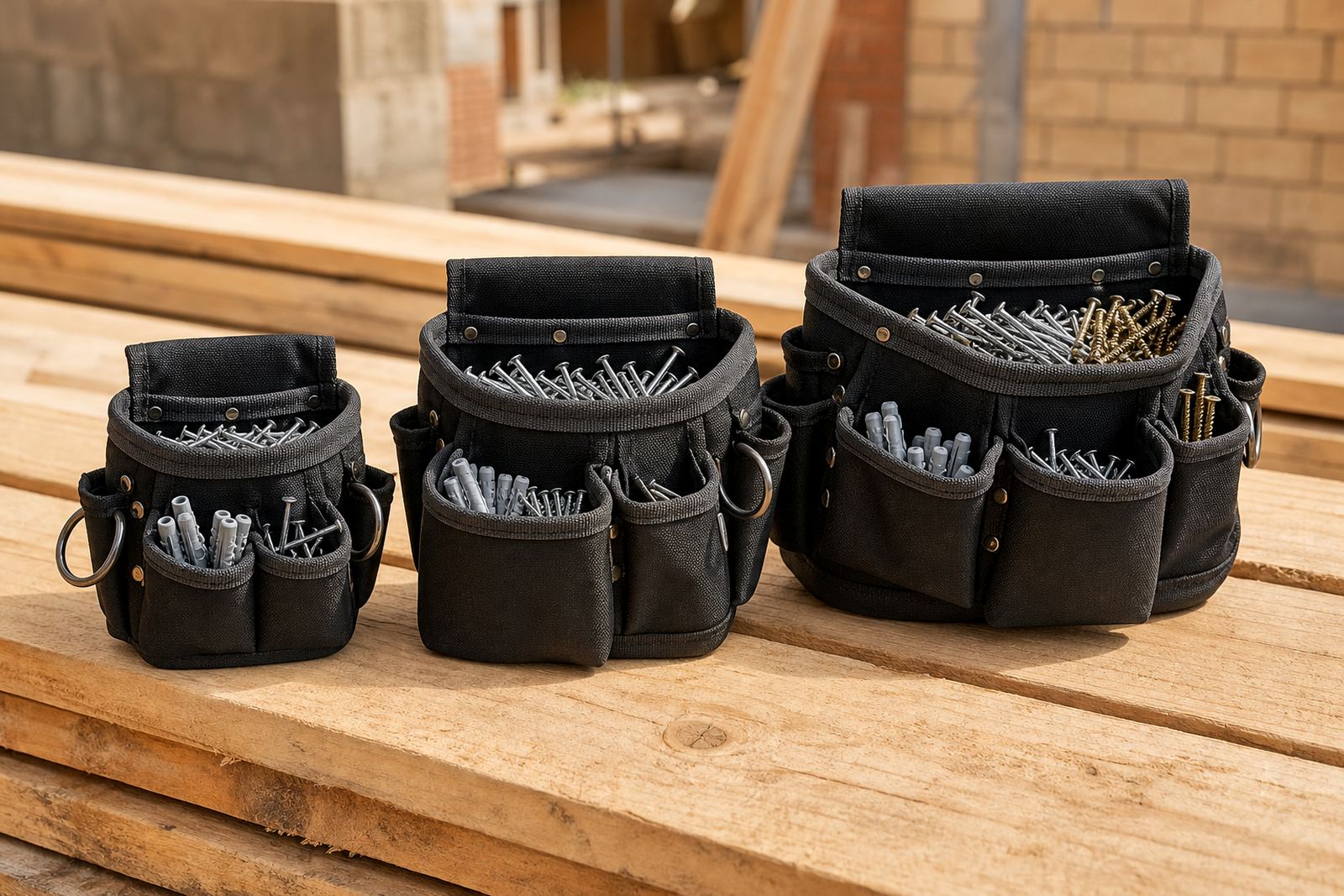
- Use open pouch styles for fast retrieval of nails, screws and small fittings.
- Keep sharp or loose items in separate sections so they do not snag gloves or tear lining.
- Make sure the pouch mouth stays open even when the belt is tightened over bulkier clothing.
Belt size matching for winter layers
One of the most common winter mistakes is ordering the same belt size you used in summer and expecting it to work with extra clothing. In practice, a winter set-up needs more adjustment room, especially if you wear a fleece, hoodie or padded jacket under your outer layer. Too tight and the belt cuts in. Too loose and the whole kit shifts every time you bend or climb.
A proper size match should leave enough room for layered clothing without letting the belt slide. That is why belt size matching matters for both builders and electricians. It helps the load sit securely over the hips and keeps the pouches where you need them, even on long days in Pretoria, Durban or Polokwane. A quick fitting before a bulk order can save a lot of trouble later.
- Measure over the winter clothing you expect to wear most days.
- Check whether the belt has enough adjustment for lighter and heavier mornings.
- If several team members use the same kit, sort sizes individually instead of guessing.
A local example from an Alberton winter start
On a cold July morning in Alberton, a small electrical team may arrive before sunrise with jackets zipped right up. The first worker starts pulling cable while the second handles fittings and screws. If the belt is too tight over layered clothing, the pouch keeps sliding toward the front. If it is too loose, the tools bang against the leg when the team moves between rooms.
In that kind of setup, a practical layout makes all the difference. The supervisor can set one belt for daily use and another for site specific work where extra items are needed. That keeps the kit tidy, saves time and helps the team stay organised even when the weather is poor or the site is dusty and cold. It is a simple change, but it prevents a lot of frustration on the floor.
Winter kit planning for teams and contractors
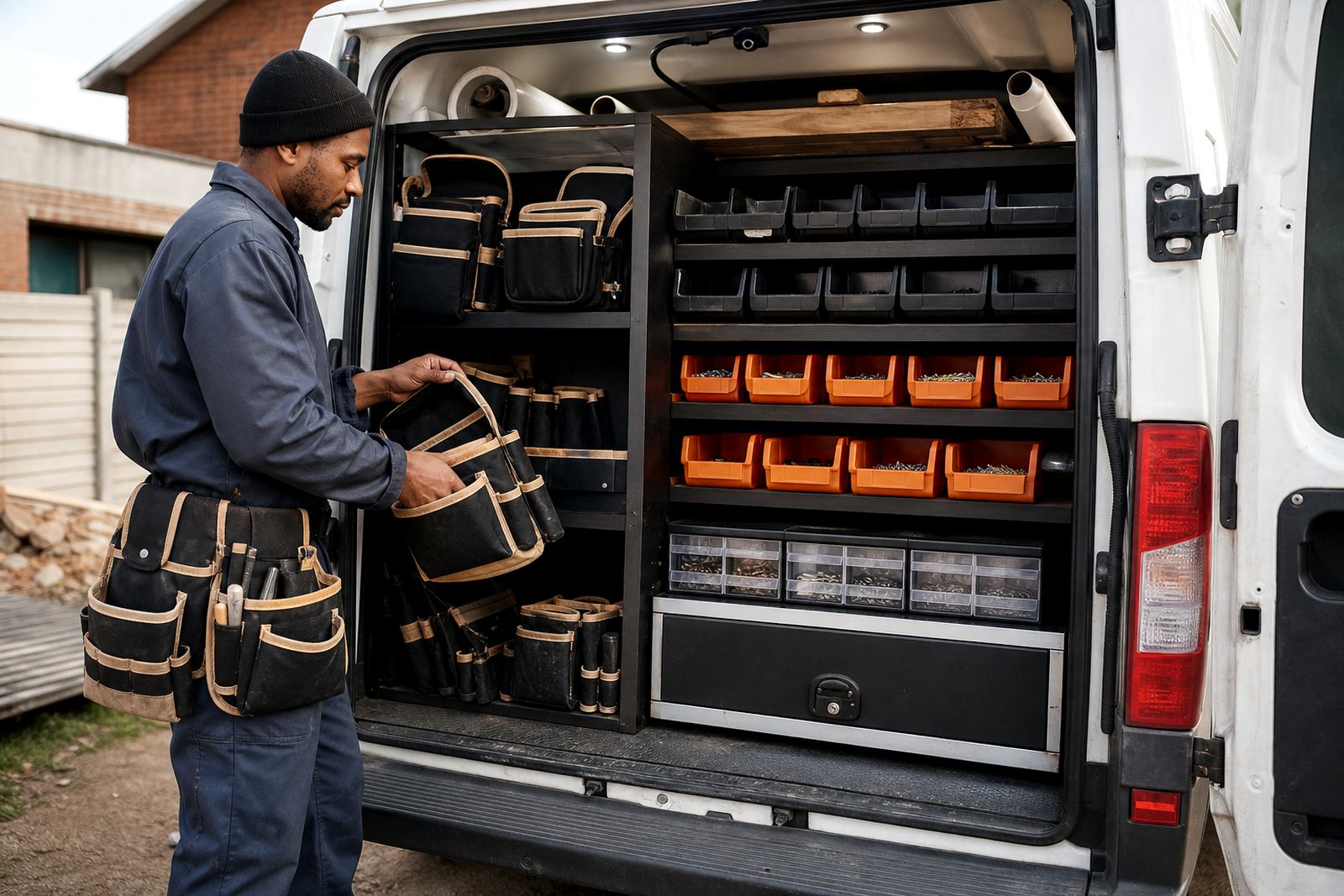
For contractors handling more than one crew, winter is a good time to review pouch layouts and restock what gets lost most often. Bulk clothing changes the shape of the body under the belt, so the same setup may not work for every team member. Project rollout supply is easier when the gear is matched to the job, the season, and the way each person works.
A few practical steps help keep things on track through the colder months:
- Plan starter kit builds for new staff with winter fit in mind.
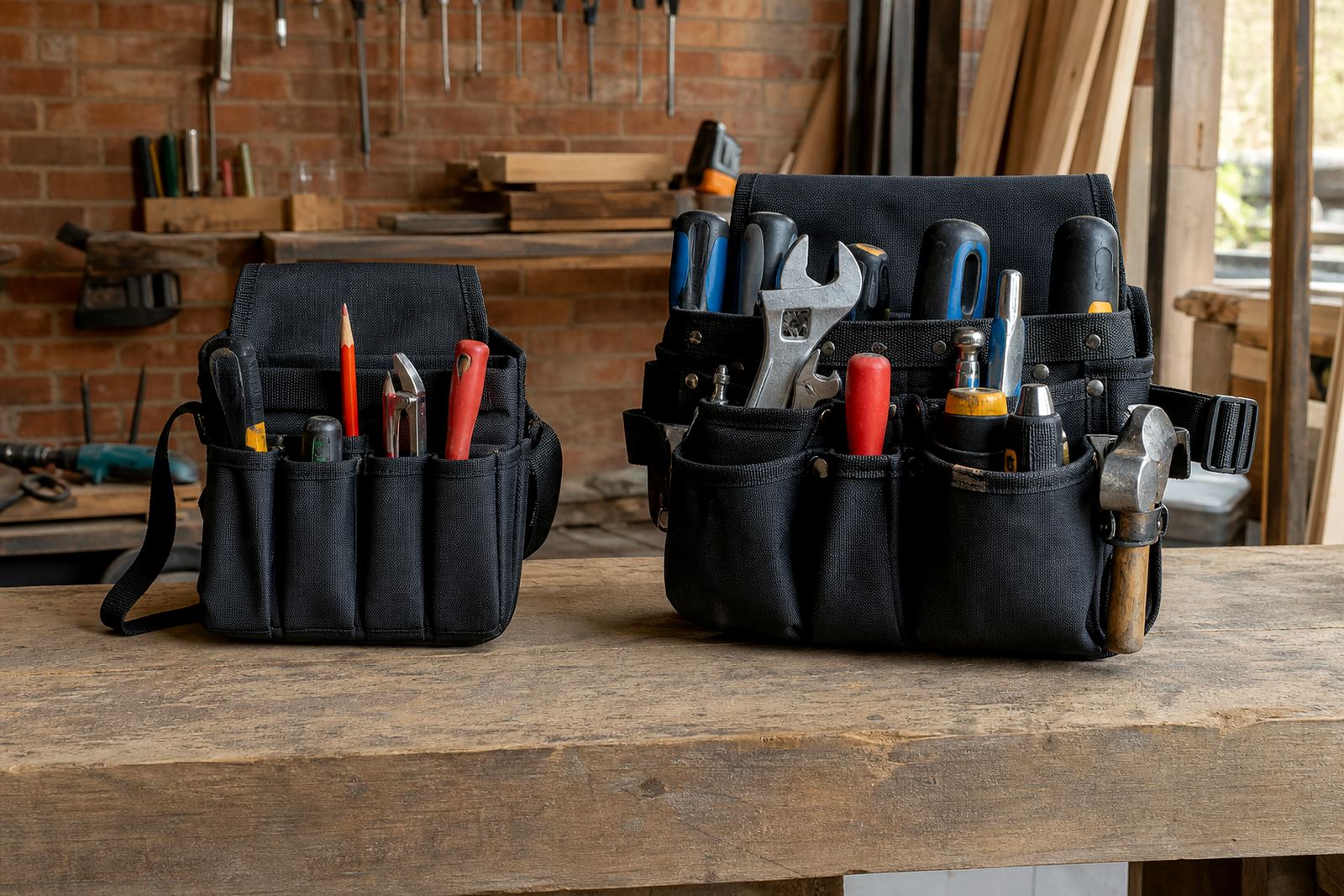
- Use mixed trade kits where builders and electricians need different pouch access.
- Set up stock replenishment plans before the cold spell starts so teams are not caught short.
- Review delivery planning for sites where early starts, coastal humidity, or long travel times affect working comfort.
For teams across Johannesburg, Pretoria, Durban, Cape Town, Polokwane, Midrand and Centurion, the aim is the same: keep the belt comfortable, keep the pouches reachable, and keep the job moving without constant adjustments.