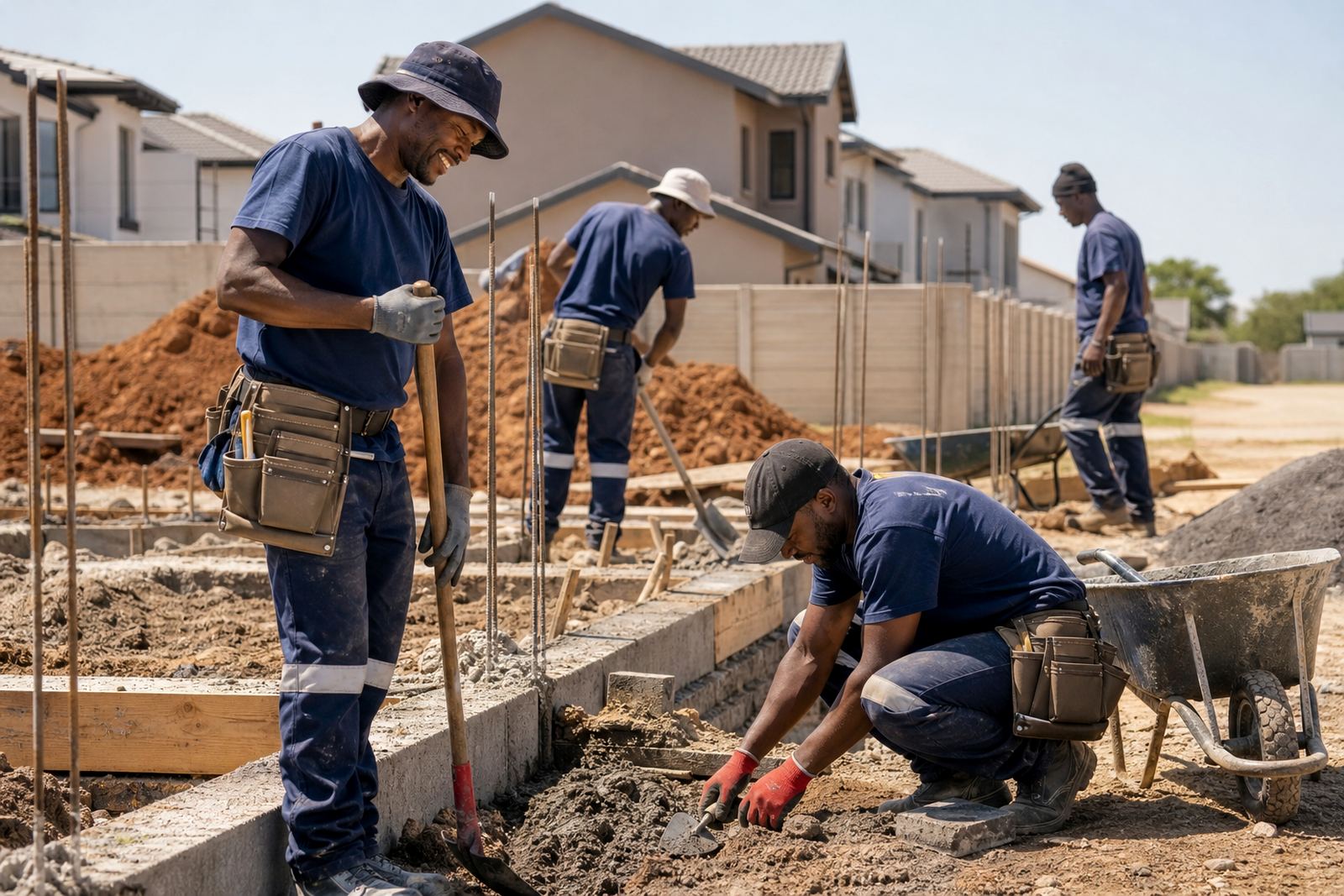
A standard kit for a fast-moving estate build
The contractor was running multiple small crews across a gated estate in Centurion, with framers, bricklayers, electricians and finishers all moving between units in the same week. The brief was simple but strict: create a common belt kit that could work across different trades, reduce time lost looking for hand tools, and keep the setup comfortable during full-day work in the heat and dust.
They also wanted a supply plan that would hold up over several phases. Estate work can change quickly, with a unit moving from slab to roof structure to first fix in a short period. That meant the belt kits had to be practical from day one and easy to reorder without changing the whole system later.
- Client type: residential contractor working on new estate homes
- Area: Centurion, Gauteng
- Trade mix: builders and electricians
- Goal: standardise belt kits across multiple crews
What made the site difficult to standardise
The estate had tight access control, limited laydown space and a moving schedule that depended on municipal inspections, weather and handover dates. The team needed pouches that could carry everyday site items without getting bulky, and the belts had to fit different waist sizes without constant swapping between workers. In summer the crews were dealing with heat and dust, while early mornings were often cold enough for layered clothing, so adjustability mattered more than looks.
We also had to keep the setup sensible for load-shedding conditions, where work often starts again as soon as power returns and crews need their tools ready in seconds. The contractor wanted something durable enough for repeated use, but not so heavy that it slowed the lads down by midday.
- Controlled estate access meant deliveries had to be timed carefully
- Crews needed a lighter carry setup for walking between units
- Different waist sizes required belt matching, not one size fits all
- Reorders had to stay consistent across all teams
The kit mix we supplied
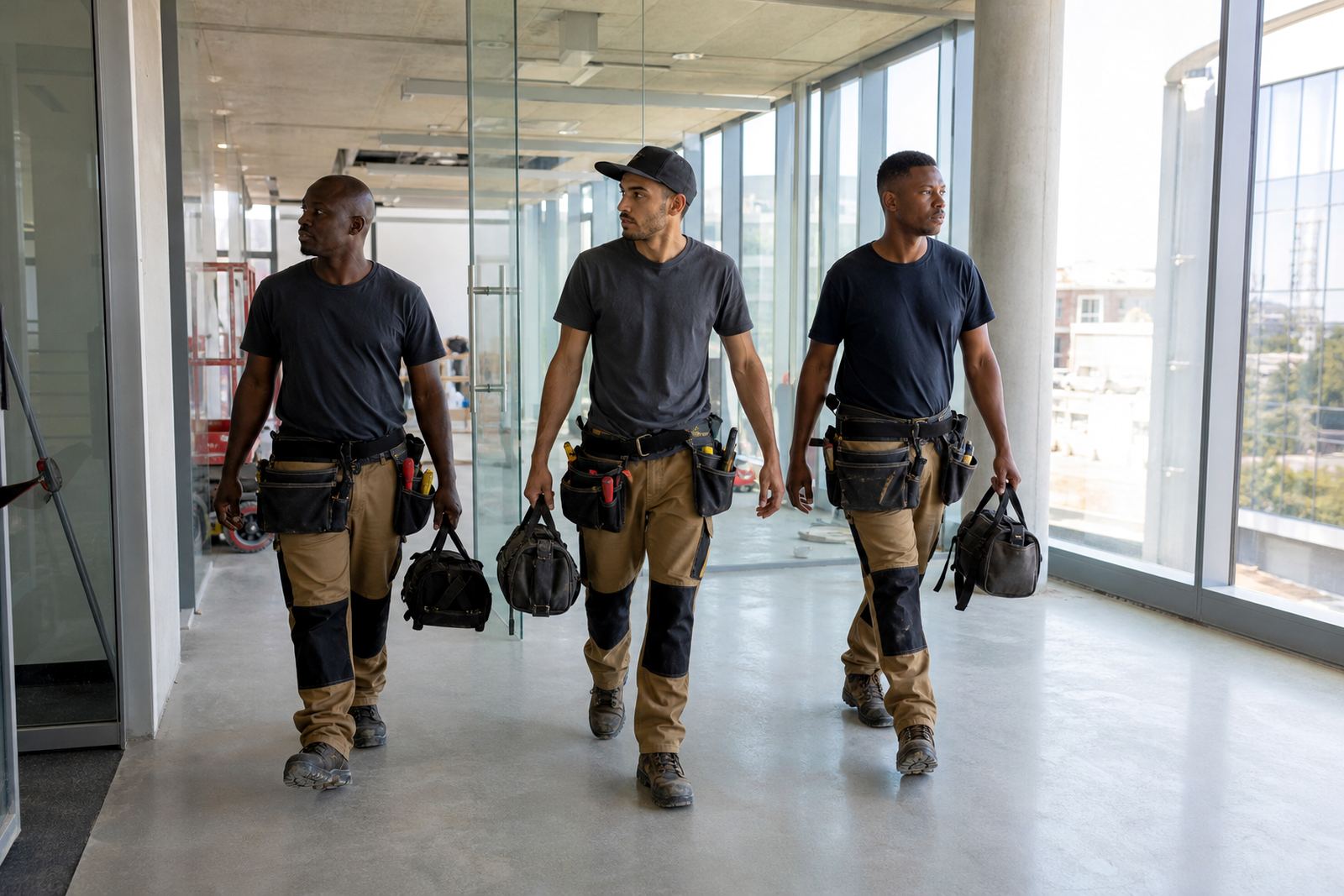
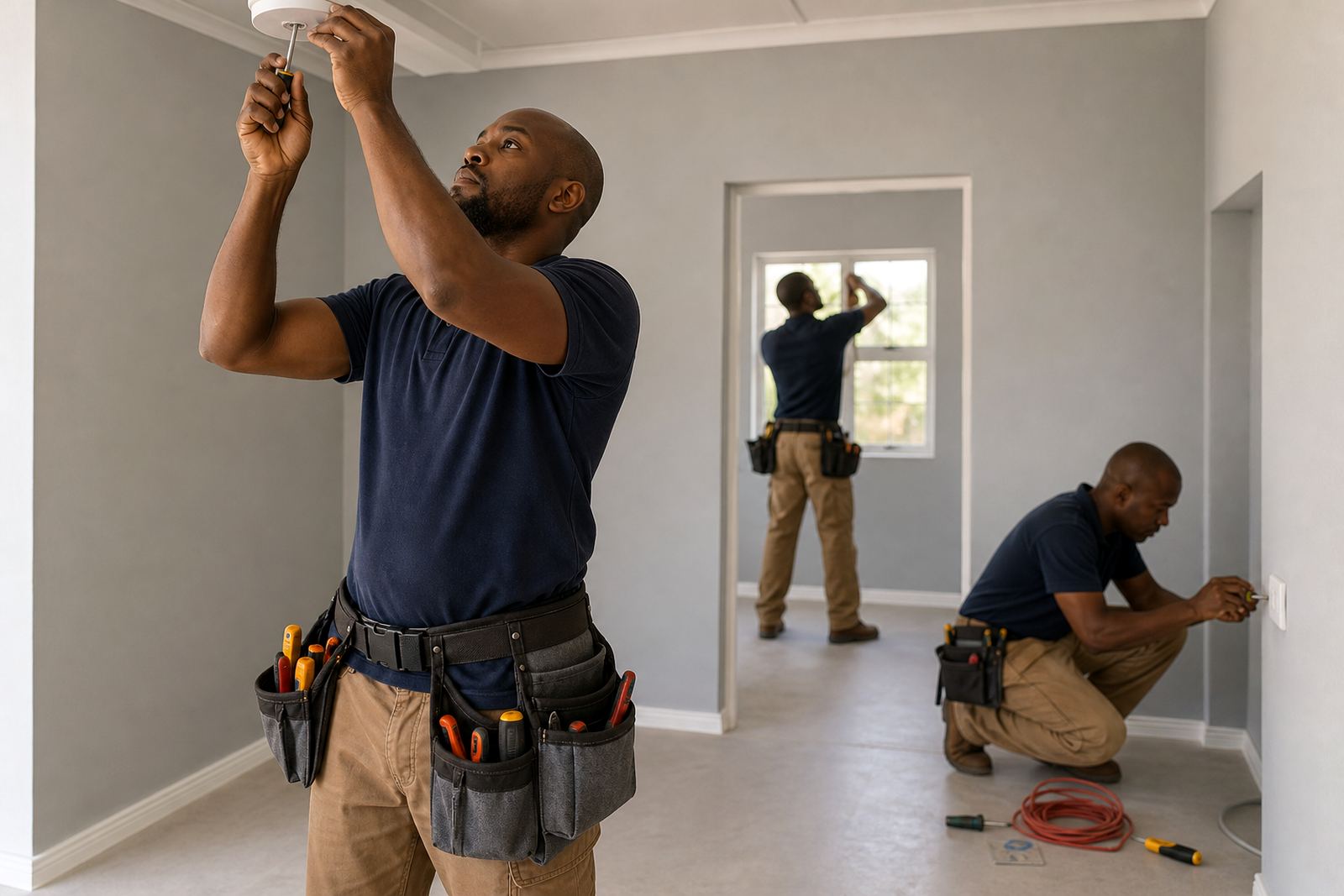
We put together a mixed trade order built around tool pouches, nail bags and utility waist belts. For the builders, the focus was on open carry and quick access to nails, tape measures, markers and small hand tools. For the electricians, we kept the layout tighter with room for screwdrivers, testers, pliers and fixings, so the pouches stayed neat on ladders and in ceiling spaces.
Each belt was matched to the person using it, with sizing checked before issue. That cut down on the usual problem of belts riding up, twisting or needing extra holes punched in the field. The contractor also asked for starter kit builds for new hires, which let them issue a standard set to each new crew member instead of piecing things together ad hoc.
- Tool pouches for general builders
- Nail bags for fast-moving brick and framing work
- Utility waist belts sized per wearer
- Electrical kit configurations for first fix and finishing work
- Mixed trade kits for supervisors and versatile crew members
How we handled the rollout over four weeks
The project ran over four weeks from first briefing to full issue. In week one we confirmed the crew mix, the kinds of tools being carried, and the belt sizes needed for each team. In week two we prepared sample layouts and agreed the pouch positions so the contractor could keep a consistent feel across all crews. In week three we packed the first bulk order and set aside extra units for site replacements. By week four everything was issued, with replenishment quantities logged for the next phase.
That approach worked well because the contractor did not want a long trial period. They needed a practical setup quickly, before the estate moved into the next block of homes. The result was a clean handover, with each foreman knowing exactly which kit went to which worker and how to request replacements later.
- Week 1: briefing and crew assessment
- Week 2: pouch layout planning and belt matching
- Week 3: bulk packing and spare stock allocation
- Week 4: issue, rollout and replenishment planning
Results on the estate site
Once the crews were using the same setup, the site ran more cleanly. Workers spent less time searching for small items, and supervisors could spot missing tools faster at the end of each shift. The standardised layout also made training easier for new arrivals, because every belt followed the same logic.
The contractor said the biggest improvement was consistency. A new electrician could move onto the estate and be productive on the first day instead of spending time getting used to someone else’s pouch layout. For the builders, the nail bags were practical on scaffold and during short moves between units, and the belts stayed comfortable during long stretches outdoors. There was less faffing about at start up too.
- Faster tool access across multiple crews
- Cleaner issue and return process at the end of shifts
- More consistent new starter training
- Better comfort during all-day estate work
What we would repeat on the next estate phase
If we were doing the next phase again, we would keep the same structure: confirm crew roles first, match belt sizes second, then lock in pouch layouts before bulk packing. That order saves time and avoids the common mistake of buying the same kit for every worker when their actual tasks are different.
We would also keep a small reserve for wear and replacement, especially on busy builds where crews move fast and gear gets knocked around in trucks, on ladders and in unfinished units. For estate contractors, the best setup is the one that can be repeated from phase to phase without changing the way people work.
For Centurion, the final result was a straightforward supply system that matched the site reality. It was practical, repeatable and easy to manage from one phase to the next.
Key facts
| Project type | Residential contractor belt kit standardisation |
|---|---|
| Town | Centurion, Gauteng |
| Timeline | 4 weeks from brief to rollout |
| Crew scope | Builders, electricians and supervisors across multiple crews |
| Supply mix | Tool pouches, nail bags and utility waist belts |
| Support services | Bulk Team Orders, Pouch Layout Planning, Belt Size Matching, Project Rollout Supply, Stock Replenishment Plans, Delivery Planning |