The clinic brief in Polokwane
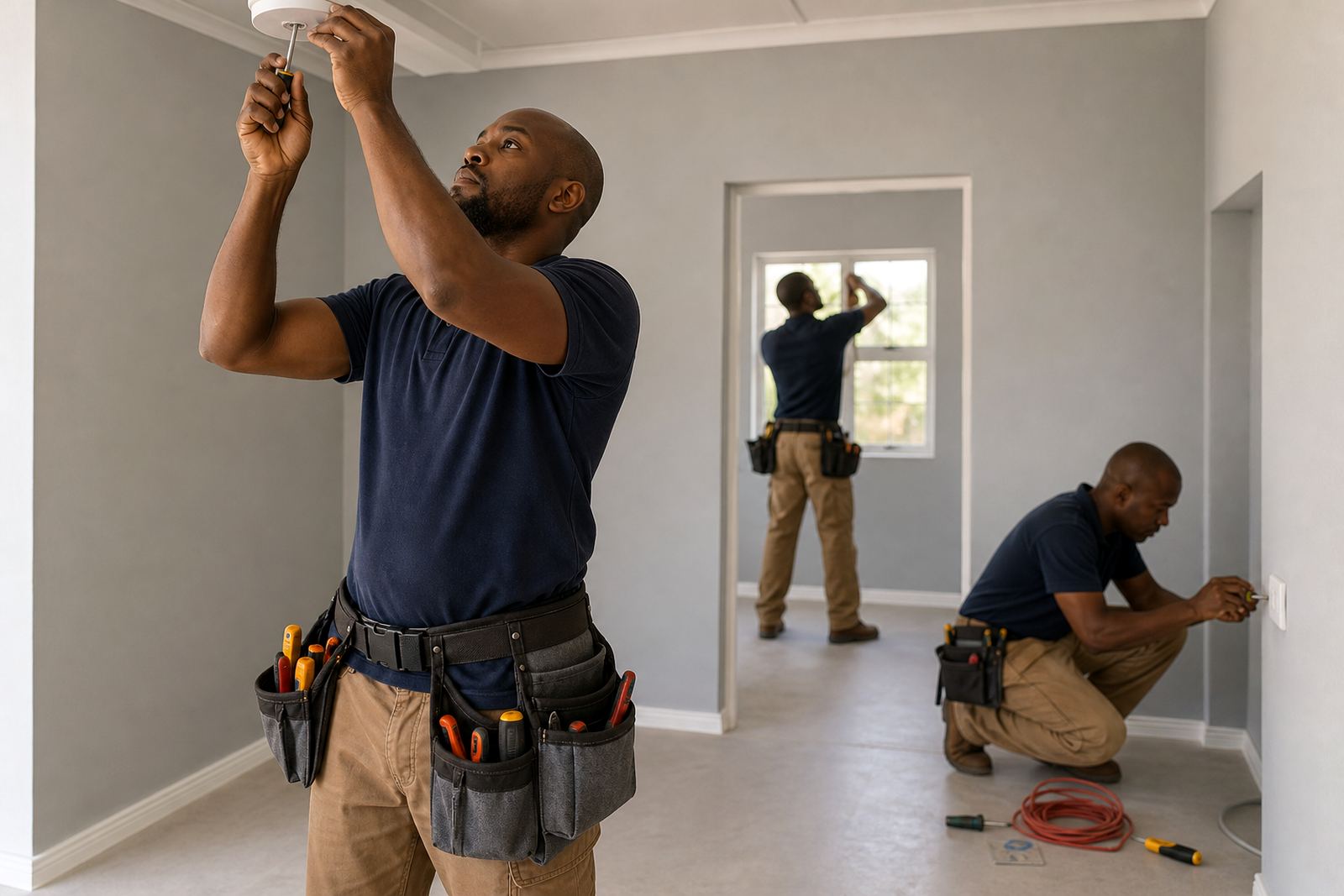
The site was a working clinic in Polokwane, so the team needed a tidy carry system that would not slow them down in narrow passages or crowded treatment areas. The brief was simple on paper: keep fixings, testers, markers, tape measures and hand tools organised while technicians moved between ceiling voids, service rooms and public corridors.
The client wanted less time spent searching through pockets and bags, and more time on the actual upgrade work. They also needed something comfortable for long shifts, since the crew was on site for several weeks and often worked around early starts, load-shedding delays and scheduled patient traffic.
- Project type: clinic electrical upgrade
- Town: Polokwane, Limpopo
- Trade focus: electricians and service installers
- Need: compact carry, quick access, safer movement
What made the site difficult
This was not an open building site where tools can be spread out across the floor. The clinic remained active during the upgrade, so space was limited and movement had to stay controlled. Dust control mattered, as did keeping pathways clear for staff and patients. The crew also had to work around existing electrical infrastructure and repeat checks before isolating sections.
Because the work involved service upgrades rather than a full strip-out, the electricians needed pouches that could handle daily use without becoming bulky. A loose hammer loop or an awkward belt can catch on doors and ladder rails, which is the last thing you want in a busy health facility. We selected a practical layout that kept the weight close to the body and spread the load evenly.
- Limited space in corridors and treatment wings
- Need for clean, low-clutter tool handling
- Frequent stop-start work between patient areas
- Mixed tasks: measuring, fixing, marking and fastening
The kit layout we supplied
For this project we supplied electrical pouches and measuring tool holders with a layout suited to day-to-day installation work. The pouch set included multiple pockets for terminals, screws, cable ties and marking tools, plus reinforced sections for items used most often. The measuring holders kept tape measures secure but still easy to grab with one hand.
The belt setup was matched to the crew size and adjusted for different waist measurements, so the same kit could be worn comfortably by multiple team members on rotation. We also kept the selection practical for the Limpopo climate, where warm afternoons and dusty conditions can wear down lighter fittings quickly.
- Electrical pouches with mixed pocket sizing
- Measuring tool holders with secure side access
- Utility belt set for repeated daily wear
- Comfort focus for long shifts and ladder work
- Durable stitching and stress points for trade use
How the rollout was handled
The rollout took two weeks from first sizing discussion to final issue on site. In week one we confirmed the work pattern, the number of technicians and the kind of tools each person carried most often. We then matched belt sizes and pouch positions so the layout would work for both left and right side carry preferences.
In week two the order was packed and issued in batches so the site supervisor could hand out kits without disrupting the upgrade schedule. That mattered because clinic work tends to change quickly, and a team cannot spend half a morning sorting gear. We kept communication direct through the enquiry form and handled the order support around the client’s programme, not the other way round.
- Week 1: site needs review and size matching
- Week 2: packing, issue and job-ready rollout
- Batch handover to fit the upgrade programme
- Simple replacement planning for future replenishment
Results on the floor
Once the pouches were in use, the team reported quicker access to small parts and less unnecessary movement between benches, bags and storage points. That saved time on repeated tasks such as marking out, fastening and checking measurements. It also helped reduce lost fasteners, which often disappear in busy service upgrade work.
The supervisors noticed cleaner work habits too. Tools had a set place, so returns at the end of each shift were faster and missing items were easier to spot. On a clinic site, that matters. It supports safer access routes, keeps the job looking organised and helps the crew maintain a steady pace even when interruptions happen. The final result was better control of the hand tools and a smoother daily routine.
- Faster access to frequently used tools
- Less time spent searching for small fixings
- Cleaner handover at the end of each shift
- Better movement through shared clinic areas
What we would repeat on similar projects
If we were setting up another clinic upgrade, we would use the same approach: keep the carry system compact, match it to the team size and separate measuring tools from fixings so nothing gets buried. For sites with live operations, we would also suggest phased issue by crew rather than a single handover to the whole team. It keeps the process orderly and avoids confusion.
We would also ask earlier about the exact work sequence, because a clinic with ceiling repairs, cable pulls and finishing work needs a slightly different pouch layout than a site focused only on terminations. That small detail makes a difference, especially where time windows are tight and the crew needs to move fast without clutter. For Polokwane conditions, we would keep the same focus on strong stitching, secure belt support and easy cleaning between shifts.
- Keep the kit compact and task-specific
- Issue by crew where work is phased
- Separate measuring gear from small fixings
- Confirm task sequence before final layout
Key facts
| Project | Polokwane Clinic Upgrade |
|---|---|
| Town | Polokwane, Limpopo |
| Client type | Working clinic undergoing electrical service upgrades |
| Supplied items | Electrical pouches and measuring tool holders |
| Timeline | 2 weeks from sizing to rollout |
| Key outcome | Improved tool organisation and faster access on site |