Why ladder work needs a lower carry profile
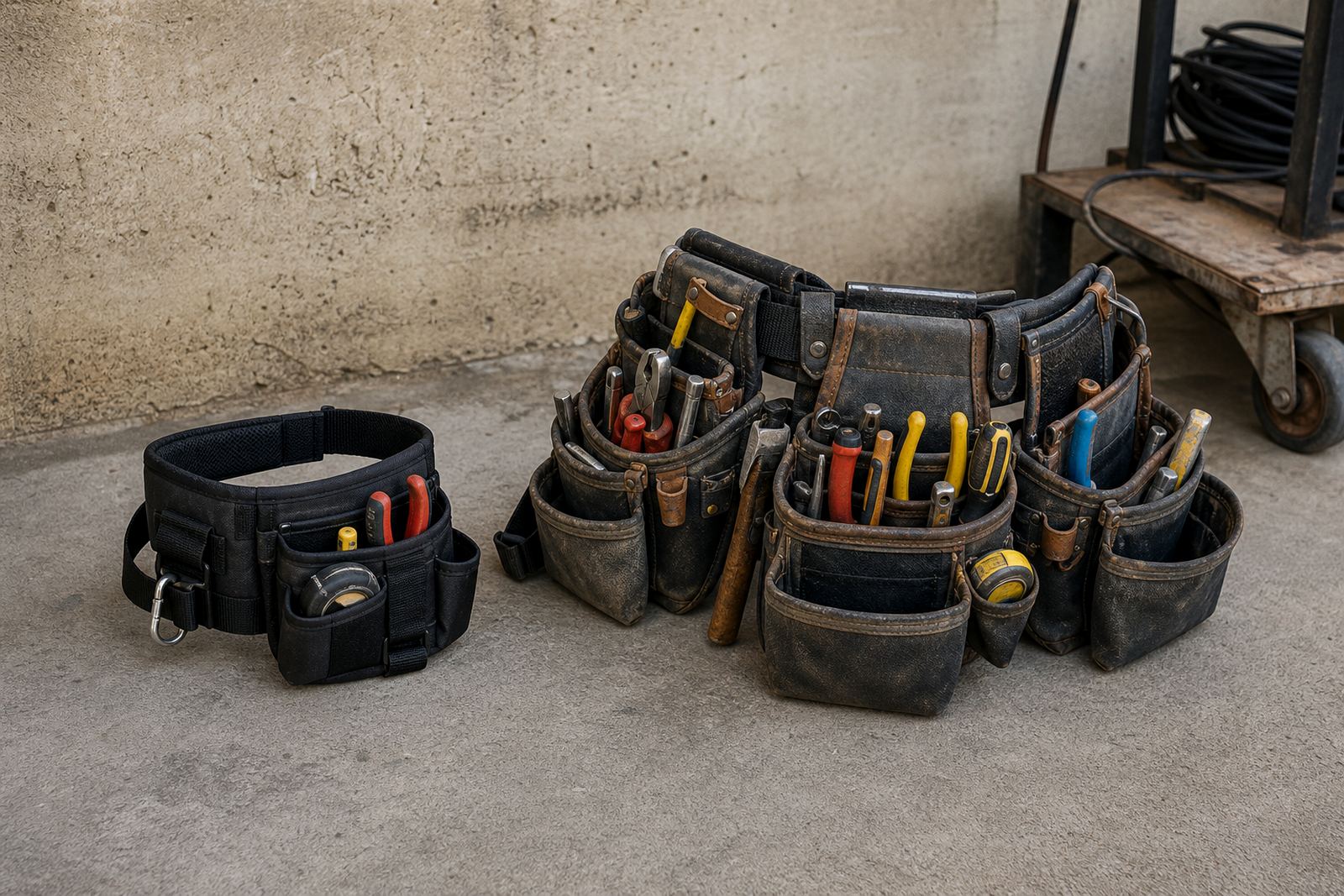
When you are on a ladder, every extra bit of bulk matters. A pouch that sticks out can catch on rung edges, scaffold tubes, gutters, roof sheeting or a cable tray, and that changes your balance fast. Low-profile carry keeps the load close to the hips so you can climb, turn and reach with less drag on your body.
For electricians working in ceilings, plant rooms and compact service areas, the right pouch also stops loose screws, connectors and test gear from rattling or spilling. Builders on wet slab work, boundary walls or repair jobs in tight courtyards need the same control, especially where there is dust, wind, or a steep ladder angle. In Gauteng the day can start cool and end hot, so a carry system should stay comfortable through the shift, not just for the first hour.
- Keep the pouch shallow and close to the waist
- Choose a belt that stays firm without digging in
- Separate sharp items from loose fasteners
- Make sure nothing swings when you step up
What to look for before you climb
Before a ladder job, check the pouch layout against the task. A sparkie doing small maintenance work may need a few insulated hand tools, connectors and fixings. A builder may need nails, wall plugs, a tape, pencil and a small hammer or pliers. If the job changes often, a mixed trade setup is usually better than a deep general-purpose pouch.
Look for firm stitching, strong belt loops and pockets that hold shape. Soft pouches that collapse can make one-handed access frustrating, especially when you are balancing with your other hand on the ladder. In coastal areas like Durban and Cape Town, humidity can affect metal fittings and fasteners, so cleanable materials and sensible pocket separation help keep gear in order. If you work near municipal sites or public walkways, neat carry also helps you stay within site rules and avoid loose items dropping into traffic areas.
- Check pocket depth so tools do not sit too low
- Test whether you can reach items with one hand
- Choose a belt width that spreads weight evenly
- Confirm the pouch can handle dust and daily wipe-downs
Set up your pouch for ladder-safe movement
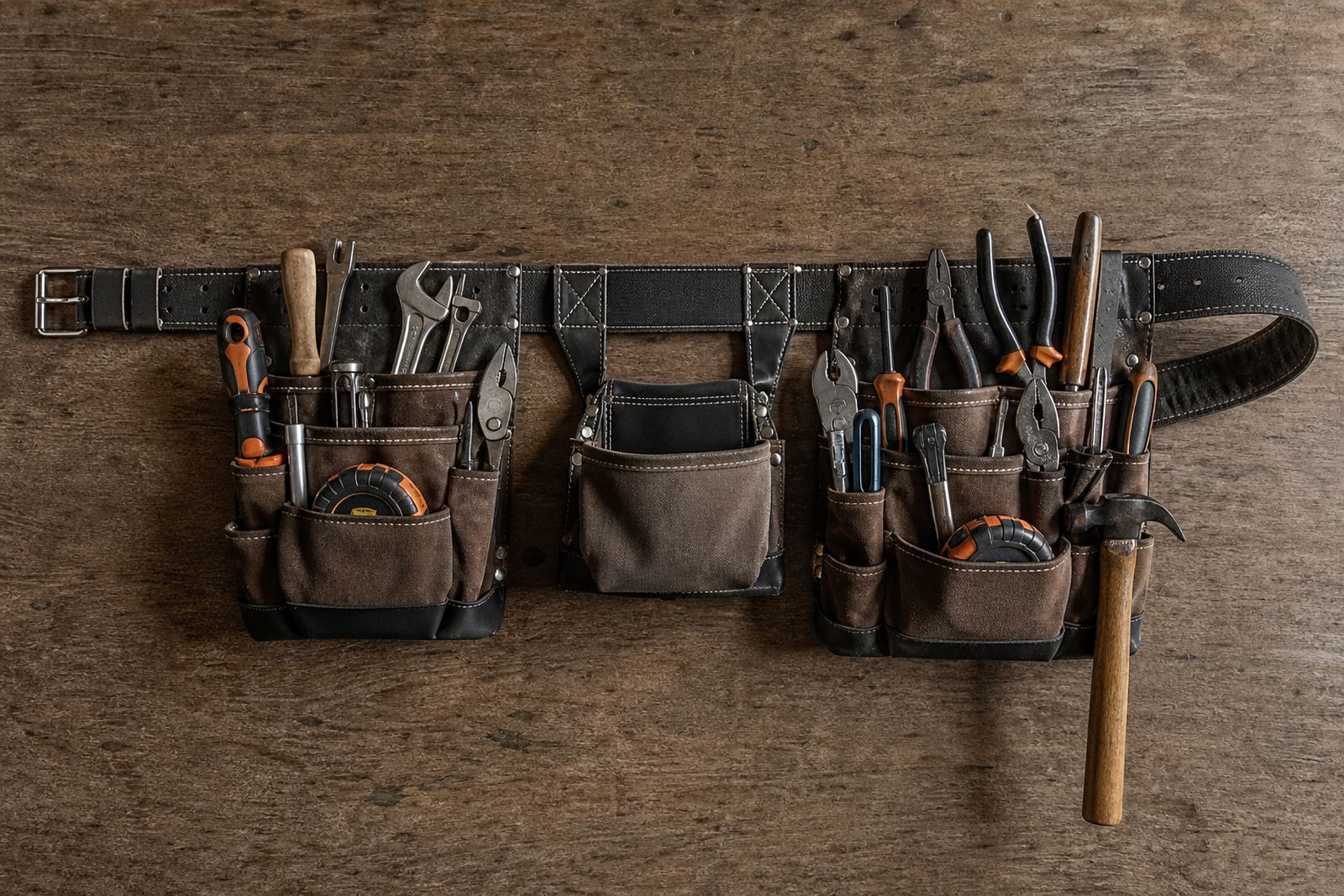
Good pouch layout is not just about storage, it is about habit. Put your most used items in the front and side pockets so you can reach them without twisting your torso. Heavier items should sit lower and closer to the centre line of the body. Keep the back section light, because it is easier to lean into a rung when there is less hard kit against your hip.
A simple rule helps: if you need to search for it, it is in the wrong place. Group nails, wall plugs, screws and small fixings by task. Keep one pocket for clean items and one for dirty or used items. If you are moving between jobs in Midrand, Centurion or Pretoria, this saves time between site stops and reduces the chance of mixing up different fasteners. The right layout also makes stock checks quicker at the end of the day, no matter if you are on a big rollout or a small repair call.
- Front pocket for frequently used hand tools
- Side pocket for fasteners and fittings
- Separate pocket for measuring and marking tools
- Small section for used screws or cut-offs
How to match belt size and load to the job
A belt that is too loose will shift when you climb. One that is too tight will pinch, ride up or make it harder to breathe on hot days. The right fit should stay steady when you step onto the first rung and when you lean sideways to work. For builders and electricians, belt size matching should take account of clothing layers, rain gear and the weight of the pouch set.
For lighter ladder tasks, keep the load to essentials only. For heavier prep work, use a stronger belt and split the tools over more than one pouch so the weight is balanced. In Alberton and the wider Ekurhuleni area, many crews work early starts and long shifts, so comfort matters. A belt that feels fine in the yard but bites after 20 minutes on a ladder is not the right fit.
- Try the belt with the actual tools you carry
- Walk, bend and climb a few steps before the job starts
- Check that buckle points do not press into the stomach
- Keep the total load light enough for safe movement
Choosing pouches for electricians and builders
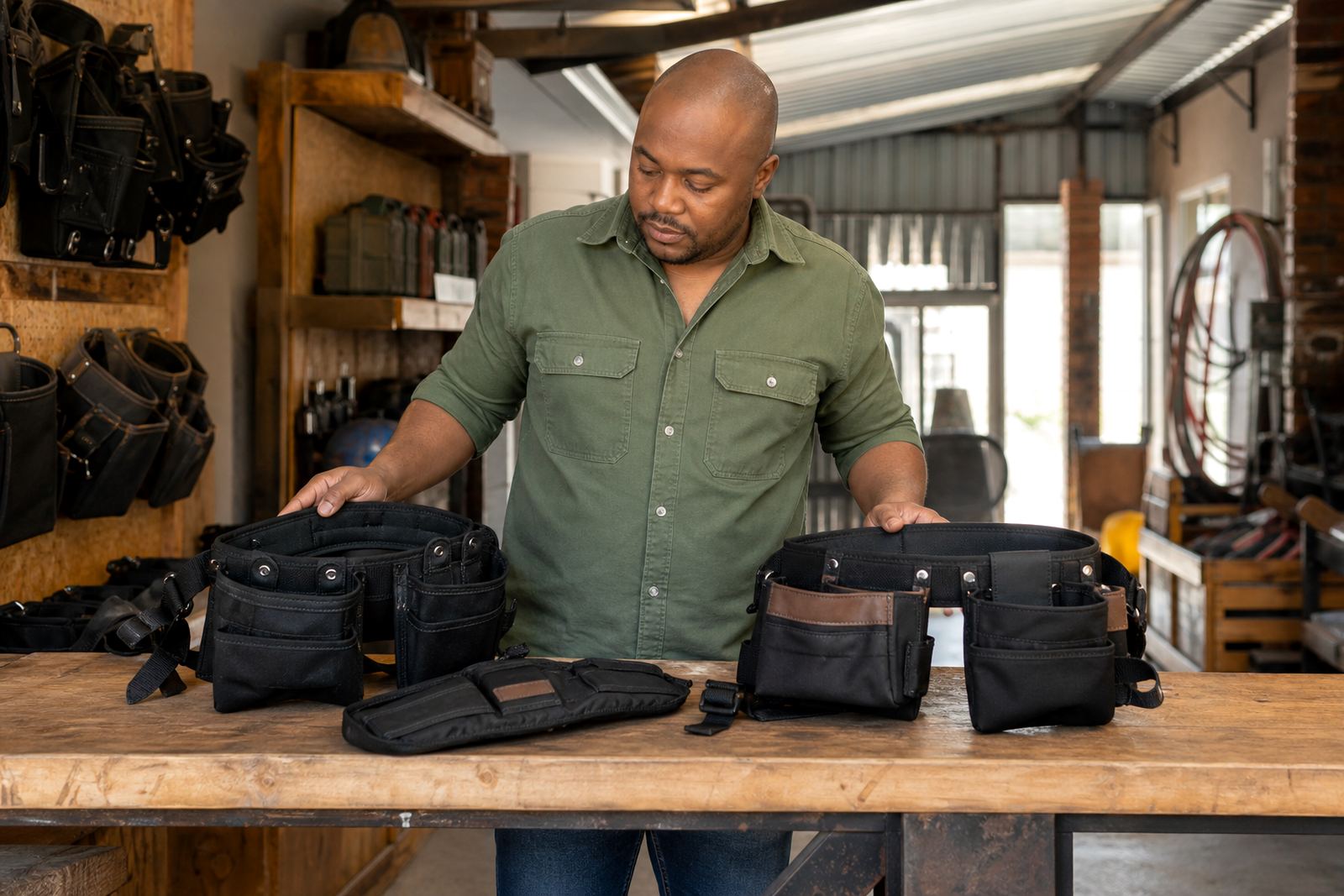
Electricians usually need slimmer pockets, cleaner separation and quick access to small parts. Builders often need deeper pouches for nails, plugs, markers and fixing tools. A good ladder carry system can be built around either trade, but the layout should stay low-profile and practical rather than overpacked.
For electrical kit configs, choose sections that keep insulated hand tools apart from metal fittings and small consumables. For builders kit configs, look for enough room for fasteners without letting them spill out when you bend or climb. If your team handles project rollout supply or contractor order support, it helps to standardise the pouch layout across crews so everyone knows where each item sits. That saves time on site and makes stock replenishment simpler back at base.
- Electricians: slim tool slots, small part pockets, neat separation
- Builders: deeper fixings pockets, tape and marking space, tougher carry points
- Mixed trade jobs: keep one side for tools and one side for fixings
Checklist for ladder tasks before the first climb
A short pre-climb check can prevent a lot of bother. Before you step off, make sure the belt is secure, the pouch is not overloaded and nothing is hanging loose. Check that any sharp tools are stowed safely and that you can return them without looking down for too long. If you are working near load-shedding backup systems, ceiling voids or temporary power setups, keep your carry tidy so you are not snagging on cords or fittings.
Use this simple checklist before ladder work and before site changes. It keeps the job steady, especially when you are moving between rooms, outside walls or upper storeys. If the carry setup feels awkward, adjust it before you go up not after.
- Belt fastened and sitting level
- Pouch load kept to essentials only
- Sharp items secured and protected
- Fasteners sorted and easy to reach
- Nothing hanging, swinging or catching on the ladder
Ordering the right setup for your crew
For teams working across Johannesburg, Pretoria, Durban, Cape Town and Polokwane, the best setup is usually the one that matches the job pattern, not just the price tag. A starter kit build, site specific selection or mixed trade kit can be arranged around the type of ladder work your crew does most. That is useful for contractors managing multiple teams, especially when each site has different access points, height limits or storage conditions.
At Waistbags Pro in Alberton, Gauteng, we help with bulk team orders, pouch layout planning, belt size matching and stock replenishment plans so the carry system fits the work from day one. If you are setting up a new crew or updating old gear, choose a pouch layout that supports safe movement, clear access and less wasted time on the ladder. The right carry system should feel natural after a few runs, not fight you on every climb.