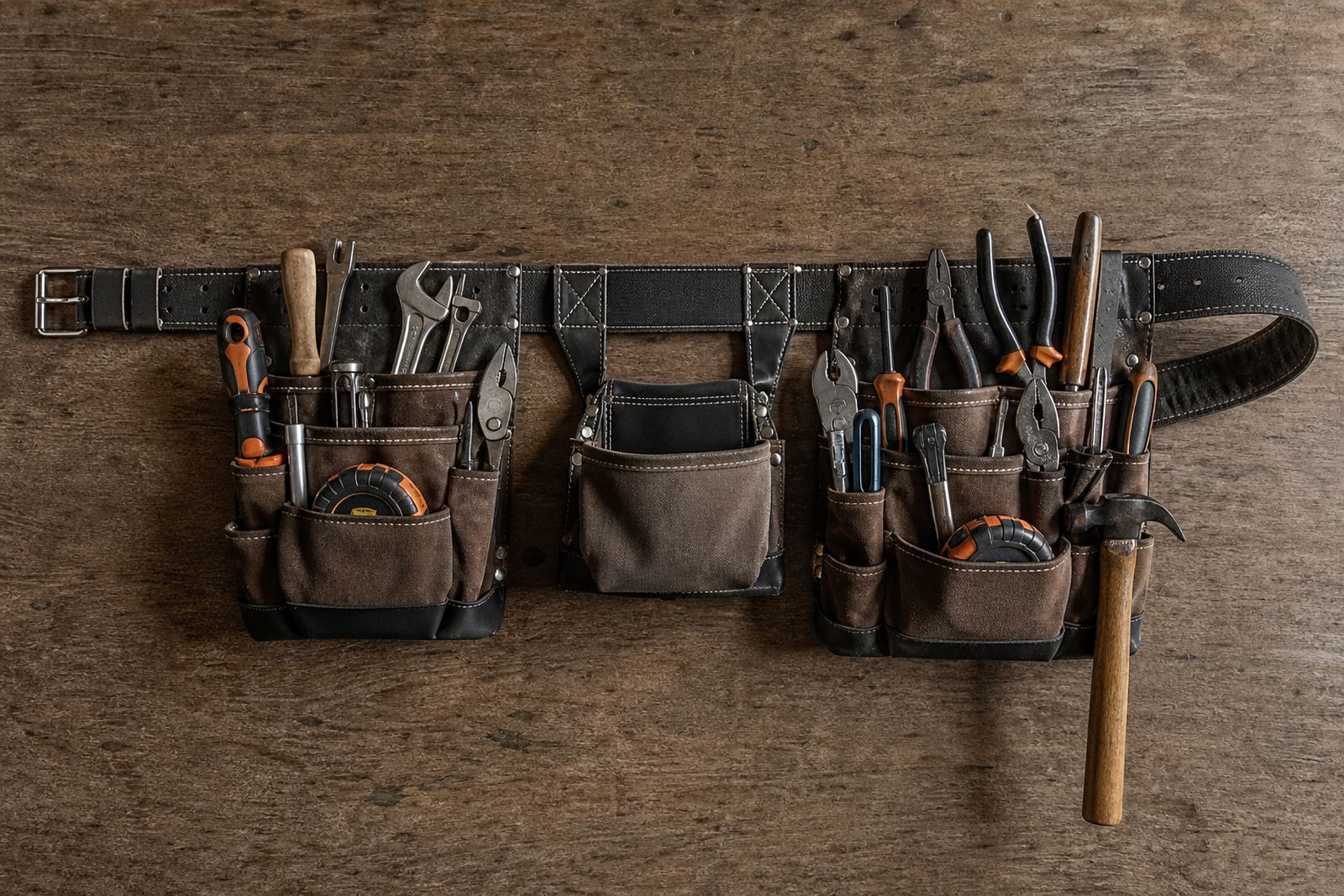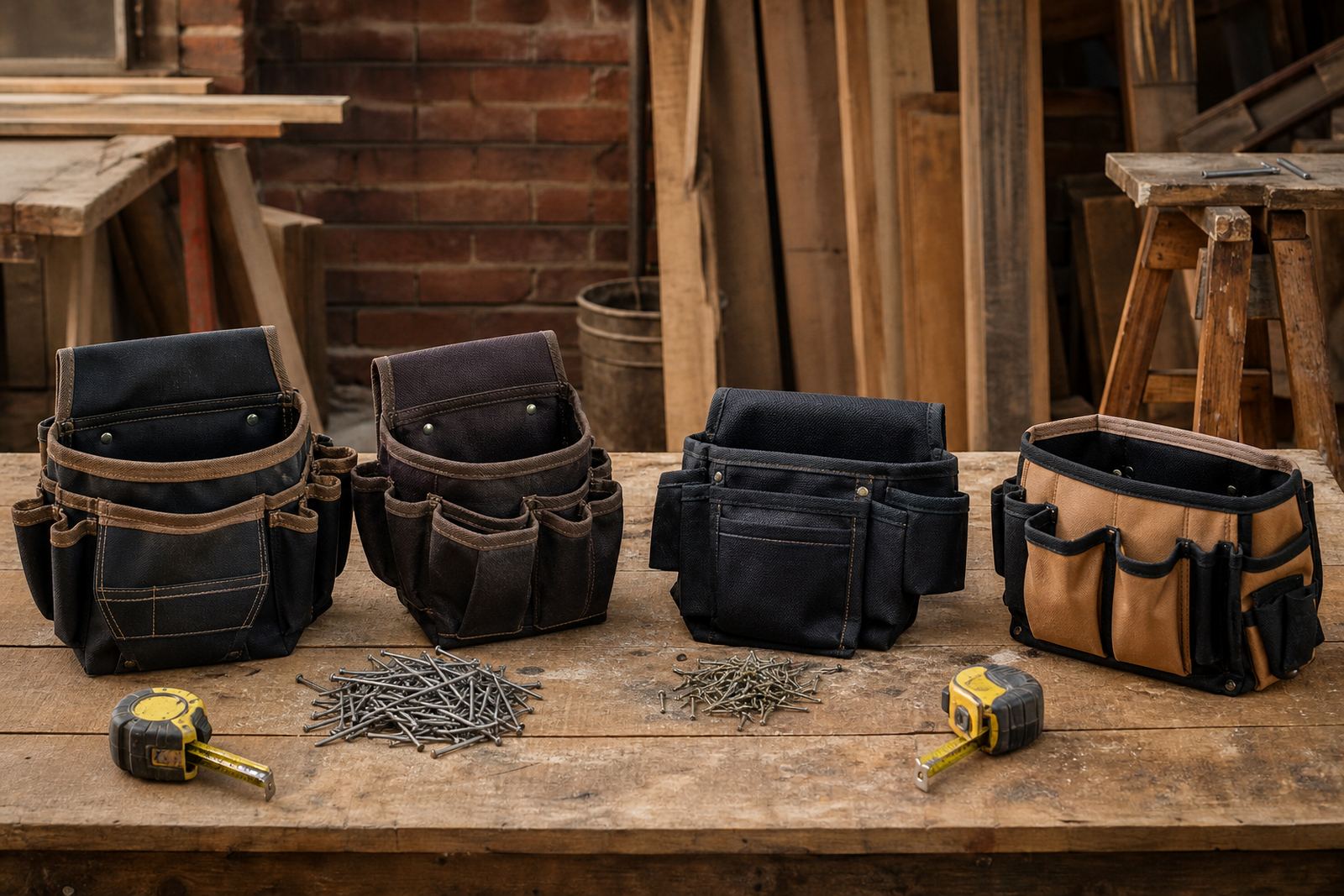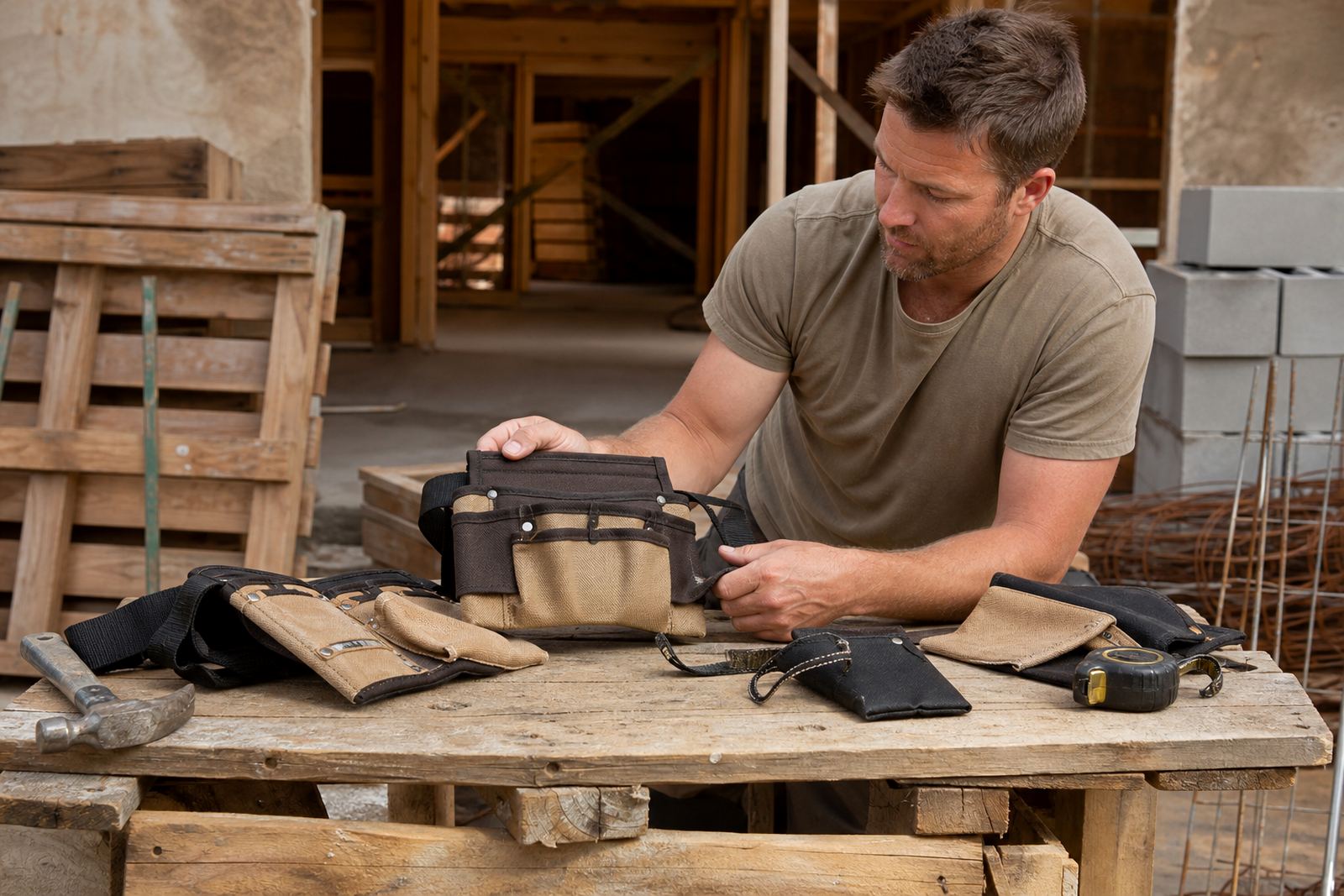

Start by grouping fasteners by trade and task
The right pouch layout starts with what you carry every day, not with how many pockets the belt has. A builder will usually need nails, screws, wall plugs, anchors, tie wire and a tape measure nearby. An electrician may need rawl plugs, clips, self tapping screws, lugs, ferrules and small consumables for fittings and mounting work.
Separate fasteners into job groups before they go into the pouch. Keep common items in the easiest reach, then place occasional items in deeper pockets or side compartments. This keeps the weight balanced and stops the small parts from sinking to the bottom when you are moving around a site in Alberton, Midrand or on a windy coastal job in Durban.
- Daily use items: screws, nails, clips, plugs
- Task based items: anchors, lugs, wall plugs, conduit fittings
- Special items: mixed fixings for one project only
- Emergency spares: a few extras for lost or damaged fasteners
Use pocket depth to control speed and spill risk
Fasteners should not sit loose in the same space as cutters, drills bits, or sharp tools. Shallow front pockets are best for the parts you use most often because you can grab them quickly without digging. Deeper main pockets work better for backup stock and heavier fasteners that would otherwise pull the pouch down.
On a hot Gauteng site or during load-shedding when you are working with limited light, a clear pocket layout saves time. If you cannot see what is where, the pouch becomes a jumble by mid morning. Keep one pocket for small loose pieces, one for medium fixings, and one for larger hardware so you can reach by feel. That kind of layout is simple and it works.
- Shallow pocket: screws, terminals, clips
- Medium pocket: wall plugs, nails, washers
- Deep pocket: anchors, spare packs, bulk fixings
- Closed pouch section: items that must stay dry and clean
Match pouch layout to the way you work on site
There is no single layout that suits every contractor. A ceiling installer, a general builder and a maintenance electrician all move differently and reach for different fasteners. If you climb ladders often, keep the lightest and most used items on the side that will not catch on rails or scaffold. If you spend more time kneeling or working at floor level, keep the heavier stock away from the front so it does not press into your leg.
For mixed trade crews, use one pouch for fasteners and one for tools. That helps with contractor order support and makes stock checks simpler at the end of the day. On larger project rollouts, a standard pouch layout also makes it easier to replace a missing item without reworking the whole belt.
- Builders: nails, screws, plugs, anchors, marking items
- Electricians: terminals, clips, screws, lugs, cable ties
- Mixed crews: one pouch per fastener type, not one pouch for everything
Keep small fasteners in separate containers inside the pouch
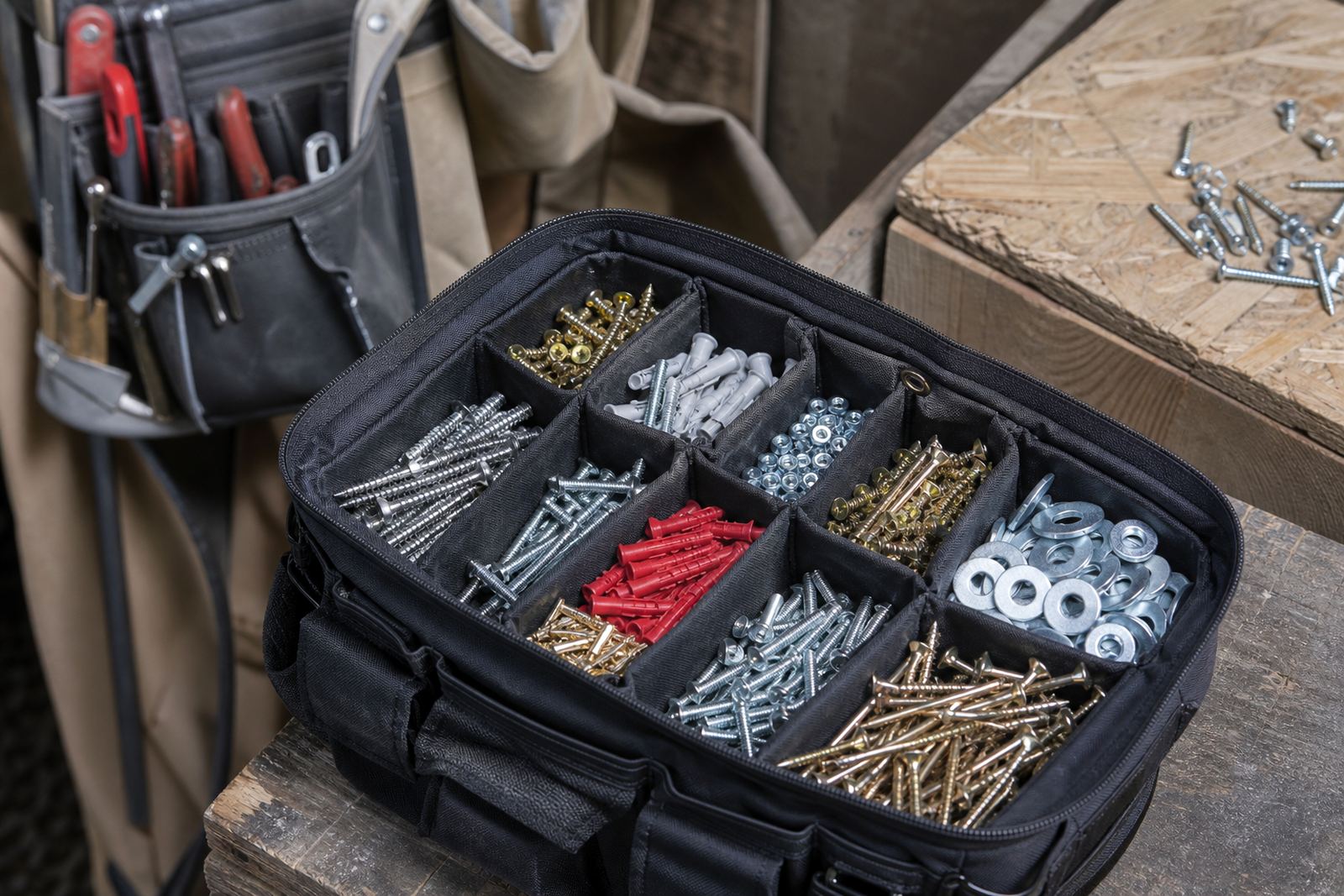
Small fasteners disappear fast if they are poured straight into a pocket. Use small divided containers, resealable bags, or internal separators so the contents stay grouped. This is especially useful for screw types that look similar but do different jobs, or for terminals and ferrules that must stay clean and easy to count.
Label the inside containers by size or use. A plain marking system is enough, such as 8 mm wall plugs, 10 mm wall plugs, 25 mm screws, or M4 fittings. That makes stock replenishment plans easier, and it helps when a team member needs to grab the right item without asking twice. In humid areas like Cape Town or Durban, a dry container also helps prevent light surface rust on metal fasteners.
- Use separate compartments for mixed screw sizes
- Keep terminals and ferrules in clean, dry pockets
- Use small containers for anything that rolls or spills
- Mark containers clearly so replacements are quick
Check weight, belt fit, and movement before a long shift
A pouch layout should feel comfortable by the second hour, not only for the first ten minutes. If one side of the belt is heavy, the pouch will twist and rub. If the fasteners are packed too high, they will bounce when you walk between rooms or move up scaffolding. Belt size matching matters because an over tight belt can make even a well packed pouch uncomfortable.
Before you head out, do a quick check. Walk a few metres, kneel, bend, and reach both sides. If the pouch digs into your hip or pulls forward, move the heavier fasteners lower or shift them to the other side. That small adjustment can save a lot of irritation on long jobs in Pretoria, Polokwane, or across a full day of site visits.
- Check that the belt sits flat when loaded
- Keep heavy items low and centred
- Make sure nothing falls out when you bend
- Test the layout before the first job of the day
A simple end of day refill routine keeps the next job moving
The fastest way to stay organised is to reset the pouch every afternoon. Empty offcuts, remove damaged fasteners, and top up the most used items first. This takes only a few minutes and stops the belt becoming a random mix of left over bits from several jobs. It also makes starter kit builds and mixed trade kits easier to manage for new hands on site.
A good routine is to count the main fastener types, replace what is running low, and keep a small reserve pack in the vehicle or store room. If your team works across Johannesburg, Centurion and Midrand, a standard refill list helps everyone keep the same layout. That means less time searching and fewer delays when the right fixing is needed right away.
- Remove broken or bent fasteners
- Top up the most used items first
- Keep a reserve pack in the vehicle
- Reset the pouch before the next shift