
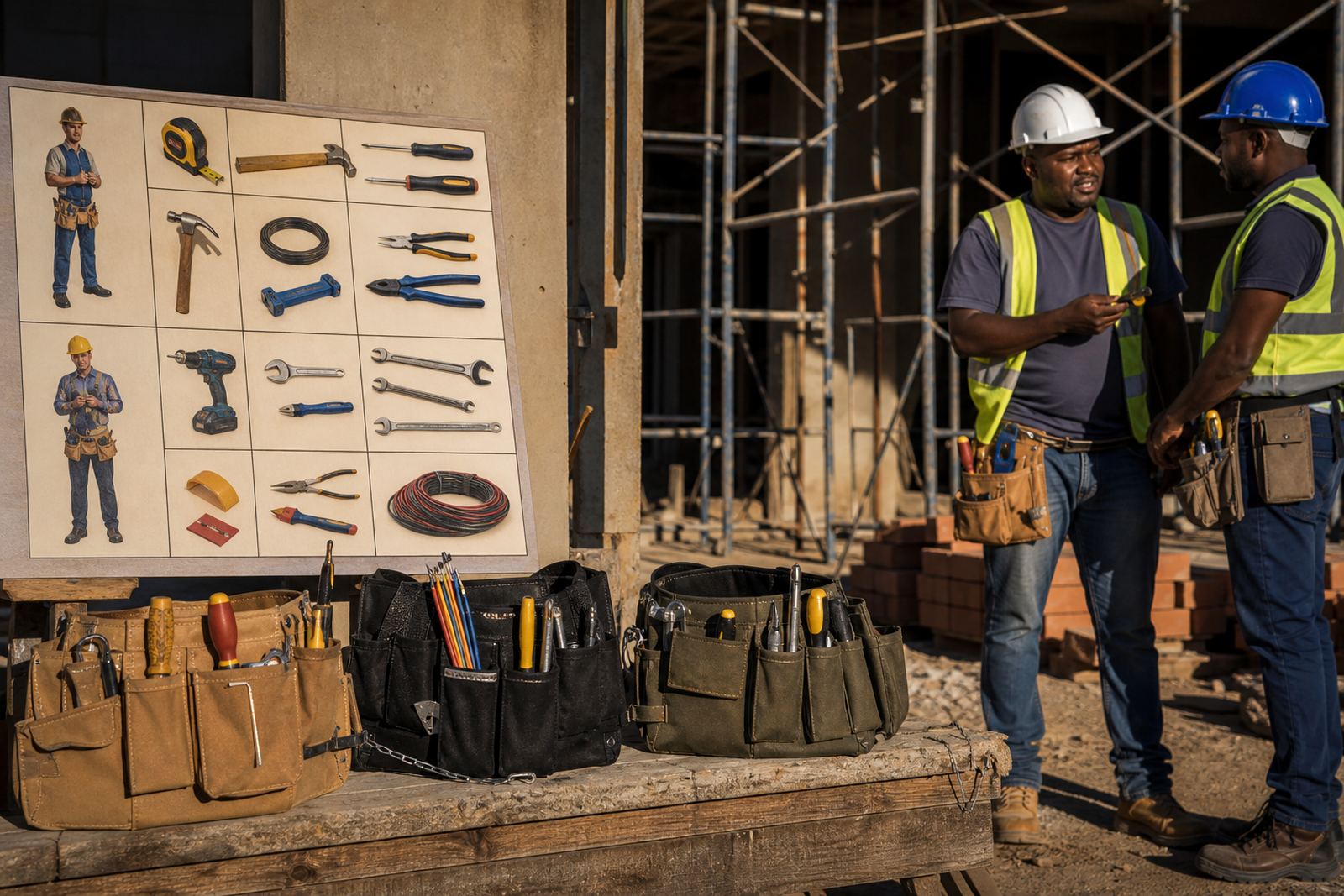
Start With Your Main Trade Tasks
The best way to choose a tool pouch is to list the jobs you do every day and the tools you reach for first. A builder on shuttering, bricklaying or punch list work needs different access than an electrician doing wire pulls, fittings and fault finding. If you split your week between sites in Johannesburg, Pretoria, Durban or Cape Town, choose a setup that works in heat, dust and stop start movement.
Begin with three questions: what do you carry, how often do you reach for it, and how long are you on your feet. If you carry only a few hand tools, a lighter pouch may be enough. If you work with fasteners, fixings, metre items and marking tools all day, you need more partitioning and a firmer belt. The goal is simple, less time searching and more time working.
- List your top 10 daily tools
- Mark which items must stay within one hand reach
- Separate heavy tools from small fittings and consumables
- Note whether you kneel, climb, or move ladders often
Choose Pocket Layout For The Way You Work
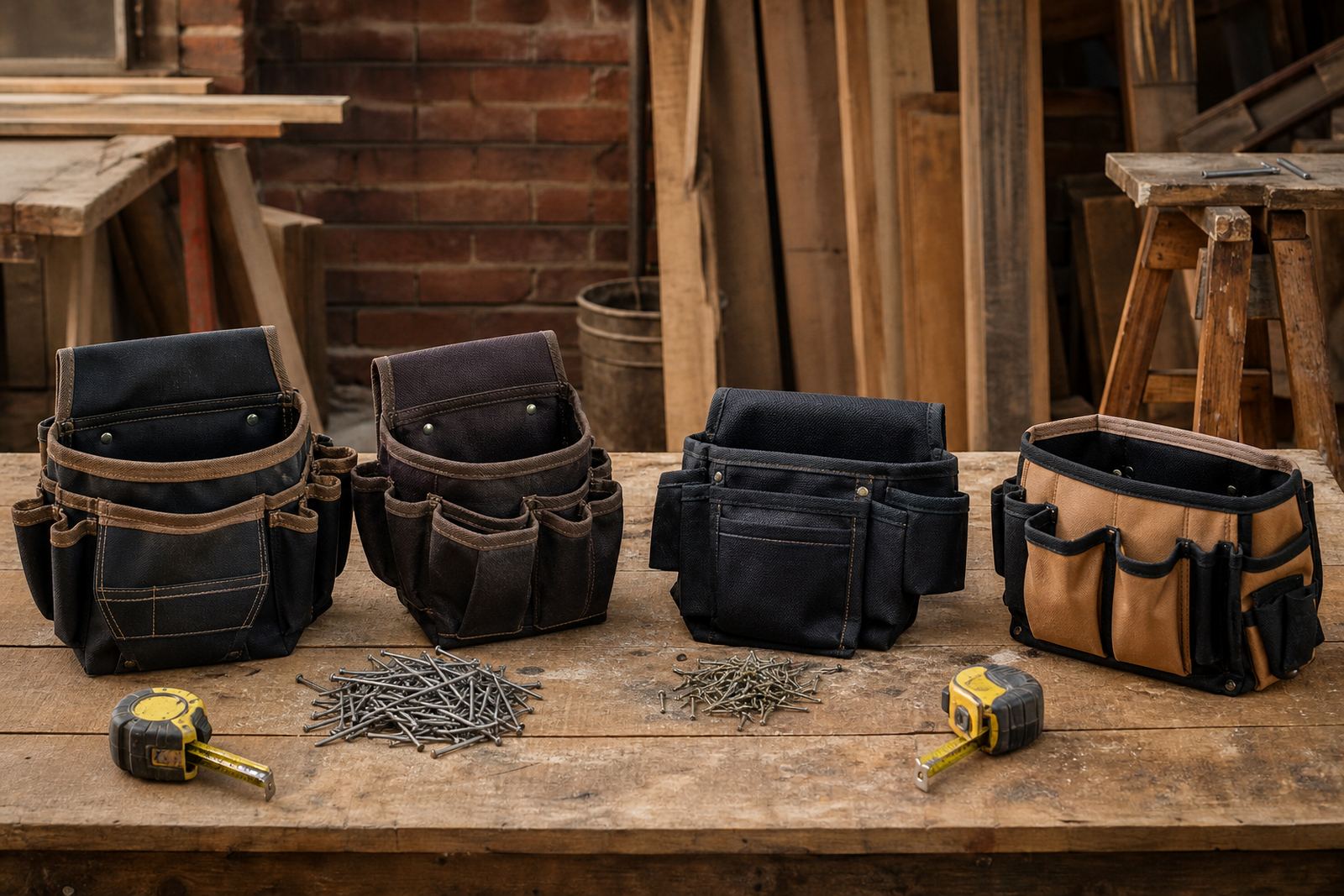
Pocket layout should match the way your hands move on site. Deep pockets suit nail sets, pliers and screwdrivers that must stay upright. Narrow slots help keep pencils, markers and testers in place. Open pockets are useful for fast access, but if your work includes loose fixings they can cause clutter, so a mixed layout is often better. For coastal humidity in places like Durban and Cape Town, a cleaner layout also helps reduce the chance of steel parts rubbing and wearing faster.
Think about the sequence of your tasks. If you are measuring, marking, fixing and checking in that order, arrange the pouch so the first tools sit in the front and the slower used items sit further back. A pouch that mirrors your workflow saves steps and keeps the load balanced.
- Front slots for the tools you use every few minutes
- Side loops for tape, markers or a compact torch
- Deeper sections for drivers, pliers and similar hand tools
- Small closed pockets for screws, plugs or connectors
Match Belt Strength To Weight And Wear Time
Utility waist belts are not all the same. A belt that feels fine for short jobs may start digging in after a full day on a project. If you are carrying heavy pouches, fasteners or extra hand tools, choose a belt with proper width and support so the load sits evenly around the waist. That matters when you are moving up and down scaffolding or working on uneven ground around a site in Alberton, Midrand or Centurion.
Fit is just as important as strength. A belt that is too loose shifts when you bend, while one that is too tight cuts into your sides. Belt size matching should allow for a winter jacket, work shirt or rain layer without forcing you to over tighten the buckle. When the fit is right, the whole setup feels steadier and the pouch stays where you want it.
- Choose a wider belt for heavier daily carry
- Check that the buckle can be adjusted quickly with gloves on
- Leave room for layered clothing in cold or wet weather
- Test the belt with full tools, not when it is empty
Build Separate Sets For Builders And Electricians
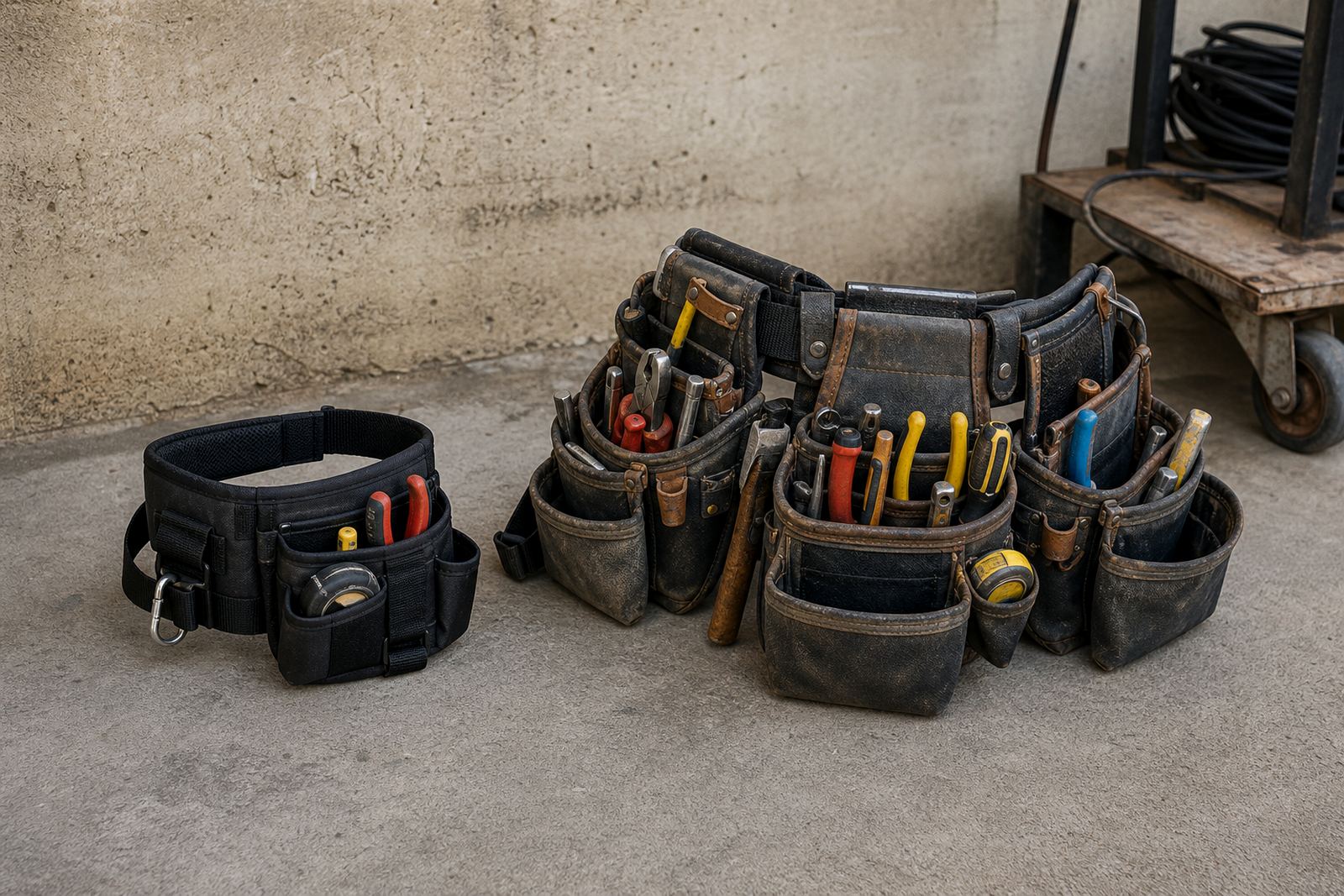
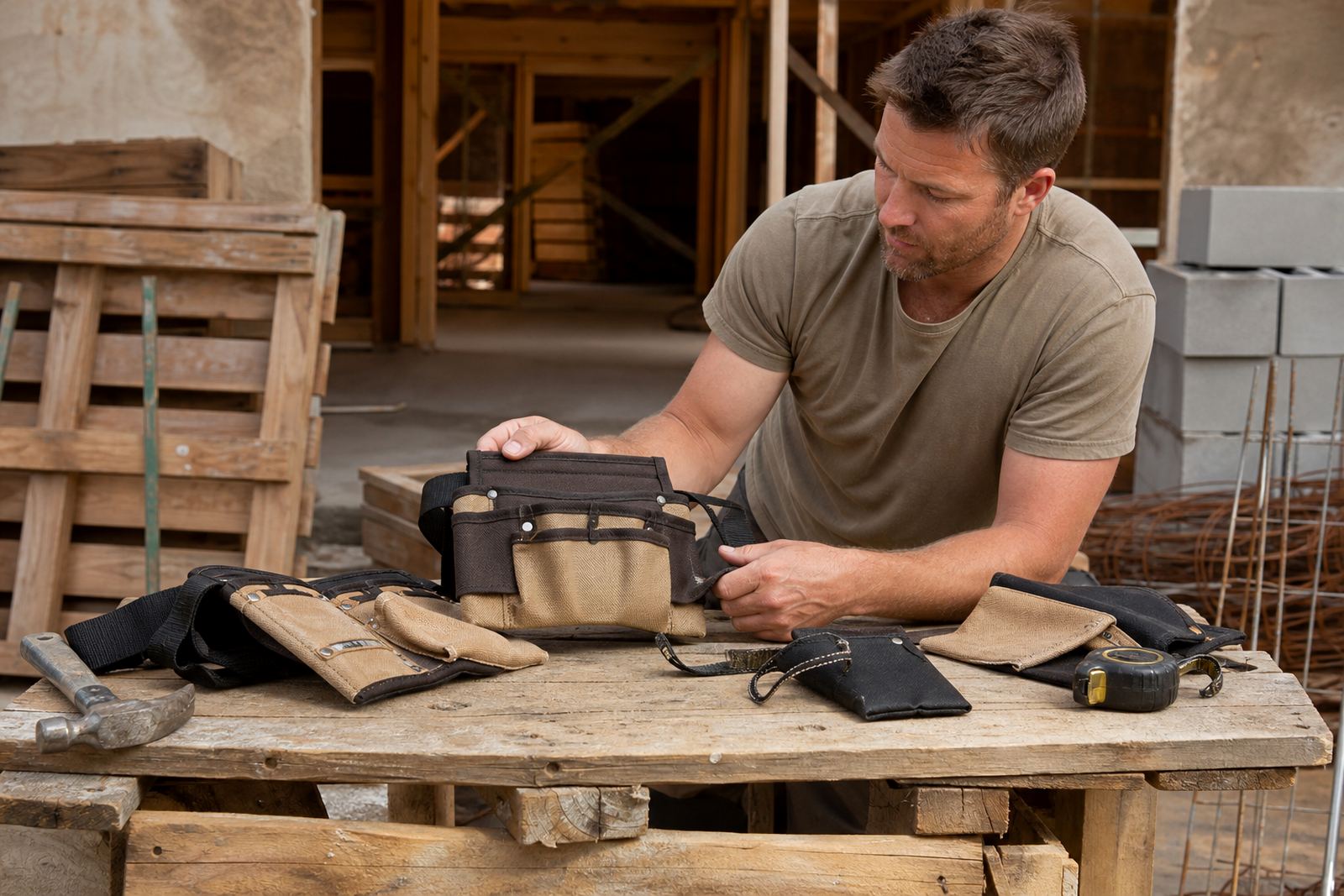
Builders and electricians often need different pouch arrangements even on the same site. Builders usually need space for nails, screws, chalk, a hammer loop and marking tools. Electricians often need a neater split for cutters, strippers, screwdrivers, testers and small fixings. If one person does both types of work, mixed trade kits can save time by keeping the common items together and the special items apart.
Starter kit builds are useful for new staff or for teams moving onto a fresh project. They help standardise what goes into each pouch, which is handy for contractor order support and stock replenishment plans. If you manage a crew, a clear setup makes it easier to issue the right kit and reduce missing items.
- Builders kit: fasteners, marking tools, hammer loop, tape and utility slots
- Electrical kit: insulated hand tools, testers, cutters and small parts storage
- Mixed kit: shared tools in the centre, trade specific tools on the sides
- Site specific selection: choose for fit out, maintenance or first fix work
Plan For Load-Shedding, Dust And Long Shifts
South African sites bring their own problems, from load shedding to dust, rain and long travel between jobs. A good pouch should keep essential tools within easy reach when power tools are off or the site changes suddenly. On days when you are working by torchlight or moving between different areas of a building, quick access matters more than fancy extras.
Durability is about practical wear. Seams, loops and stitching should handle repeated pulling, climbing and kneeling. If you work near the coast, wash off salt dust and damp after use. If you are in inland areas such as Polokwane or Pretoria, check for dust build up and grit in the pockets. A simple routine keeps the pouch in service for longer and reduces replacements.
- After every shift, empty fine dust and loose offcuts
- Check stitching, belt loops and buckle wear weekly
- Keep spare bits and fixings in small sealed pockets
- Dry gear fully after rain or wet concrete contact
Use A Simple Checklist Before You Order
Before placing a team order or a single kit order, do one final check against the work you actually do. This avoids buying a pouch that looks right but slows you down in the field. Our team in Alberton helps with pouch layout planning, belt size matching and bulk team orders for sites across South Africa.
A good order should answer three things: does the pouch hold the right tools, does the belt fit comfortably and does the layout suit the day to day job. If the answer is yes to all three, you are on the right track. If not, adjust the layout before the kit goes into regular use.
- Does the pouch carry your top tools without crowding?
- Can you reach key items with one hand?
- Does the belt stay steady when fully loaded?
- Will the kit suit one worker or a whole crew?
- Have you allowed for future stock replenishment?
Keep The Kit Working As The Job Changes
Trades do not stay the same all year. A project may move from first fix to finishing, or from heavy build work to punch list maintenance. Review your pouch setup every few months and adjust what sits in each pocket. This is especially useful for contractors handling several sites at once, because one layout may not suit every crew.
If you need a different mix for Johannesburg Supply, Pretoria Supply, Durban Supply, Cape Town Supply, Polokwane Supply, Midrand Supply or Centurion Supply, keep the order notes specific. Clear details make delivery planning easier and help us match the right pouch features to the job at hand. A small adjustment now can save a lot of time on site later.