

Why Ceiling Work Needs a Better Belt Setup
Ceiling installations usually mean working above shoulder height, often in tight ceiling voids, on uneven ladders or under hot roof spaces. When tools are loose in pockets or left on the floor, the job slows down and the risk of dropping fittings, blades or screwdrivers goes up. A proper waist belt keeps the daily kit stable and easy to reach, which matters when you are wiring downlights, setting out batten points or fitting access panels.
For teams in Alberton, Johannesburg and Pretoria, the right belt also helps with movement across sites. One day it is a house in the suburbs, the next it is a shop fit-out or a block of flats. The pouch set should be light enough for ladder work, but strong enough to hold fasteners, connectors and a tester without sagging by midday.
Typical Kit For Ceiling Installation Teams
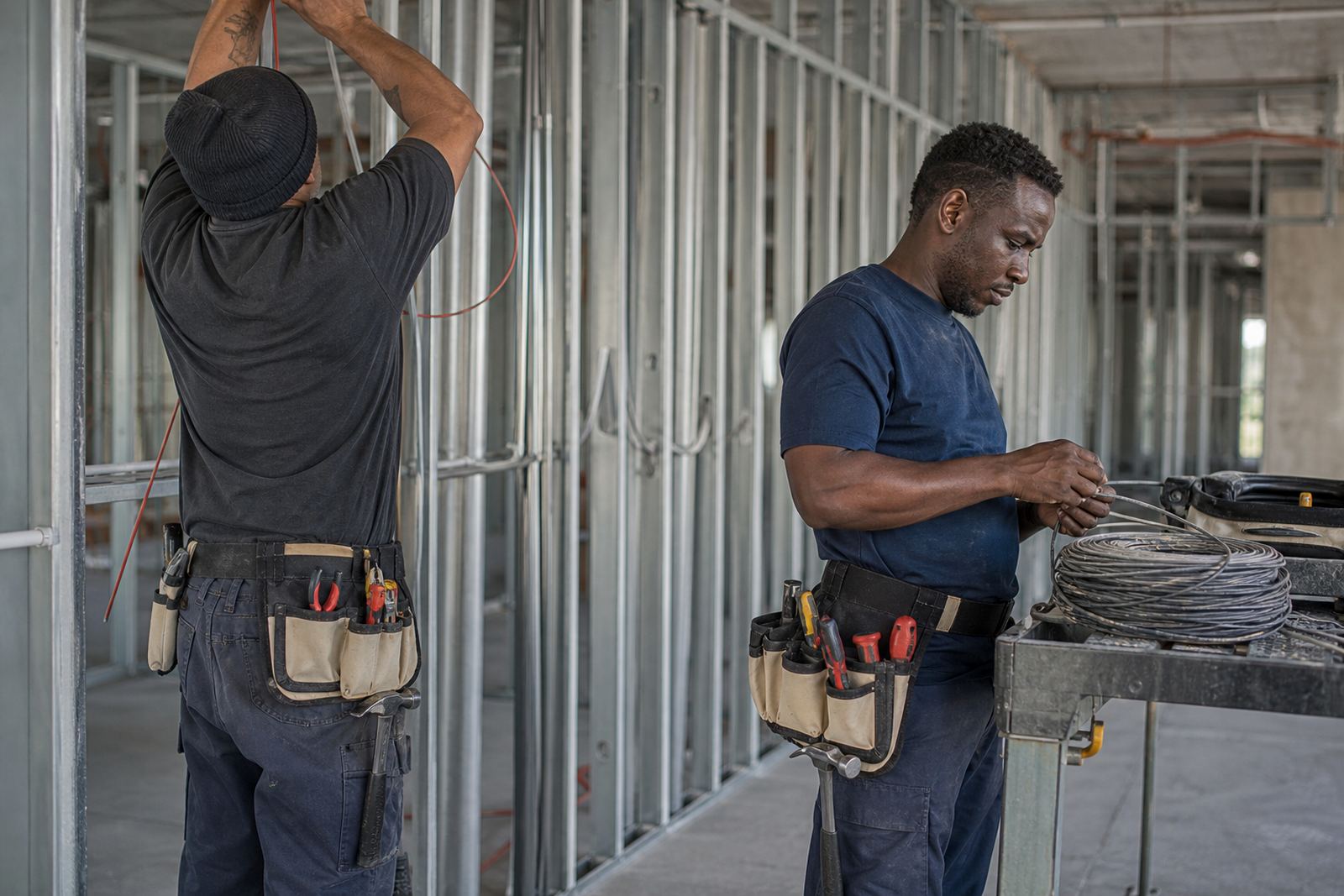
A ceiling installation belt should carry only what is needed for overhead work. That keeps the weight down and reduces snagging on joists, ladder rails and cable runs. Many electricians prefer a split layout, with the most used items on the dominant hand side and fixings on the other side.
- Small tool pouch for screwdrivers, side cutters, pencil, marker and tape measure
- Nail bag or fixings pouch for screws, plugs, clips and anchors
- Utility waist belt with adjustable fit for overalls or workwear
- Compact metre or tester pouch where required on the task
- Clip points or loops for a torch, insulation knife or cable ties
For ceiling teams working in Durban or coastal areas, it helps to choose materials that clean off dust and do not hold moisture for long periods. On busy rollouts, a mixed kit can be set up for each person so the layout is the same from site to site, which cuts confusion and wasted time.
Layout Planning For Faster Overhead Work
Pouch layout should follow the task, not just the catalogue. A ceiling installer who is fitting lighting may need fast access to screws, Wago-type connectors, a small driver and a tester. Someone doing suspended ceiling support work may need heavier fixings and a more open pouch mouth. The aim is to keep the hand path short. If you are reaching across your body for every second item, the belt is set up wrong.
We often help teams in Midrand and Centurion match belt size and pouch position before a bulk order goes out. That is useful when you have different body sizes on one crew, because a belt that is too loose will slide when climbing, while one that is too tight gets uncomfortable after a few hours. It is worth checking whether the belt will be worn over summer shirts or winter layers as well, since that changes the fit more than people expect.
- Place the heaviest pouch slightly off-centre so the belt does not twist
- Keep sharp tools in a secure pocket, not loose in an open bag
- Separate fixings from hand tools so they do not scratch or tangle
- Test the belt while bending, climbing and reaching before site use
Common Mistakes On Ceiling Jobs
One common mistake is overloading the belt. If the pouch is stuffed with every tool in the van, it becomes heavy and awkward, especially when moving between rooms or going up and down ladders. Another problem is using a general purpose belt that sits fine on the ground but rides up once the user starts reaching overhead. That leads to constant adjustments and sore hips by the end of the day.
Another issue is poor kit separation. Screws mixed with drill bits and connectors can slow a worker down, and in dusty roof spaces the wrong pouch design may trap grit. On some sites in Cape Town and Polokwane, teams also work in strong wind or dry heat, so small parts need to stay secure or they get lost fast. It is better to build the set around the job and not the other way round.
Budget Ranges For Teams And Contractors
Budget depends on whether you need one set for a lead installer or a full team rollout with matching pouches and belt sizes. A simple starter setup for ceiling work can sit in the lower range, while a full contractor order with mixed trade kits, spare pouches and delivery planning will cost more. For most South African teams, the right budget is less about buying the cheapest set and more about avoiding replacements after a few months of hard use.
As a guide, basic ceiling work belts and pouch combinations often start from around R450 to R850 per person. Mid-range kits for regular site use can fall between R900 and R1 600, depending on layout and the number of compartments. Bulk team orders, custom layouts and stock replenishment plans are usually quoted separately, especially when a contractor wants the same setup across several crews or branches.
- Starter kits for new installers
- Mixed trade kits for electrical and ceiling work
- Replacement pouches for worn or damaged sets
- Bulk supply for contractor teams and project rollouts
Supplying Ceiling Installers Across South Africa
From Alberton, Gauteng, we supply builders and electricians across Johannesburg, Pretoria, Durban, Cape Town and Polokwane, with support for site specific selection and delivery planning. If your team works under load-shedding pressure, on deadline driven fit-outs or on municipal projects with strict access times, it helps to order the belt and pouch layout before the job starts. That way the crew arrives with the right kit, not a box of extras to sort through on site.
Our team includes Sibusiso Mthembu, Annelise van Wyk, Kagiso Molefe, Nokuthula Dlamini, Johan Strydom and Lerato Moeketsi, so bulk enquiries, orderes and custom builds are handled by people who understand trade work. Clients reach us through the enquiry form on our contact page for starter kit builds, belt size matching, project rollout supply and contractor order support.